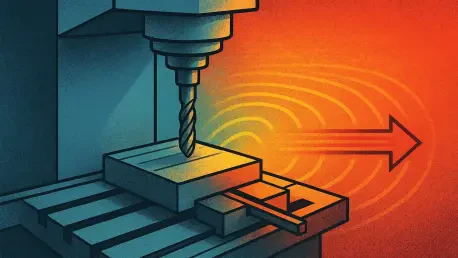

A modest five-degree Celsius fluctuation in shop floor temperature can cause a standard one-meter steel machine bed to expand by more than fifty-five micrometers. This physical reality creates a persistent challenge for modern precision engineering, where even the slightest thermal expansion can ruin a batch of high-value components. As manufacturers push for tighter tolerances in 2026, the traditional methods of checking parts after production are proving insufficient. Heat is an omnipresent variable that stems from both the mechanical operation of the machine itself and the shifting environment of the industrial facility. To maintain competitive cycle times while ensuring absolute accuracy, the industry is increasingly turning toward sophisticated computational solutions. This shift marks a departure from reliance on human intuition and manual intervention, moving instead toward a framework where machine tools possess a high level of self-awareness. By integrating thermal sensors with advanced processing capabilities, operators are finally able to stabilize production environments that were previously subject to the unpredictable whims of thermodynamics.
Identifying the Roots of Dimensional Variation
Identifying the root causes of dimensional variation requires a deep dive into the thermodynamics of the machining process, where heat is an inevitable byproduct of work. Every movement within the CNC system contributes to a changing thermal profile that affects the machine’s geometry in real time. While modern machines are built with high-quality materials, they are still subject to the laws of physics, meaning that any energy not used for cutting is dissipated as heat into the frame and components. This thermal energy does not distribute evenly, leading to localized “hot spots” that cause the machine to warp or tilt in ways that are not easily corrected by simple linear offsets. Engineering teams must therefore account for a complex interplay of forces, ranging from the friction in the guideways to the heat generated by the electronic cabinets. Understanding these variables is the first step toward building a robust system that can maintain its precision over a full twenty-four-hour production cycle by utilizing data-driven insights.
Internal Friction and Mechanical Heat Sources
The primary driver of thermal instability originates within the heart of the CNC machine itself, where mechanical energy is converted into heat through friction. High-speed spindle units, which often operate at tens of thousands of rotations per minute, generate substantial thermal energy within their internal bearings and housings. As these components warm up, the spindle housing expands, typically pushing the tool tip closer to or further from the workpiece along the Z-axis. This growth is not instantaneous but occurs over several hours as the machine reaches a state of thermal equilibrium, meaning that a part cut at the start of a shift might differ significantly from one cut several hours later. Similarly, the rapid movement of heavy axes causes ball screws to heat up, resulting in pitch errors that compromise positioning accuracy. These internal heat sources are dynamic and vary based on the specific machining parameters, such as feed rates and spindle speeds, making them notoriously difficult to model using traditional static compensation tables or periodic manual checks.
Environmental Fluctuations and External Factors
Beyond internal friction, the external environment plays a major role in dictating the geometric stability of a machine tool. Ambient temperatures on a shop floor are rarely constant; they fluctuate based on the efficiency of HVAC systems, the opening of loading dock doors, and even the heat radiating from neighboring machinery. While high-end facilities use climate-controlled rooms, many production floors experience thermal cycles that cause the entire machine frame to warp or tilt. Furthermore, the coolant used to manage cutting temperatures can paradoxically become a source of error if its temperature is not strictly regulated. As the fluid circulates, it absorbs heat from the cutting zone and carries it back to the reservoir, eventually raising the temperature of the entire machine bed. Because different materials have unique coefficients of thermal expansion, the interaction between a warming machine and a cold workpiece can lead to unpredictable dimensional shifts. This complexity necessitates a sophisticated approach that looks beyond simple temperature readings to understand the holistic thermal behavior.
Transitioning to Intelligent Predictive Control
The shift toward proactive control represents a fundamental change in how manufacturers view the relationship between software and hardware on the factory floor. In the past, the machine was viewed as a static tool that performed instructions, but today it is seen as a dynamic system that must constantly adapt to its own physical state. This transition is fueled by the realization that manual intervention is no longer sufficient to meet the rigorous standards of modern industry. As parts become more complex and tolerances become tighter, the margin for error has effectively disappeared, leaving no room for the delays associated with manual measurement and correction. Proactive control relies on the ability to anticipate changes before they manifest as defects in the workpiece, requiring a level of data processing that far exceeds human capability. By moving toward an automated framework, facilities can ensure that their equipment remains in a state of constant calibration, regardless of the thermal loads being placed upon the system during high-intensity production runs.
Overcoming the Limitations of Manual Offsets
Historically, the burden of managing thermal drift fell squarely on the shoulders of experienced machinists who developed a specialized intuition for their equipment’s behavior. This reactive approach typically involves measuring the first few parts of a run and then manually inputting tool offsets into the controller to compensate for observed growth. However, this method is fundamentally flawed for high-precision production because it assumes that the rate of expansion is linear and predictable, which it rarely is. Furthermore, manual intervention requires frequent machine stoppages, which directly reduces overall equipment effectiveness and introduces the risk of human error during data entry. In an era of shrinking labor pools and increasing demands for 24-7 production, relying on an operator to catch a drift after a part has already been machined is no longer a viable strategy. These delays create a bottleneck that prevents shops from reaching their full throughput potential, as the time spent chasing tolerances is time that could be spent on actual value-added machining.
Algorithmic Compensation and Operational Excellence
The integration of artificial intelligence offered a transformative solution by shifting the paradigm from manual correction to autonomous, real-time compensation. This process began with the installation of a network of thermal sensors placed at critical junctions, such as spindle bearings and the machine bed casting. These sensors fed data into a localized AI model that was trained to understand the specific thermal fingerprint of that individual machine tool. By utilizing machine learning algorithms, the system predicted how the machine would expand based on current operational data and environmental conditions. Instead of waiting for a deviation to occur, the AI calculated the necessary compensation values and automatically updated the machine’s coordinate system mid-cycle. Manufacturers who adopted these algorithmic controls achieved a level of repeatable precision that was previously thought to be impossible, effectively neutralizing the impact of heat. They then prioritized the collection of high-fidelity data to refine these models for even greater accuracy.