
The technical flexibility of the MACHX series includes beam-shaping capabilities that enhance the precision and quality of complex metal components during the build process, arriving as Nikon’s digital manufacturing division experiences a transformative era defined by a 77 percent year-over-year revenue increase and a strategic leadership transition. The appointment of new co-presidents, Jan-Niklas Thielmann and Simone Castellani, signals a dedicated shift toward integrating advanced technology with rigorous industrial engineering. By introducing the MACHX platform at Formnext, Nikon is responding directly to the fragmentation and limitations currently hindering the metal additive manufacturing market. The platform is not merely a collection of new machines but a calculated ecosystem designed to provide industrial scalability. It represents a move away from isolated hardware solutions toward a unified framework that supports high-performance production, ensuring that manufacturing becomes more adaptable and economically sustainable for global markets.
Strategic Shift Toward Unified Hardware
Architecture: A Foundation of Unified Versatility
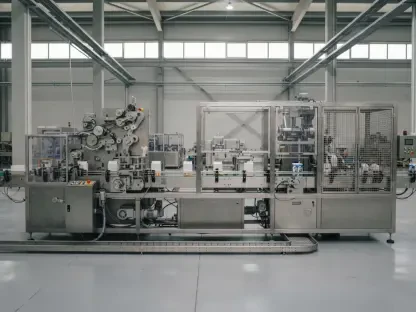
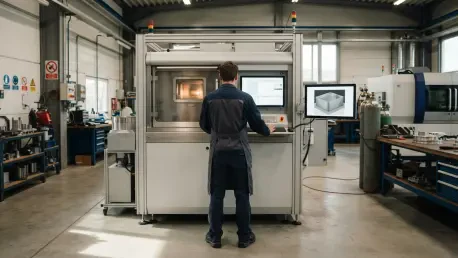
Nikon has engineered the MACHX platform around a philosophy of unified versatility, utilizing a singular architectural foundation for three distinct models: the 450, 450C, and 450E. While these machines feature different build envelopes to accommodate varied industrial needs—from general parts to long automotive components and tall rocket engine chambers—they share identical software and process parameters. This consistency is critical for maintaining quality across a production floor, as it allows for the seamless transfer of operational knowledge between different physical units. The hardware itself is remarkably powerful, offering laser configurations that include up to eight 1 kW lasers or four 2 kW lasers. By standardizing the core technology, Nikon ensures that the complexities of metal 3D printing do not become a barrier to expansion. This architecture allows manufacturers to scale their operations without having to learn entirely new systems for each specific machine, reducing the technical debt often associated with growth.
Industry Resilience: Avoiding the Overspecialization Trap
A central objective of the MACHX rollout is the deliberate avoidance of the overspecialization trap that has historically plagued many Western manufacturing sectors. Some competitors have focused exclusively on niche defense markets, creating highly specialized hardware that lacks broader industrial utility. Nikon’s platform approach counters this trend by ensuring that process expertise developed on one system is immediately applicable to others. This prevents the siloing of technology, where specific advancements are locked within a single industry or machine type. By preserving the inherent flexibility of additive manufacturing, Nikon ensures that its systems remain a disruptive force in the global economy rather than just specialized tools for limited applications. The strategy prioritizes a versatile commercial foundation that can adapt to changing market demands. This prevents the loss of industrial leadership that occurs when a manufacturing base becomes too narrow, fostering a more resilient and multi-faceted production landscape.
Enhancing Economic and Workforce Agility
Training Efficiency: Overcoming the Learning Curve
One of the most persistent hurdles in modernizing industrial production is the immense cost and time required to train a specialized workforce. Traditional additive manufacturing systems often require unique operational logic for every model, creating a fragmented labor pool that is difficult to scale or relocate. The MACHX platform addresses this challenge by providing a consistent software environment and operational interface across the entire lineup. An operator trained on the standard MACHX 450 can transition to the extended 450E with virtually no additional instruction, as the process controls and data management remain identical. This portability of skills is vital for companies attempting to reshore production or rebuild their local industrial bases. By reducing the learning curve, Nikon enables firms to deploy new capacity faster and with lower overhead. This standardization effectively democratizes high-end manufacturing skills, making it easier for new technicians to enter the field and for experienced ones to maximize their output.
Future Adaptability: Pivoting Across Industrial Sectors
Manufacturers found that the ability to pivot between different industrial sectors became a primary driver of long-term stability. The MACHX platform allowed organizations to transition from producing flat automotive structural components to tall aerospace thrust chambers without the need for a total operational overhaul. Decision-makers evaluated these systems based on their capacity to maintain high-performance output while shifting market focus, which proved essential during periods of economic volatility. Strategic investments were directed toward platforms that offered this hybrid flexibility, combining a robust commercial foundation with the precision required for specialized government contracts. Organizations that adopted this standardized approach avoided the pitfalls of technical obsolescence and maintained a competitive edge by keeping their human and technological capital highly mobile. These next steps ensured that every machine on the factory floor contributed to a single, cohesive data ecosystem, fostering a resilient future for metal manufacturing.