
Decoupling software from physical hardware allows manufacturers to modernize their operations while protecting existing investments in legacy applications. This fundamental principle drives the industrial sector’s current transformation from a foundational connected factory model to a sophisticated software-defined manufacturing (SDM) environment. This shift represents the next evolutionary step in the Industrial IoT landscape, moving beyond simple connectivity to the intelligent management of compute resources and data at the edge. The partnership between Cisco and Rockwell Automation focuses on replacing fragmented, hardware-dependent systems with a unified architecture capable of supporting advanced artificial intelligence and real-time analytics. By standardizing these environments, manufacturers can finally overcome the limitations of isolated industrial PCs that have historically hindered scalability. This modernization effort ensures that the factory floor operates with the same agility as a modern cloud-based data center.
Overcoming the Fragmented Nature of Industrial Hardware
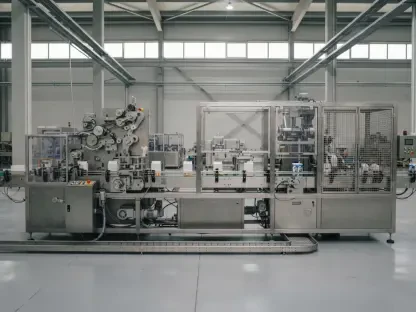
For decades, the manufacturing world prioritized reliability through physical production lines, but this success created a patchwork of aging servers, isolated industrial PCs, and specialized applications that are increasingly difficult to maintain. In traditional setups, each new industrial function typically requires a dedicated piece of hardware, leading to high operational costs and significant complexity for maintenance teams. This hardware-heavy approach creates a cluttered environment where expansion is the only way to introduce new capabilities, which often leads to unsustainable power consumption and physical space constraints. For large-scale producers, this fragmentation prevents the implementation of modern tools like machine vision and real-time data processing across geographically dispersed facilities. Transitioning to a software-defined model allows these companies to consolidate their footprint while maintaining the rigorous uptime standards required by the automotive and food sectors.
The necessity for a more cohesive system is particularly evident when looking at the global manufacturing landscape, where data silos prevent executive leadership from gaining a holistic view of production efficiency. By moving away from a hardware-dependent strategy, organizations can implement standardized security protocols and update cycles across all sites simultaneously. This shift is not merely about replacing physical boxes but about redefining how operational technology interacts with the broader corporate network. The objective is to create a resilient digital thread that connects every sensor, motor, and controller to a centralized management plane. This ensures that a software update in one facility can be replicated across twenty others with a single click, eliminating the need for manual intervention at every site. Such a transition significantly reduces the mean time to repair and allows onsite engineers to focus on process optimization rather than troubleshooting hardware.
Transitioning to Compute-Centric Industrial Architectures
The roadmap for modern manufacturing is being built on nearly twenty years of collaboration between Cisco and Rockwell Automation, which originally focused on merging information technology and operational technology. While previous efforts successfully established a common networking foundation through Converged Plantwide Ethernet, the current era demands a convergence that goes deeper than simple connectivity. The next phase of manufacturing must address how applications are deployed and managed, necessitating a transition from a network-centric view to a compute-centric view. In this model, the factory edge becomes a powerful, manageable data center capable of hosting complex workloads that previously required cloud access. By prioritizing compute at the edge, manufacturers reduce reliance on external data centers, which is critical for maintaining operations in remote areas. This strategy allows for faster decision-making based on local data streams without latency.
A key theme in this architectural transition is the consolidation of workloads onto shared, modular infrastructure through the use of virtualization and containerization. Virtualization allows established software environments to run on virtual machines, preserving legacy applications while removing their dependence on aging hardware that is often no longer supported by vendors. Meanwhile, containerization ensures that newer applications run consistently across multiple factory floors by packaging software with all its necessary dependencies. Cisco Unified Edge serves as the primary platform for this consolidation, allowing IT and OT teams to oversee infrastructure across various locations from a single interface to maximize compute efficiency. This unified management approach simplifies the lifecycle of industrial applications, from initial deployment to long-term maintenance. It also provides a scalable foundation for microservices that can be updated independently.
Harnessing AI Power: GPU-Enabled Edge Infrastructure
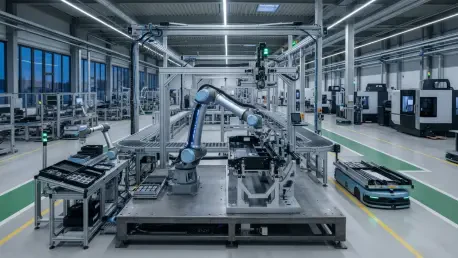
The modernization of compute is a prerequisite for the era of artificial intelligence, as high-performance manufacturing AI requires processing power to be located as close to the production line as possible to minimize latency. The industry is seeing a significant trend toward GPU-enabled edge infrastructure, which provides the specific mathematical processing power needed for demanding AI workloads like deep learning and neural network execution. By bringing AI closer to the point of production, manufacturers can realize high-value use cases that were previously impossible with traditional architectures. This local processing capability ensures that critical safety or quality decisions are made in milliseconds, preventing accidents or the production of defective goods. The integration of high-end graphics processing units directly into industrial switches and compute modules represents a massive leap forward, enabling the factory to think and react in real-time.
By leveraging these advancements, manufacturers can implement predictive maintenance programs that utilize high-frequency data to identify potential equipment failures before they cause expensive downtime. Additionally, high-speed production lines can utilize advanced video analytics to detect microscopic quality defects that are invisible to the human eye, ensuring higher yield and lower waste across the board. Rockwell’s FactoryTalk software portfolio provides the industrial intelligence, while Cisco Unified Edge provides the flexible compute foundation, ensuring that AI can exist alongside existing operational applications without requiring a siloed infrastructure. This synergy is vital for creating a future-proof environment where machine learning models can be continuously refined based on new production data. As these models evolve, the underlying infrastructure can scale its compute allocation dynamically to ensure that critical tasks always have the necessary resources.
Achieving Resilience: Full-Stack Industrial Orchestration
Strategic leaders recognized that the path to operational excellence required a move toward industrial observability, where every aspect of production was visible and adjustable through software. The shared reference architecture developed by Cisco and Rockwell provided a guide for manufacturers to navigate the convergence of networking and automation. Decision-makers implemented these solutions to consolidate legacy hardware and prepared their facilities for advanced machine learning deployments. Engineers utilized unified management interfaces to reduce complexity and standardized security protocols across global sites to mitigate emerging threats. By prioritizing edge compute, organizations ensured that their production lines remained resilient against network outages and data bottlenecks. This transition solidified the role of software-defined architectures as the cornerstone of industrial success, allowing companies to convert raw operational data into intelligence while protecting their investments.