
By establishing live-streaming sales bases and RV camping facilities, Henan aims to extract economic value from every stage of a vehicle’s lifecycle after it leaves the factory. This aggressive strategy marks a point of no return for a province traditionally characterized by its vast wheat fields and central logistics hubs, which is now reinventing itself as the beating heart of the global electric vehicle revolution. As traditional economic pillars like real estate and basic infrastructure construction experience a structural cooling, the regional government has pivoted with surgical precision toward the automotive sector to stabilize its industrial base. The ambition is not merely to participate in the domestic market but to dominate the high-value manufacturing landscape by fostering an environment capable of producing over one million units annually. This metamorphosis represents a seismic shift in the provincial identity, moving from a primary producer of agricultural commodities to a sophisticated high-tech center. By aligning local policy with global decarbonization trends, the province has set the stage for an industrial rebirth that promises to redefine the economic geography of the Central Plains for decades to come, ensuring that the “Made in Henan” label carries a weight of technological prestige and industrial reliability.
Implementing the Action Plan: A Full-Chain Strategic Approach
The roadmap for this industrial overhaul is codified in the Action Plan for Cultivating and Expanding the Automotive Aftermarket, a comprehensive policy framework involving eighteen different provincial departments. This initiative recognizes that the modern automotive industry is no longer just about the assembly line; it is about the entire ecosystem that supports a vehicle from its design to its eventual recycling. By implementing twenty-four specific measures, the province has moved away from a production-only mindset to embrace a “full-chain” philosophy. This shift is designed to create a resilient economic structure that can withstand the fluctuations of the global manufacturing market. The goal is to nurture “anchor” enterprises that act as magnets for secondary and tertiary industries, ensuring that every component of the automotive value chain—from specialized insurance to high-end vehicle modification—is present within the provincial borders. This approach is essential for achieving the economies of scale needed to challenge established coastal manufacturing giants like Shanghai and Guangdong, effectively turning the interior of the country into a formidable competitor for international investment.
A critical geographic component of this strategy is the development of the Zhengzhou-Kaifeng Automobile Industry Belt, which serves as the physical and logistical nerve center for these ambitions. This industrial corridor utilizes the Zhengzhou Airport Economy Zone to create a seamless link between manufacturing plants and global markets, allowing for the rapid export of finished vehicles and the efficient import of specialized components. By concentrating resources in this specific corridor, the province has fostered a dense network of suppliers and assembly units that reduce logistical costs and improve production efficiency. This concentration does more than just facilitate manufacturing; it creates a vibrant ecosystem where technical expertise and innovation can flourish through proximity. The synergy between Zhengzhou’s administrative and logistical power and Kaifeng’s industrial capacity has formed a backbone for the province’s automotive aspirations. This belt is not just a collection of factories but a sophisticated industrial organism that integrates research, high-speed testing, and large-scale assembly into a single, cohesive unit that attracts both domestic innovators and global industry leaders.
Future-Proofing Development: Seizing the New Energy Window
The rapid global transition toward New Energy Vehicles (NEVs) has provided a unique, time-sensitive window for Henan to reconfigure its industrial standing within the national landscape. Economists and industry experts have noted that as the market for electric and hydrogen-powered vehicles reaches maturity, the regional layouts of production capacity will become increasingly rigid, making it nearly impossible for new players to enter the field. Recognizing this, Henan has accelerated its efforts to secure its status as an NEV stronghold before the national industrial patterns become permanent. This urgency is driven by the understanding that the first regions to establish a comprehensive NEV infrastructure and supply chain will naturally become the dominant hubs for the next several decades. By acting now, the province is not just chasing a trend but is actively participating in the fundamental restructuring of the global transport industry. This proactive stance ensures that the region remains at the forefront of the technological curve, preventing the province from being sidelined as older, internal-combustion-based manufacturing hubs struggle to adapt to the new reality.
The necessity of this transition is underscored by the search for new “growth poles” to replace the cooling sectors of the previous decade. The automotive industry is uniquely suited to drive this new era of economic development because of its incredibly long and complex industrial chain. A single vehicle assembly plant requires a supporting network of thousands of specialized parts, which in turn necessitates a vast array of services ranging from software development to specialized logistics and chemical engineering. This “driving effect” creates a massive multiplier for tax revenue and high-quality job creation, offering a stable foundation for the province’s long-term prosperity. As the real estate sector transitions into a more mature and less volatile phase, the automotive industry provides a high-growth alternative that utilizes the province’s existing labor force while demanding the upskilling of its technical workers. This strategic pivot ensures that the provincial economy remains dynamic and capable of supporting a growing middle class, providing a clear path forward for industrial modernization and sustainable economic health in a rapidly changing global environment.
Geographical Mastery: Logistics and Physical Infrastructure
Henan’s central location has been successfully transformed from a geographical characteristic into a profound strategic asset. The development of a “meter-shaped” high-speed rail network has placed the province at the center of China’s internal connectivity, allowing for the rapid movement of personnel and lightweight components. Furthermore, the integration of the China-Europe freight train services has provided a direct terrestrial link to international markets, making the region an ideal base for the global export of electric vehicles. This connectivity is particularly valuable for the automotive sector, where the ability to reach a massive domestic consumer base within a short delivery radius can significantly reduce overhead costs and improve market responsiveness. By leveraging its position as a crossroads for national and international trade, the province has effectively shortened the distance between the factory floor and the final consumer. This logistical advantage is a powerful draw for manufacturers who require high-velocity supply chains to remain competitive in a market where speed to market and distribution efficiency are paramount.
Beyond mere transportation links, the province has committed to the aggressive deployment of the physical infrastructure required to support a modern, electric-powered transport fleet. This commitment is visible in the widespread installation of high-speed charging stations and battery-swapping facilities across all major transit corridors and urban centers. Additionally, the region has pioneered the creation of intelligent connected vehicle test scenarios, providing a real-world laboratory for the development of autonomous driving technologies. By creating this “fertile soil” for smart transport, the province is attracting a new generation of technology companies that specialize in high-tech mobility solutions. This infrastructure-first approach ensures that the region is not just a place where cars are built, but a place where they can be operated and tested at the highest level of technological sophistication. This foresight in planning for the requirements of future mobility has made the province a preferred destination for researchers and developers who need access to comprehensive, state-of-the-art testing environments to refine their latest innovations in smart transport and vehicle-to-everything communication.
Dual Track Growth: Dominating Commercial and Passenger Sectors
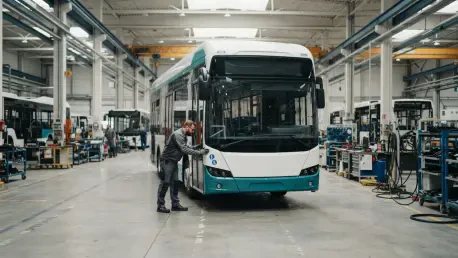
The province possesses a unique “dual-track” industrial structure that sets it apart from other automotive hubs, maintaining a position of leadership in both the commercial and passenger vehicle sectors. This strength is anchored by the presence of Yutong, a global leader in the bus market that has spent years mastering the core technologies of electric propulsion, including advanced battery management and motor control systems. The expertise resident in the commercial sector has provided a deep technological floor that the rest of the provincial industry can build upon. This established foundation has allowed for a smoother transition into the development of new energy trucks and specialized sanitation vehicles, sectors that are increasingly critical for urban sustainability efforts worldwide. By leveraging decades of experience in heavy-duty electric transport, the province has been able to bypass many of the initial hurdles that traditional passenger car manufacturers face when moving into electric mobility. This dual focus ensures that the local industry is diversified and capable of capturing market share across multiple segments of the global automotive market.
Simultaneously, the province has witnessed an incredible rise in passenger vehicle production capacity through strategic partnerships with industry titans like BYD and SAIC. In the Zhengzhou Airport Automobile City, the local supply rate for essential components has already surpassed the fifty percent mark, reflecting a highly integrated and self-sustaining manufacturing ecosystem. Major manufacturers of batteries and specialized parts have established large-scale facilities in close proximity to the main assembly plants, creating a clustering effect that drives down costs and fosters innovation. This transformation from a simple manufacturing enclave into an integrated automotive ecosystem means that the province now captures a much larger share of the total value produced during the vehicle manufacturing process. The presence of these global giants has not only boosted production numbers but has also elevated the quality standards and technical capabilities of local suppliers. This synergy between established commercial vehicle expertise and the rapid scaling of passenger car production has created a balanced and robust industrial profile that is capable of competing at the highest international levels.
Strengthening Local Innovation: Transitioning to Intellectual Ownership
Despite the impressive climb in national production rankings, the primary challenge remains the transition from being a “large” manufacturing center to becoming a “strong” industrial power. Historically, a significant portion of high-value research and strategic decision-making has remained at the headquarters of major manufacturers located outside the province. To counteract this, the regional government has implemented incentives designed to encourage local firms to invest heavily in forward-looking research and development and technical iterations. The goal is to close the innovation gap and ensure that the highest levels of the automotive value chain are rooted in the Central Plains. By fostering an environment where local engineers and designers can lead the development of next-generation vehicle architectures, the province is working to reduce its reliance on external intellectual property. This effort is vital for building a resilient industrial base that is not just a collection of branch plants but a source of original innovation and technological leadership that can define the future of mobility.
Furthermore, the province has recognized the urgent need to develop independent local brands and secure control over the production of critical high-tech components, such as automotive-grade semiconductors. By supporting the growth of domestic software systems and intelligent connectivity solutions, the provincial leadership has worked to reduce the region’s vulnerability to the strategic shifts of multinational corporations. These efforts were designed to ensure that the “Central China” label eventually became synonymous with high-tech, sustainable mobility and independent innovation. In the period leading up to the present, the province successfully established several research centers dedicated to battery chemistry and autonomous navigation, which have already begun to produce patents that are being integrated into new models. These initiatives transformed the industrial landscape into one where local expertise drives progress, allowing the region to dictate its own economic destiny. By focusing on the development of proprietary technology and strong local brands, the province has positioned itself as a permanent and influential leader in the global automotive industry, moving beyond simple assembly to become a center of excellence for the entire world.