
The aerospace sector demands a level of geometric accuracy that pushes the boundaries of traditional machining capabilities, especially when dealing with exotic alloys like titanium and Inconel. For decades, manufacturers struggled to balance the requirement for high-torque material removal with the delicate finishes needed for aerodynamic efficiency, but the arrival of the HU63A-5XT marks a significant shift in this dynamic. This five-axis horizontal machining center integrates a massive cast-iron structure with advanced motion control algorithms to ensure that every pass of the tool remains consistent within microns. Unlike previous generations of machinery, this platform provides the rigidity necessary to achieve final surface requirements in a single setup. By combining high-speed spindle dynamics with a robust pallet system, the machine allows for continuous operation, reducing the cycle times for complex engine components and structural airframe parts that previously occupied multiple work centers.
Engineering Integrity and Mechanical Stability
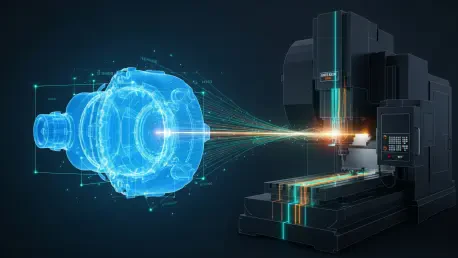
At the core of the HU63A-5XT lies a specialized spindle design that addresses the dual challenges of high-speed finishing and heavy-duty milling within the same operational envelope. Engineers have incorporated a dual-wound motor system that provides peak torque at low revolutions per minute while maintaining the dynamic balance required for high-frequency operations near twenty thousand rotations. This versatility is essential for machining intricate cooling channels in turbine housings where precise tool paths must be maintained despite the varying densities of the workpiece material. Furthermore, the five-axis configuration utilizes a high-torque trunnion table that offers superior positioning accuracy through the use of direct-drive motors and high-resolution encoders. This arrangement eliminates the backlash common in gear-driven systems, ensuring that the transition between axes is seamless and devoid of the micro-stuttering that often plagues contouring tasks.
Thermal management represents another significant hurdle in maintaining aerospace-grade tolerances over long production runs, as even a minor expansion in the machine frame can lead to catastrophic deviations. The HU63A-5XT employs an active cooling circuit that circulates temperature-controlled fluid through the spindle head, the ball screws, and the motor housings to counteract the heat generated during high-intensity milling. By isolating these heat sources from the main cast structure, the machine maintains a stable thermal profile regardless of the ambient shop floor conditions or the duration of the machining cycle. This stability is complemented by a vibration-dampening bed design that utilizes composite materials to absorb the resonant frequencies generated by large-diameter cutters. Consequently, the machine achieves a level of surface finish that rivals specialized grinding equipment, which is a critical advantage when producing components that must withstand the cyclic loading and fatigue typical of jet engine environments.
Strategic Integration: Automation and Workflow Evolution
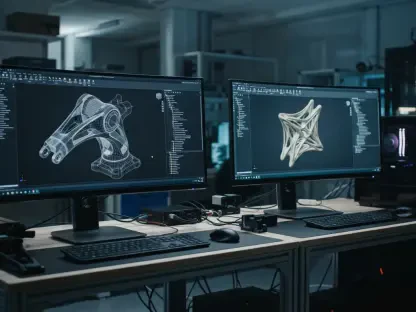
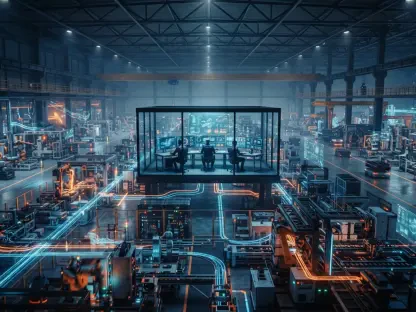
Transitioning from manual oversight to autonomous production cycles is where the HU63A-5XT truly distinguishes itself from its predecessors by leveraging a sophisticated digital twin interface. This system allows operators to simulate every movement of the tool and the workpiece in a virtual environment before a single chip is cut, identifying potential collisions or inefficient tool paths that could waste expensive raw materials. The machine also features an integrated tool management system that monitors wear in real-time, automatically swapping out dull inserts to prevent dimensional drift during the final stages of a critical cut. When paired with a multi-pallet reservoir, the platform functions as a self-contained manufacturing cell capable of running lights-out shifts with minimal human intervention. Such capabilities are indispensable as the aerospace industry looks to scale production of next-generation aircraft from 2026 to 2030, requiring a massive increase in output.
The implementation of the HU63A-5XT across high-end production facilities ultimately provided a blueprint for how manufacturers could bridge the gap between heavy metal removal and ultra-fine precision. By adopting this technology, facilities moved away from fragmented workflows and embraced a more unified approach to component fabrication that prioritized geometric consistency. Engineers discovered that the integration of real-time sensory feedback and rigid mechanical construction allowed for the production of parts that exceeded the safety requirements of global aviation authorities. This shift facilitated a deeper exploration of lightweight materials, as the machine demonstrated an ability to handle difficult-to-cut substances with ease. Strategy focused on the synchronization of thermal compensation data with real-time toolpath adjustments to maintain accuracy. As the industry progressed, these lessons informed the development of more resilient supply chains and efficient propulsion systems.