
The traditional image of a robotic arm relentlessly welding a vehicle chassis in a Detroit assembly line no longer captures the full breadth of the North American automation market as diverse industries begin to assert their dominance. For decades, the automotive sector served as the undisputed engine of robotic innovation and consumption, dictating the pace of development and the specific types of technology that reached the factory floor. However, a significant pivot is occurring in 2026, as sectors ranging from high-tech electronics to retail logistics demand specialized solutions that differ wildly from the heavy-duty machinery found in car plants. This transition marks a fundamental maturation of the industry, where software-defined robots and modular hardware are making automation accessible to businesses that previously lacked the capital or technical expertise to implement them. The result is a more resilient economic ecosystem where vehicle production no longer dictates the total health of the regional robotics sector.
The Shifting Dynamics of Industrial Demand
Automotive Sector: Saturation and Technological Evolution
While the automotive industry continues to be a massive consumer of robotic units, its relative share of the total market has seen a noticeable decline as other sectors outpace its growth rates. Historically, the heavy-duty tasks of spot welding and large-scale assembly provided the primary revenue stream for robot manufacturers, but the market for these specific applications has reached a point of high saturation. In 2026, many of the major car manufacturers have already integrated extensive automation, leading to a shift in demand from new installations to maintenance and software optimization. This cooling of demand in the traditional core has forced robotics providers to look elsewhere, leading to a more competitive and innovative environment. Consequently, the focus has shifted toward high-precision tasks and flexible manufacturing lines that can handle various vehicle models simultaneously, rather than the monolithic lines that defined previous decades of North American production.
Logistics Growth: The New Engine of Automation
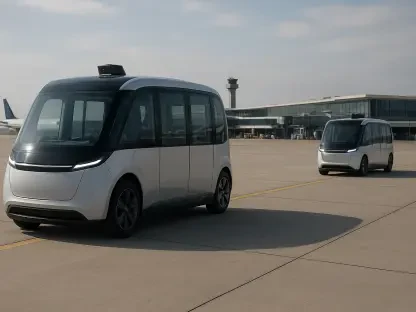
Driven by the relentless demand for rapid delivery, the logistics sector has emerged as a primary driver of robotic sales in North America, surpassing many manufacturing categories in total growth. Warehouse operators are increasingly relying on autonomous mobile robots (AMRs) to navigate complex environments and manage inventory with a level of efficiency that human labor alone cannot achieve. These machines are not stationary; they are dynamic participants in the supply chain that utilize advanced LiDAR and machine learning to avoid obstacles and optimize routes in real-time. In 2026, the deployment of these systems has expanded from massive fulfillment centers to smaller, localized urban delivery hubs. This shift represents a democratization of robotics, where even mid-sized retail operations can justify the investment in automation to remain competitive. The scalability of these logistics solutions has provided a stable counterweight to the cyclical nature of industrial manufacturing.
Innovation Beyond the Factory Floor
Medical and Food Sciences: Precision and Sanitation
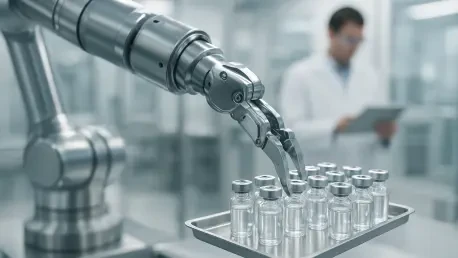
Beyond the warehouse and the factory floor, the life sciences and pharmaceutical sectors have become vital frontiers for robotics, demanding levels of precision and cleanliness that exceed the requirements of traditional industrial settings. In 2026, lab automation has progressed to the point where robots handle sensitive biological samples and perform high-throughput screening with minimal human intervention. These systems are designed with specialized materials that can withstand rigorous sterilization processes, making them indispensable in sterile environments. The growth in this sector is fueled by the need for faster drug discovery and the production of personalized medicines, which require the handling of unique chemical combinations at high speeds. Unlike the automotive industry, the pharmaceutical sector prioritizes repeatability and the elimination of cross-contamination. As North American biotech firms continue to expand, their reliance on these specialized robotic platforms is expected to grow.
Strategic Directions for an Automated Future
In recent years, the transition from an automotive-centric market to a diversified automation ecosystem served as a defining feature of the North American industrial landscape. Organizations that embraced flexible, software-driven platforms found themselves better equipped to handle the rapid shifts in consumer demand that characterized the mid-2020s. Business leaders identified the integration of edge computing and 5G connectivity as the best way to enhance the real-time processing capabilities of their robotic fleets. Investing in cross-functional training for the existing workforce became essential, as the role of human employees shifted from manual labor to the supervision of intelligent systems. Furthermore, adopting a Robotics-as-a-Service model provided a sustainable way for businesses to scale their automation efforts without the burden of heavy upfront capital expenditures. This shift effectively lowered the barrier to entry for smaller firms and ensured a competitive future.