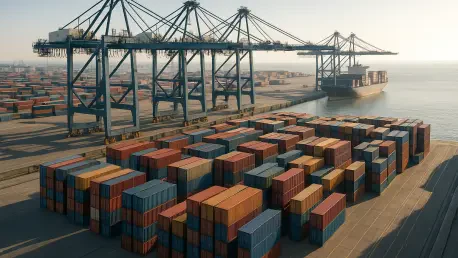

The intricate machinery of international commerce ground to a sudden and jarring halt as a massive new wave of import duties swept across the borders of sixty different nations just minutes after the previous protectionist framework had officially expired. This transition occurred with calculated precision, leaving global logistics managers and commodity traders scrambling to reconcile their balance sheets against a new reality of 10% to 12.5% levies. It was a trade shift executed not through a gradual phase-in, but through a definitive policy strike designed to ensure that the cost of entry into the American market remained high. The immediate impact rippled through supply chains from the manufacturing hubs of Southeast Asia to the agricultural heartlands of the South Pacific, marking one of the most significant reconfigurations of trade policy in recent memory.
At the center of this upheaval is a fundamental reevaluation of how the United States balances its economic interests with its commitment to human rights. The administration’s decision to penalize sixty distinct economies stems from a sweeping investigation into alleged failures to prevent forced labor within global supply chains. By leveraging labor standards as a justification for new duties, the federal government has effectively opened a new front in the ongoing debate over economic protectionism. This maneuver followed a critical legal defeat at the Supreme Court, which had stripped the administration of its previous ability to maintain certain trade barriers. Consequently, the new tariff structure serves both as a moral statement against modern slavery and as a strategic legal workaround to preserve domestic industrial advantages.
The Sudden Friday Morning Trade Shock
The timing of the announcement was far from accidental, as officials chose to unveil the new duties just as the clock ran out on the “Liberation Day” tariff structure. This tactical move ensured there was no “free trade” window during which importers could rush goods into the country at lower rates. By closing the door at the exact moment the previous policy lapsed, the government signaled its intent to maintain a continuous wall of duties, regardless of the shifting legal justifications required to support them. Port authorities reported a flurry of activity in the final hours, but for many vessels still at sea, the cost of their cargo increased by millions of dollars before they even reached the horizon.
Economic observers noted that the 10% to 12.5% duties were specifically calibrated to disrupt high-volume trade without completely severing diplomatic ties. However, the sheer breadth of the target list—encompassing 60 different economies—sent shockwaves through the financial markets. The suddenness of the shift meant that contracts signed under the old pricing regime were suddenly underwater, forcing many firms to declare force majeure or scramble for emergency financing. This strategic execution was designed to prevent any erosion of the domestic market’s protective shell, reinforcing the idea that the U.S. consumer market is a privilege that comes with a specific, and now higher, price tag.
Economic Frontiers: Why Labor Standards Shape Trade Policy
The U.S. Trade Representative (USTR) spent four months conducting a deep dive into the labor practices of global partners, focusing on the dark reality of modern slavery that often hides behind low production costs. The resulting investigation concluded that existing enforcement mechanisms in many of these nations were woefully insufficient to prevent the infiltration of forced labor into exports destined for American shores. While the official goal was to eliminate the competitive advantage of goods produced through exploitation, the policy also reflects a broader shift toward using human rights as a primary tool for economic leverage.
This transition from traditional trade wars to labor-focused protectionism was accelerated by domestic legal challenges. When the Supreme Court ruled against previous iterations of trade barriers, the administration was forced to find a more legally resilient foundation for its policies. By tying tariffs to the Tariff Act of 1930 and modern anti-slavery statutes, the government created a framework that is much harder for corporations to challenge on purely economic grounds. This pivot has successfully reframed the debate from a question of market competition to one of moral and legal compliance, effectively making labor standards the new frontier of global economic warfare.
Global Impact: Analyzing the 12.5 Percent Duties
The 12.5% duties fell unevenly across the map, creating a complex mosaic of economic winners and losers that challenged long-standing alliances. Australia, a stalwart security partner, expressed profound frustration as its exports of beef, gold, and copper were hit by the same rates as its non-allied competitors. Trade Minister Don Farrell labeled the move as “completely unjustified,” pointing to Australia’s own rigorous anti-slavery protocols as evidence that the tariffs were more about market control than labor rights. In New Zealand, Prime Minister Christopher Luxon echoed this sentiment, lamenting the lack of meaningful evidence presented to justify the sudden increase in costs for Kiwi exporters.
In Southeast Asia, the reaction was more varied, as some nations managed to carve out specific niches of protection. Thailand, for instance, faces the new duty but noted that over 2,120 specific items—representing more than half of its total export value—received exemptions. This nuanced approach suggests that the U.S. is still willing to use surgical strikes rather than blanket bans. Meanwhile, in China, the response was a mix of defiance and strategic adaptation. Manufacturers in Dongguan, sensing a permanent frost in U.S. relations, have already begun abandoning the American market in favor of Europe. For these firms, the 12.5% rate was simply the final push toward a total diversification strategy that avoids the volatility of Washington’s policy shifts.
Legal Challenges: Expert Perspectives on Trade Barriers
The implementation of these tariffs has invited immediate legal and political opposition within the United States, centered on the legitimacy of the “forced labor” justification. The Liberty Justice Center, a libertarian advocacy group, has already filed a lawsuit in the U.S. Court of International Trade, arguing that the administration is using labor standards as a “pretext” to bypass the Supreme Court’s prior rulings. Their argument hinges on the idea that the government is essentially rebranding the same protectionist policies under different statutes to avoid judicial oversight. If successful, this lawsuit could dismantle the legal scaffolding of the current trade regime and force a return to more traditional, and limited, tariff authorities.
Trade expert Wendy Cutler provided a more nuanced perspective, noting that these new measures might be harder to overturn in court because they were preceded by a formal and documented USTR investigation. Unlike previous broad-brush tariffs, these duties are linked to specific investigative findings that give them a veneer of administrative legitimacy. However, the divide in Washington remains sharp. Lawmakers like Representative Linda Sanchez have questioned the fairness of taxing democratic allies like Australia at the same rate as nations with documented human rights abuses. Furthermore, concerns about inflation continue to mount, as critics point out that these “disastrous tariff schemes” inevitably drive up the cost of living for American families by making essential machinery and consumer goods more expensive.
Manufacturing Shifts: Navigating the New Tariff Landscape
In response to this volatility, global manufacturers have initiated a massive effort to diversify their export destinations and audit their own supply chains. Proactive companies began implementing rigorous anti-slavery protocols not just to meet moral standards, but to secure the documentation necessary to apply for future tariff exemptions. As they identified “safe” product categories that remained outside the current USTR crosshairs, these firms also began long-term planning for the next wave of expected duties. Many prepared for a future where “structural excess capacity” would become the next target for trade enforcement, moving their investments away from heavy machinery and toward high-tech sectors that currently enjoy more favorable trade status.
The administration successfully navigated the immediate legal challenges by framing the duties as a necessary response to global labor abuses, even as the diplomatic fallout continued to spread across multiple continents. Stakeholders eventually recognized that the era of predictable, low-cost global trade had effectively ended, giving way to a more fragmented and values-based economic system. The strategy focused on forcing a global rethink of supply chain ethics, regardless of the inflationary pressures it placed on domestic consumers. Ultimately, the actions taken on that Friday morning signaled that the United States was prepared to use every available lever to reshape the international order to its own specifications, ensuring that the cost of doing business would forever be linked to the standards of the labor behind the product.