
Hexagon’s new HYPERSCAN SR utilizes WiFi 6 technology to provide wireless optical tracking, enabling high-mobility 3D scanning in demanding environments like construction and energy sites. This breakthrough is merely one highlight from the 2026 International Manufacturing Technology Show (IMTS), where more than 90,000 attendees gathered across 1.1 million square feet at Chicago’s McCormick Place to witness a historic shift in industrial production. For the first time, additive manufacturing companies have moved from the periphery of the exhibition into the main halls, standing shoulder-to-shoulder with traditional metal removal and subtractive machining giants. This physical repositioning reflects a broader industry consensus that 3D printing has transitioned from a specialized prototyping tool into a critical, permanent component of the modern factory floor. As the digital and physical worlds continue to converge, the presence of artificial intelligence and advanced robotics has become the glue that binds these disparate technologies into a unified, high-performance manufacturing ecosystem capable of meeting the rigorous demands of 2026 and beyond.
The Digital Thread: AI-Driven Metrology and Reverse Engineering
Bridging Data Gaps with Intelligent Scanning
Modern manufacturing operations frequently encounter the challenge of maintaining legacy machinery or repairing critical components that lack original digital blueprints. At the current exhibition, companies such as Hexagon and Artec 3D have demonstrated that the “Scan to CAD” workflow is no longer a labor-intensive hurdle but a streamlined, intelligent process. Hexagon’s integration of Geomagic DesignX software allows operators to capture complex point clouds and instantly process them into functional polygon meshes with a single click. This capability enables engineers to model directly on top of scanned meshes within native environments like SOLIDWORKS, effectively removing the friction that once defined reverse engineering. By creating a seamless digital thread, manufacturers can now reproduce broken or obsolete parts with a degree of precision that ensures perfect fitment and performance, significantly extending the operational lifespan of existing industrial infrastructure without the need for original manufacturer support.
Furthermore, Artec 3D has pushed the boundaries of field-ready inspection with the introduction of the Artec Neo, a structured light scanner that employs tolerance-driven 3D scanning. This hybrid technology allows users to apply physical scan targets only to critical functional features where micron-level precision is required, while leveraging AI-driven color and texture tracking for the remainder of the component. The result is a volumetric accuracy as high as 0.025 mm achieved in a fraction of the time required by traditional methods. This intelligent allocation of resources ensures that metrology teams can maintain high throughput during inspection cycles without sacrificing the accuracy needed for mission-critical aerospace or medical parts. By blending the flexibility of target-free scanning with the rigor of target-based precision, these systems represent a significant leap in the ability of manufacturers to validate complex geometries in real-time.
Empowering the Connected Worker Through AI
The concept of the “Connected Worker” has taken center stage as industrial environments become increasingly data-heavy and complex. Hexagon’s newest platform leverages Large Language Models to digitize what were once paper-based or tribal-knowledge-dependent factory operations. By integrating these AI systems directly into the shop floor interface, operators can interact with their machinery using natural language, much like they would consult a human supervisor. This allows for real-time troubleshooting; when a machine presents an error code or a quality deviation occurs, the AI can cross-reference the organization’s specific data libraries and provide an immediate, actionable solution. This shift is not focused on replacing the workforce but on reducing the steep learning curves associated with 2026-era advanced manufacturing, thereby enhancing overall safety and operational productivity.
In the specialized field of quality inspection, the role of artificial intelligence has moved toward a more rigorous and reliable model of decision-making. Manufacturers are now utilizing AI systems that have been extensively trained on massive datasets of “good vs. bad” parts to automate the detection of structural flaws that are invisible to the naked eye. This ensures that the high-speed production enabled by additive manufacturing is matched by equally rapid and accurate quality assurance protocols. Hexagon emphasized that the reliability of these systems depends on the architecture of the data they access, highlighting a move toward closed-loop data environments where the AI learns specifically from the unique tolerances and material behaviors of a single facility. This level of customization ensures that the AI serves as a precision tool for the operator, providing a second layer of defense against manufacturing defects in high-stakes industries like energy and defense.
Functional Additive Manufacturing in Aerospace and Defense
Rapid Production for Unmanned Aerial Systems
The drone industry has rapidly become the most prominent beneficiary of high-performance polymer 3D printing, a trend clearly visible in the collaboration between EOS and leading UAV developers. At this year’s show, EOS demonstrated the startling speed of modern additive manufacturing by producing 180 components for the Glaive Attack Drone and the Quantum Systems Counter-UAS Interceptor in a single twelve-hour window. This feat highlights the fundamental advantage of 3D printing over traditional injection molding, which would require weeks for tooling and fabrication. Beyond sheer speed, the technology allows for “conformal ribbing” within drone wings—an advanced internal structural design that enables walls as thin as 0.4mm while maintaining the rigidity necessary for high-speed flight. This ability to maximize the strength-to-weight ratio is crucial for UAVs designed to break world records or operate in high-threat environments where maneuverability is paramount.
Building on these advancements, the integration of 3D printing into the defense supply chain has fundamentally altered how mission-ready equipment is deployed. By moving away from centralized mass production and toward localized, rapid-response manufacturing, defense contractors can iterate designs in real-time based on field data. The components displayed at the exhibition showcase how complex internal geometries, such as cooling channels and integrated electronics housings, can be printed as a single monolithic structure. This reduces the number of assembly steps and potential points of failure, creating more resilient systems. As the demand for specialized, low-volume aircraft continues to grow from 2026 to 2030, the reliance on these rapid polymer and composite printing techniques is expected to become the industry standard for both tactical advantages and logistical efficiency.
Humanitarian and Industrial Scaling of Drone Technology
While defense applications often capture the headlines, the current exhibition has also spotlighted the significant impact of “drones for good” through HP’s Multi Jet Fusion technology. HP’s drone-focused division has expanded significantly over the last few years, driven by the need for airframes that are as light as foam but possess the structural durability of high-grade plastics. In South Africa, these 3D-printed fixed-wing drones are being utilized for anti-poaching surveillance, where they must survive extreme heat and harsh landings. The modular nature of the Multi Jet Fusion process allows for a revolutionary approach to maintenance; if a wing or fuselage section is damaged during a remote operation, a replacement part can be printed and installed individually. This prevents the costly and wasteful practice of discarding an entire airframe due to a single localized failure, making long-term environmental monitoring more sustainable.
The reach of this technology extends further into the medical and environmental sectors, where specialized UAVs are performing tasks that were once considered impossible. Medical delivery drones are now being used to transport blood and emergency supplies to accident sites in remote areas, leveraging the customizability of 3D printing to create specialized cargo pods that maintain temperature control. Similarly, drones equipped with advanced sensors are monitoring rainforest deforestation and tracking tuna populations with unprecedented accuracy. These applications demonstrate that the maturity of additive manufacturing in 2026 lies in its ability to solve logistical challenges in the most demanding environments on Earth. By providing a scalable, modular, and durable manufacturing solution, technologies like MJF are enabling a new era of humanitarian and industrial service that prioritizes rapid deployment and environmental resilience.
Industrial-Scale Robotics and Autonomous Systems
Large-Format Manufacturing and Metal Deposition
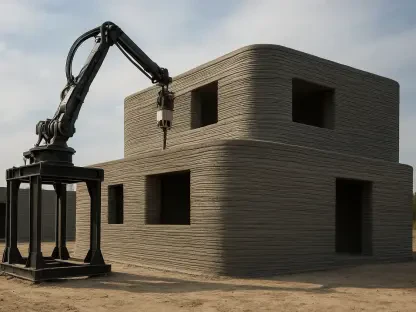
The intersection of high-payload robotics and additive manufacturing has birthed a new class of machines capable of producing massive components for heavy industry. Caracol’s Heron and Vipra systems represent the cutting edge of this movement, offering robotic platforms that can handle everything from composite printing for large-scale construction supports to metal Directed Energy Deposition. These systems are designed to bridge the gap between material types, allowing manufacturers in the maritime and aerospace sectors to produce parts that were previously restricted by the physical dimensions of traditional 3D printer build envelopes. By utilizing a robotic arm as the movement system, these platforms provide nearly unlimited geometric freedom, enabling the creation of large-scale molds, tools, and end-use parts that would otherwise require expensive and time-consuming casting or forging processes.
As these robotic systems evolve, they are increasingly being applied to highly regulated industries that demand extreme material integrity. The Vipra system, for instance, is being utilized to print high-strength metal alloys for the energy sector, where large-scale components must withstand high pressure and corrosive environments. The move toward robotic Directed Energy Deposition allows for the addition of material onto existing parts, facilitating high-end repair and remanufacturing processes that were previously impossible. This capability is transforming how large-scale infrastructure is maintained, as it allows for the “up-cycling” of worn industrial components rather than their total replacement. This approach not only saves significant costs but also aligns with the global push for more sustainable industrial practices by reducing the raw material and energy consumption associated with traditional heavy manufacturing.
Closed-Loop Manufacturing and Self-Healing Software
A defining characteristic of the manufacturing landscape in 2026 is the emergence of “self-healing” software suites that provide autonomous control over the printing process. Caracol’s Eidos Manufacturing Software Suite exemplifies this trend by integrating real-time AI analytics that compare the physical progress of a print to its original digital twin. If the system detects a defect, such as a localized cooling error or a material deviation, the AI can make instantaneous decisions to adjust the parameters of the next layer to compensate for the mistake. This closed-loop approach effectively creates a manufacturing environment where the machine monitors itself, drastically reducing the rates of scrap and downtime. For manufacturers working with expensive aerospace-grade alloys or complex composites, this level of autonomous quality control is essential for ensuring the economic viability of large-scale production.
This shift toward autonomous manufacturing extends beyond simple error correction and into the realm of predictive optimization. By analyzing data across thousands of hours of operation, these AI-driven systems can anticipate potential failures before they occur, suggesting maintenance or parameter shifts that prevent production halts. This transition from reactive to proactive manufacturing is fundamentally changing the role of the machine operator, who now functions more as a fleet manager overseeing a group of intelligent systems. As these technologies continue to mature from 2026 into the late 2020s, the goal is to create a fully “lights-out” manufacturing environment where the digital twin and the physical machine are in constant, perfect synchronization. This evolution ensures that the highest standards of precision and consistency are met, even when producing the most complex and demanding industrial components.
Specialized Metal Processes and Material Innovation
Precision Engineering with Functionally Graded Materials
In the current era of metal additive manufacturing, the focus has shifted from merely creating complex shapes to the precise control of material properties at the molecular level. FormAlloy has emerged as a leader in this field through the development of functionally graded materials using Directed Energy Deposition. Unlike traditional manufacturing, which relies on a single alloy for an entire component, FormAlloy’s technology allows engineers to blend different metal powders in real-time during the build process. This enables the creation of parts like “blisks” for jet engines, where the center of the disk can be optimized for structural toughness while the outer blades are composed of a different alloy optimized for extreme heat resistance. This ability to tailor material properties to specific environmental stresses within a single part represents a monumental shift in engineering capabilities.
The success of these graded material processes has led to significant expansion and adoption by the highest levels of the defense and maritime sectors. Recent contracts with the US Navy and the Defense Innovation Unit underscore the strategic importance of being able to print multi-functional materials that can survive the world’s most hostile conditions. FormAlloy’s recent move to a 24,000 square foot facility reflects the surging demand for components that are lighter, stronger, and more specialized than anything possible through traditional casting or forging. As we look at the trajectory from 2026 to 2028, the ability to “print materials” rather than just “print shapes” will likely be the primary differentiator for high-end aerospace and defense contractors seeking to maintain a competitive edge in performance and durability.
Scaling the Extremes of Metal Printing
The market for metal 3D printing is currently bifurcating into two distinct extremes: ultra-precise micro-manufacturing and massive, multi-laser industrial systems. At the micro-scale, Aixway3D, a spinout from the Fraunhofer ILT, has pioneered Micro-Laser Powder Bed Fusion, which achieves micron-level accuracy and wall thicknesses as thin as 30 µm. This level of precision is revolutionizing the medical device industry, where it is used to create incredibly complex components for endoscopes, stents, and surgical forceps that were previously impossible to manufacture using traditional micro-machining. By offering the ability to produce intricate, high-strength medical geometries, micro-metal printing is setting a new standard for minimally invasive surgical tools and personalized medical implants that require perfect biocompatibility and structural integrity.
At the other end of the spectrum, companies like Canmora Tech are addressing the challenges of manufacturing meter-scale metal parts for the naval and energy sectors. Their unique Laser Electron Additive Manufacturing platforms utilize a fixed build plate while moving the powder tank, an architecture that provides the stability necessary for parts weighing hundreds of pounds. By utilizing up to 36 individual lasers that remain perfectly perpendicular to the powder bed, these systems ensure uniform material properties across massive surface areas, overcoming the distortion issues that plague traditional galvanometer-based systems. This scalability allows for the rapid production of large-scale industrial components, such as turbine housings and pressure vessels, that once required months of lead time. These dual advancements at both the micro and macro levels demonstrate that metal additive manufacturing is now capable of meeting the full range of industrial needs, from the smallest surgical tool to the largest naval component.
The Evolution of the Integrated Industrial Landscape
Hybrid Workflows and the End of Isolation
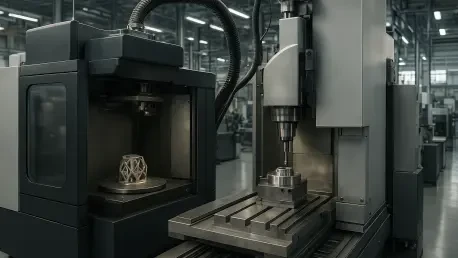
The most significant takeaway from the events at McCormick Place is that additive manufacturing has finally shed its reputation as a standalone technology. In 2026, the industry has embraced a hybrid workflow where 3D printing is integrated directly into the machine shop alongside CNC mills, lathes, and grinders. This synergy allows manufacturers to leverage the geometric freedom of additive processes to create “near-net” shapes that are then finished using traditional subtractive methods to achieve the tightest possible tolerances and superior surface finishes. This approach combines the best of both worlds, reducing material waste by up to 90% compared to traditional “billet-to-part” machining while maintaining the high-speed production and precision required for critical aerospace and automotive components. The era of the isolated 3D printing lab is over; it has been replaced by a unified production line where every tool is chosen for its specific strengths.
This integration is further supported by a unified digital thread that manages the entire lifecycle of a part, from initial design through printing, machining, and final inspection. Software platforms now allow for the seamless transition of data between different types of machinery, ensuring that the original design intent is maintained throughout the various stages of production. As manufacturers adopt these hybrid strategies, the focus has shifted toward optimizing the entire value chain rather than individual manufacturing steps. This has led to the creation of more resilient and flexible supply chains, where a single facility can quickly pivot between different products and materials without the need for extensive re-tooling. By 2027, the standard for a world-class manufacturing facility will be defined by its ability to fluidly navigate these hybrid workflows, ensuring maximum efficiency and innovation in a rapidly changing global market.
Actionable Strategies for an AI-Driven Future
The current state of manufacturing as seen at IMTS suggests that companies must immediately prioritize the digitization of their physical assets and the training of their workforce to interact with AI-driven systems. Transitioning to a “Scan to CAD” and “Connected Worker” model is no longer an optional luxury but a necessary step for maintaining competitiveness and operational continuity. Manufacturers should look to integrate wireless metrology and AI troubleshooting tools to empower their existing staff and bridge the skills gap that has historically slowed the adoption of advanced technologies. By investing in these digital foundations now, organizations can ensure they are prepared for the continued evolution of autonomous, self-healing production systems that will dominate the landscape from 2026 into the next decade.
Furthermore, the adoption of functionally graded materials and large-scale robotic additive systems offers a pathway to solving complex engineering challenges that traditional methods cannot address. Executives and engineers should evaluate their product portfolios to identify where material tailoring or near-net shape printing could reduce costs and improve performance. As manufacturing becomes more localized and sustainable, the ability to produce high-performance, mission-critical components on-demand will be the hallmark of industry leaders. The transition observed at this year’s show was a definitive move toward a future where AI, robotics, and 3D printing are the standard pillars of industrial production, providing the tools necessary to build a more efficient and capable world. Organizations that successfully navigate this shift will be well-positioned to lead the next era of global manufacturing excellence.