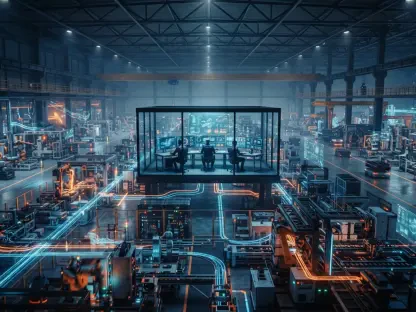

The Australian manufacturing landscape underwent a radical transformation as traditional subtractive methods were systematically replaced by the precision and design flexibility of advanced metallic additive manufacturing technologies. Lab22, established by CSIRO, emerged as the central pillar of this industrial evolution, serving as a critical bridge between high-level research and commercial application. As the global 3D printing market approaches a staggering $10 billion valuation, this facility acts as a catalyst for economic growth, enabling local firms to shed outdated production habits in favor of agile, software-driven methods. The transition represents more than just a change in machinery; it signifies a complete overhaul of how engineers conceptualize physical products. By providing a collaborative ecosystem, Lab22 ensures that Australian businesses remain competitive on the international stage while fostering a domestic culture of high-tech innovation and sophisticated engineering.
Industry Transformation: Empowering Local Businesses through Additive Innovation
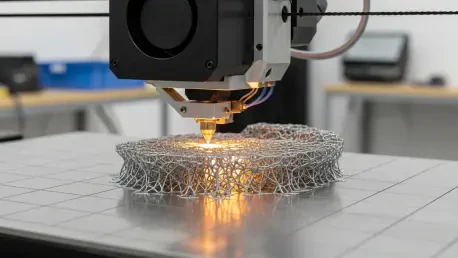
Transitioning away from subtractive manufacturing marks a departure from techniques where large blocks of material were carved, milled, or drilled to reach a final shape. In contrast, the additive approach employed at Lab22 constructs components layer by layer, utilizing fine metal powders fused by high-intensity energy sources. This fundamental change offers engineers unparalleled design freedom, making it possible to create intricate internal lattices and complex organic geometries that were previously impossible or prohibitively expensive to manufacture. Such capabilities allow for the consolidation of multiple parts into a single, cohesive unit, which reduces both the weight of the final product and the potential points of mechanical failure. For industries where every gram matters, such as aerospace and high-speed rail, these advancements represent a paradigm shift in performance standards. The ability to place material only where it is structurally necessary optimizes resource usage while pushing boundaries.
Since its inception, the facility has welcomed thousands of industry professionals and entrepreneurs, providing a point of entry for small and medium-sized enterprises that otherwise lack the capital to invest in multi-million dollar equipment. By democratizing access to top-tier 3D printing hardware and metallurgical expertise, Lab22 allows these smaller firms to experiment with rapid prototyping without the financial risks associated with full-scale industrial procurement. This hands-on environment fosters a unique learning curve where business owners can validate their designs under the guidance of world-leading scientists. The result is a more resilient manufacturing sector where the barrier to entry for high-precision metalwork has been significantly lowered. As companies move through the pilot phases of production, they gain the confidence to integrate these advanced technologies into their own permanent workflows. This systematic support network ensures that the Australian industrial base thrives by leading in specialized production.
Production Efficiency: Advanced Machinery and Streamlined Supply Chains
The technical infrastructure consists of a sophisticated suite of machinery, including high-powered laser powder bed fusion systems and electron beam melters capable of processing diverse alloys. Unlike the sprawling factories of the previous century, this facility functions more like a sterile laboratory environment where precision is the primary metric of success. Every stage of the process, from digital modeling to post-processing, is monitored with extreme accuracy to ensure metallurgical integrity. This modern approach also results in a dramatic reduction in material waste and energy consumption during fabrication. Conventional machining often sees up to eighty percent of raw material ending up as scrap metal, whereas additive methods utilize only the powder required for the part. This efficiency translates directly into lower production costs for high-value components, making the technology increasingly attractive for commercial ventures looking for a sustainable footprint while simultaneously improving their bottom line.
Collaborative efforts with global leaders have demonstrated that 3D printing can fundamentally reorganize and simplify complex supply chains in high-stakes sectors like defense. Major partners, such as the Thales Group, have used the facility to explore how on-demand manufacturing can replace massive inventories of spare parts. Instead of waiting weeks for a specific component to be shipped, organizations can now print the required part directly from a digital file, reducing logistics overhead and downtime. The acceleration of development cycles is further illustrated by companies like Albins, which have successfully slashed prototyping timelines from several months to just a few weeks. In the fast-paced world of performance engineering, the ability to rapidly iterate on a design is a massive competitive advantage. Rather than waiting for custom molds, engineers can send a new design to the printer in the morning and have a functional metal prototype ready for evaluation within a few days of starting the project.
Specialized Innovation: Personalized Medical Solutions and Academic Integration
Within the biomedical sector, the impact of metallic 3D printing is profoundly personal, as it enables the creation of medical devices and implants tailored specifically to an individual’s unique anatomy. Partnerships with innovative firms like Oventus and OMX Solutions have pioneered the use of custom-printed surgical tools and titanium implants that fit patients with a level of precision that off-the-shelf components simply cannot match. This degree of personalization significantly improves surgical outcomes, reduces recovery times, and enhances long-term comfort. Beyond the operating room, this drive for personalization extends into high-end consumer markets, where custom-engineered products offer a performance edge for elite athletes. Specialty sports brands have produced high-performance titanium bicycle components that are optimized for both weight and structural rigidity based on the rider’s specific requirements. This move toward high-value, niche manufacturing allows local businesses to compete by focusing on customization.
The integration of academic research with commercial production frameworks provided a sustainable roadmap for modernizing the national industrial sector. Academic institutions and private enterprises synchronized their efforts to turn scientific discoveries into high-value intellectual property, such as proprietary software and new alloy formulas. This bridge between theory and practice allowed businesses to move beyond simple fabrication to lead in high-tech innovation. Strategic decisions focused on re-skilling the workforce and securing domestic supply chains against global volatility through localized production nodes. Those who successfully adopted these insights achieved systemic improvements in operational efficiency and product performance. Moving forward, stakeholders prioritized the refinement of automated post-processing and expanded multi-material capabilities. By treating additive manufacturing as a holistic digital ecosystem, the manufacturing community ensured that technological gains were solidified into a permanent competitive advantage.