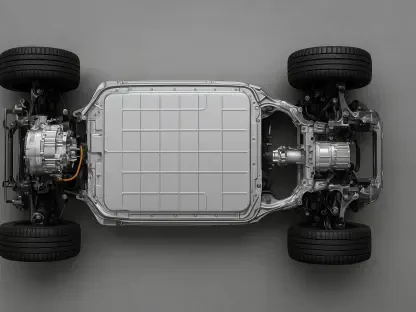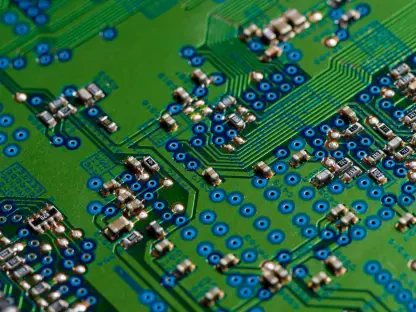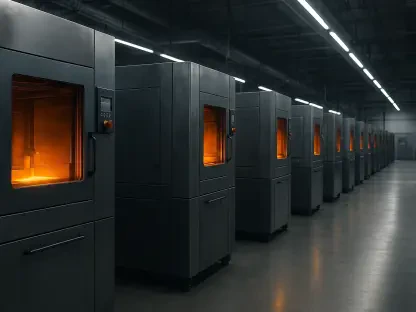

Traditional factories are being replaced by shared-use research environments that bridge the gap between theoretical material science and shop-floor application. This transformation represents a departure from the twentieth-century model of massive, static assembly lines toward a more agile and data-driven approach. The United States currently faces a critical turning point where the revitalization of its industrial base is not just an economic preference but a matter of national security. As domestic production of critical electronics and printed circuit boards remains significantly lower than global demand, the necessity for high-tech intervention has never been more urgent. Modern industrial policy now emphasizes the creation of smart ecosystems that can quickly pivot to meet changing market needs or defense requirements. By prioritizing the integration of advanced sensors and intelligent systems, the manufacturing sector is fostering a new era of resilience that protects against global supply chain shocks.
The Technological Evolution of the Factory Floor
Collaborative Systems: Moving Beyond Automation Myths
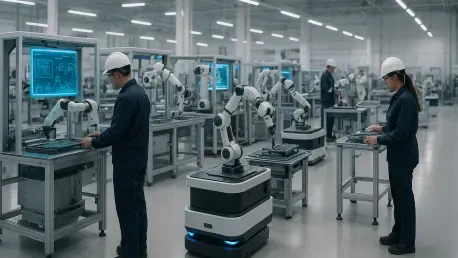
The vision of a fully automated factory that operates entirely without human oversight, often called a lights-out facility, has largely given way to a more practical and effective reality known as the lighthouse factory. These centers serve as beacons of technological integration where artificial intelligence and autonomous mobile robots work in concert with highly skilled human operators. This model acknowledges that while machines excel at repetitive precision and data processing, humans are irreplaceable when it comes to creative problem-solving and handling unpredictable variables. Consequently, the focus has shifted toward augmentation rather than total replacement. By equipping workers with wearable technology and augmented reality interfaces, companies are increasing individual productivity while reducing physical strain. This collaborative environment ensures that the workforce remains engaged and essential, even as the machines they operate become more capable and sophisticated.
Implementing these collaborative systems requires a fundamental shift in how facility layouts are designed and managed. Instead of fixed conveyor belts that lock a plant into a single product line, modern floors utilize autonomous mobile robots to shuttle components between flexible workstations. This modular approach allows for rapid reconfiguration, enabling a factory to switch between different product types in a fraction of the time previously required. Centralized digital control systems oversee this dance of machinery, providing a bird’s-eye view of every process and bottleneck. This level of transparency means that supervisors can make informed decisions based on live data, rather than relying on end-of-shift reports. As these systems become more prevalent, the traditional divide between blue-collar labor and white-collar management begins to blur, as everyone on the floor must be comfortable interacting with complex digital dashboards and robotic systems.
Physical AI: The Power of Localized Decision-Making
A critical component of this technological evolution is the rise of physical AI, which moves machine learning from remote cloud servers directly into the industrial equipment on the shop floor. This localized processing power allows for real-time decision-making that occurs in milliseconds, providing a level of responsiveness that human reaction times cannot match. When a machine can sense a minute change in vibration or temperature, it can adjust its own parameters instantly to prevent a defect from occurring. This capability is particularly vital when working with advanced materials like superalloys or high-performance ceramics, where even a slight deviation in heat or pressure can ruin an entire batch. By embedding intelligence at the edge, manufacturers are drastically reducing the amount of waste generated during production. This shift not only improves the bottom line but also enhances the overall sustainability of the process by minimizing the energy and raw materials consumed per unit.
The integration of physical AI also extends to quality assurance, where high-speed cameras and acoustic sensors monitor production cycles with superhuman precision. Instead of waiting for a part to be finished and inspected manually, the system can flag a potential issue while the part is still being formed. This proactive approach to maintenance and quality control is transforming the reliability of domestic manufacturing. Equipment can now predict its own failure points, scheduling maintenance before a breakdown occurs and avoiding costly unplanned downtime. Furthermore, these intelligent systems gather massive amounts of data that can be used to refine designs for future iterations. This feedback loop between the physical product and the digital model creates a continuous cycle of improvement. As American factories adopt these tools, they are developing a competitive advantage based on quality and efficiency that offsets the lower labor costs found in other regions globally.
Research Integration: Bridging the Lab and Shop Floor
Facilities like the Georgia Tech Manufacturing Institute and its Advanced Manufacturing Pilot Facility are at the forefront of this industrial rebirth, serving as critical testing grounds for new methodologies. These environments are unique because they provide a space where academic researchers and industry partners can collaborate on high-stakes projects without the pressure of immediate commercial production. This allows for the stress-testing of experimental processes, such as advanced additive manufacturing or the use of novel composite materials, in a controlled yet realistic setting. By bridging the gap between theoretical material science and practical application, these centers significantly reduce the risk associated with adopting new technologies. Companies can prove a concept at the pilot level before investing millions in full-scale deployment. This structured approach to innovation ensures that only the most viable and efficient methods make it to the open market.
The transition from a scientific discovery to a commercially viable product is often the most difficult stage of the innovation cycle, but smart research centers are smoothing this path. By integrating physical AI into the pilot phase, researchers can identify exactly how a new process will perform at scale. This involves simulating thousands of different production scenarios to find the optimal balance between speed, cost, and quality. This predictive capability is essential for convincing manufacturers to move away from legacy systems and embrace newer, more efficient technologies. Furthermore, these facilities provide a training ground for the next generation of engineers who must be proficient in both physical mechanics and digital software. As these individuals move into the private sector, they carry with them the expertise needed to implement and manage smart systems. This transfer of knowledge is the lifeblood of the industrial renaissance, ensuring that the workforce is as advanced.
National Security and the Modern Workforce
Strategic Stability: Strengthening the Domestic Bedrock
The revitalization of American manufacturing is a primary engine for economic growth, particularly in regions that have historically relied on industrial employment. Modern manufacturing no longer offers the repetitive, low-skill jobs of the past; instead, it demands a workforce of thinkers and creators who can navigate sophisticated robotics and complex design software. In states like Georgia, the sector supports hundreds of thousands of high-paying roles that contribute billions of dollars to the regional economy. These positions are often more stable than traditional labor because they require specialized knowledge that is difficult to outsource. As factories become cleaner and more technologically advanced, they also become more attractive to a modern workforce that expects a stimulating and safe professional environment. This shift toward high-value production ensures that the manufacturing sector remains a cornerstone of middle-class prosperity for future decades.
Beyond the immediate economic benefits, a robust domestic manufacturing capacity is a fundamental pillar of national security. Recent history has shown that global supply chain disruptions can have catastrophic effects on everything from the availability of consumer vehicles to the readiness of defense systems. The ability to produce critical components like microchips and advanced sensors within one’s own borders is essential for maintaining strategic independence. If a nation cannot manufacture its own essential hardware, it remains vulnerable to the political and economic pressures of foreign suppliers. Smart manufacturing addresses this vulnerability by allowing for highly efficient, on-demand production that can be scaled up during times of crisis. By investing in a trusted, domestic production base, the United States is securing the infrastructure necessary for both national defense and economic stability. This strategic shift ensures the country can meet its own vital needs.
Industrial Success: Proving the Model and Rebranding
Tangible examples of the success of smart technology can be found in recent partnerships between academic institutions and private industry. For instance, a collaboration between the IAC Group and researchers at Georgia Tech demonstrated how physical AI could solve complex manufacturing hurdles in record time. By applying sophisticated modeling to a specialized adhesive process at a plant in Alabama, the team was able to identify the root causes of production errors that had previously eluded human operators. Within just forty-five days, the facility saw a fifty percent reduction in scrap material, a change that saved millions of dollars and significantly improved the environmental footprint of the plant. This project proved that for many companies, the primary obstacle is not a lack of data, but rather the lack of tools to analyze that data quickly enough to make meaningful adjustments. This success story serves as a blueprint for how others can leverage smart tech to solve persistent problems.
In conclusion, the strategic integration of physical AI and the widespread adoption of lighthouse factories successfully repositioned the United States as a global leader in high-tech production. To maintain this momentum, industry leaders established comprehensive K-12 engagement initiatives and specialized teacher training boot camps that successfully sparked an early interest in the intersection of physical making and digital innovation. By fostering a sense of excitement and curiosity, these efforts helped to rebuild the talent pipeline from the ground up, ensuring that the workforce remained the most significant asset in the country’s industrial arsenal. Ultimately, the movement toward smart technology provided the necessary infrastructure to protect national security and ensure a reliable domestic supply chain. These developments established a framework where human ingenuity and machine precision reached a state of mutual reinforcement, offering a definitive roadmap for future industrial growth.