
The prevailing narrative of artificial intelligence often centers on the unsettling sight of corporate downsizing, yet this narrow lens ignores the profound shift toward hyper-productivity that is currently redefining the modern enterprise. While observers frequently fixate on the immediate reduction in headcount at major technology firms, the deeper reality involves a fundamental recalibration of human potential. This transition is not merely about removing individuals from the payroll; it is about providing those who remain with the tools to perform with a degree of effectiveness that was previously unimaginable. Historical precedents suggest that every major technological leap initially triggers anxiety about job losses, only to eventually catalyze a massive expansion in the scope of what human labor can achieve.
Beyond the Pink Slip: Why the AI Revolution Is More Than Just Headcount Reduction
Current headlines are saturated with a grim tally of layoffs across the professional landscape, frequently attributing these cuts to the rapid adoption of generative artificial intelligence. However, interpreting these workforce reductions solely as a cost-cutting measure misses the broader industrial shift occurring beneath the surface. For many organizations, the primary function of this breakthrough technology is not to replace human hands but to upgrade human capability. We are currently witnessing a period of “capability amplification,” where the objective is to enable a single professional to deliver the impact previously expected from a large team. The narrative is shifting from a focus on how many people are being removed to how much more the remaining workforce can accomplish through high-leverage tools.
Looking back at industrial history provides a necessary perspective on this evolution. During the first Industrial Revolution, the introduction of mechanized looms was initially viewed as a terminal threat to handweavers, yet it ultimately enabled a single operator to produce an abundance of textiles that benefited entire societies. Today, artificial intelligence serves a similar role for the knowledge and industrial sectors. Instead of functioning as a simple replacement for human judgment, these systems act as a foundation upon which workers can build more complex and valuable outputs. The real story is not the displacement of the worker but the elevation of the role itself, as technology moves the “ceiling” of human productivity to a new, unprecedented height.
The Silver Tsunami and the Industrial Imperative for Intelligence
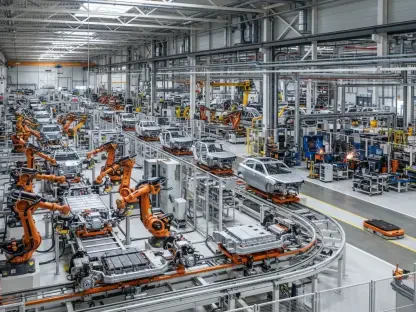
A critical factor often overlooked in the debate over artificial intelligence is the looming demographic crisis facing global industry. By 2033, the American manufacturing sector is projected to face a deficit of nearly 2 million workers as the “Silver Tsunami” of retirements reaches its zenith. In this environment, where talent is becoming increasingly scarce, artificial intelligence is far from a luxury or a gimmick used for cost reduction. It has become a structural necessity for the survival of the industrial base. Organizations are currently navigating a high-stakes race to digitize the specialized expertise of their most experienced employees before that knowledge disappears from the workforce forever.
The loss of this “institutional knowledge”—the unwritten, tacit expertise held by veteran staff who understand the nuances of complex machinery and processes—poses a greater threat than any technological disruption. Converting this human experience into digital intelligence ensures that when a master technician finally chooses to retire, their specific insights remain accessible on the factory floor. This strategy transforms the concept of artificial intelligence from a competitor into a repository for human legacy. By capturing the unique ways a veteran solves a recurring problem, a company can provide a junior employee with a digital mentor that guides them through complex tasks with the precision of someone who has spent thirty years in the field.
Workflow-First vs. Automation-First: Navigating the Strategic Divide
The long-term success of an artificial intelligence strategy depends heavily on whether a leader chooses a philosophy of “automation-first” or “workflow-first.” The automation-first approach, which has gained significant traction in the software and service sectors, begins by asking which specific human tasks can be offloaded to machines to trim overhead. This strategy frequently encounters heavy resistance from employees who view the technology as a direct threat to their livelihood, often leading to low morale and high failure rates in implementation. When the primary goal is subtraction, the organization often loses the essential human context required to make the technology function effectively in real-world scenarios.
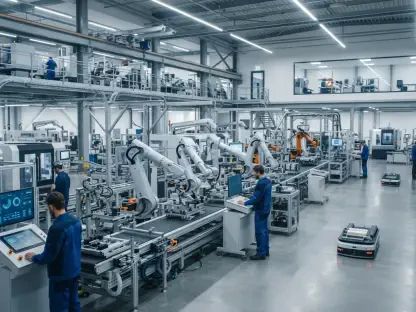
In contrast, the “workflow-first” model, which is gaining ground in the industrial and frontline sectors, prioritizes the digitization of daily tasks to support the worker. This approach focuses on creating a digital foundation for existing workflows, layering intelligence on top of what people are already doing. Instead of trying to automate a process in its entirety, this model seeks to provide workers with real-time data and guidance that makes their current jobs easier and more accurate. By focusing on empowerment rather than replacement, a junior staff member can operate with the specialized insight of a twenty-year veteran. This turns the senior staff member’s experience into a “multiplier” for the entire team, fostering an environment where technology and humanity work in a collaborative, rather than competitive, fashion.
The Workforce Intelligence Flywheel: Data-Driven Proof of Success
The argument for shifting from a displacement mindset to an empowerment mindset is supported by compelling empirical evidence. Research indicates that organizations prioritizing human-centric artificial intelligence strategies consistently outperform their peers, seeing up to 2.3 times greater shareholder returns compared to those focused strictly on efficiency and cost-cutting. While generic pilot programs often fail to produce a meaningful return on investment because they lack a specific operational focus, a significant majority of manufacturing executives expect positive returns within a short window. This success is largely driven by a clear focus on solving specific, high-value problems rather than chasing a vague notion of “innovation.”
This success is fueled by what experts call the “workforce intelligence flywheel”—a self-reinforcing loop where digital tools improve frontline operations, which in turn generate richer, more specialized data. As workers engage with these tools, the system learns from their unique inputs and adjustments, creating a more sophisticated and proprietary intelligence layer that competitors cannot easily replicate. This process moves human workers further up the value chain, shifting their focus away from repetitive, low-stakes tasks and toward critical decision-making and strategic judgment. The result is a more resilient organization that treats data as a dynamic asset, constantly refined by the people who understand the work most intimately.
A Leadership Framework for Building Leverage and Capturing Knowledge
To successfully navigate the current transition, leaders shifted their focus away from simply defending current headcount and toward the aggressive creation of leverage. The most effective managers realized that treating institutional knowledge as a critical insurance policy was the only way to prevent a catastrophic “fuel supply” crisis when veteran staff departed. By prioritizing the encoding of specialized expertise into digital formats, these organizations ensured that the departure of a single individual did not result in the permanent loss of operational capacity. This proactive approach allowed companies to build a defensible competitive moat where technology and human judgment evolved in a continuous, symbiotic relationship.
Organizations also redefined their internal metrics for success, moving away from total headcount as a primary indicator of health and toward “output per person.” This shift encouraged a culture where every employee was empowered to operate at the highest possible level of their capability, supported by a sophisticated digital infrastructure. Instead of viewing artificial intelligence as a replacement for human talent, the most forward-thinking leaders treated it as a force multiplier that allowed their teams to tackle more complex challenges with fewer errors. By fostering an environment where technology served the worker, these companies attracted higher-skilled talent and established a foundation for sustainable growth that prioritized human ingenuity over simple automation. This strategic recalibration ensured that the workforce remained the central engine of progress, proving that the true value of intelligence lay in its ability to amplify, rather than erase, the human element in work.