
The integration of physical artificial intelligence into heavy industry reached a turning point at CES 2026 with the announcement of a new robotics collaboration between Caterpillar and FieldAI. Imagine a massive excavation site where machines no longer wait for human commands but instead coordinate their own movements to optimize safety and speed. This milestone marks a significant departure from the static automation of the past decade, signaling a move toward machines that perceive and adapt to their surroundings in real time. As global demand for infrastructure and mineral extraction continues to climb, the industry faces acute labor shortages and increasingly complex safety requirements. The partnership represents a concerted effort to solve these systemic issues by embedding advanced cognitive capabilities into the very fabric of heavy machinery. By bridging the gap between human expertise and robotic speed, these organizations are laying the groundwork for a more resilient and efficient industrial framework. The result is a transformative approach to jobsite management that prioritizes intelligence over brute force.
Architectural Foundations: Merging Data and Autonomy
Foundation Models: Redefining Machine Cognition
The core of this technological leap lies in the synthesis of Caterpillar’s massive repositories of operational data with FieldAI’s cutting-edge foundation models. Unlike standard robotic programming that relies on pre-defined paths and rigid logic, these new models allow machines to understand the nuances of a construction site or a deep-surface mine. This intelligence is trained on decades of telemetry, sensor logs, and human operator inputs, creating a digital consciousness capable of navigating unpredictable terrain. The collaboration focuses on making hardware more than just a mechanical extension of human will; it transforms it into an independent agent capable of local decision-making. This shift is particularly critical for the United States manufacturing sector, which seeks to modernize domestic production through smarter asset management. By utilizing high-performance computing, the project ensures that machines can process environmental data locally, reducing the latency that often plagues cloud-dependent systems.
Navigation Systems: Mastering Unstructured Terrains
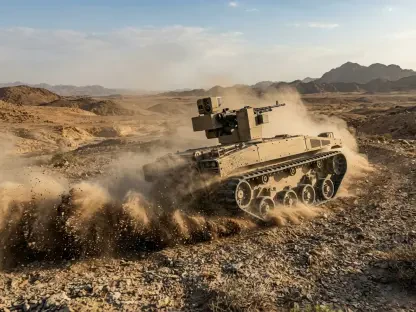
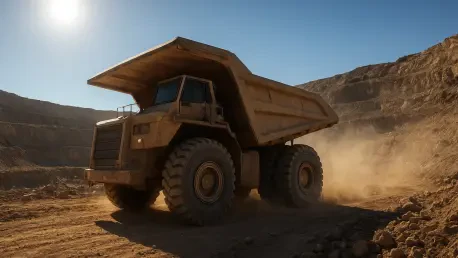
Navigating unstructured environments has historically been the greatest hurdle for heavy industry robotics, as traditional sensors often struggle with dust, uneven ground, and moving obstacles. FieldAI addresses this challenge by deploying autonomous platforms that do not require constant human oversight or a perfectly mapped environment to function effectively. These systems utilize physical AI to interpret sensory input in a manner similar to human perception, allowing for fluid adjustments when conditions change unexpectedly. This capability is essential for large-scale projects where a single delay can cascade into significant financial losses. By integrating these autonomous platforms into Caterpillar’s existing fleet, the partnership aims to provide a scalable solution that works across diverse geographical locations and site types. The objective is to move away from rigid, scripted movements toward a dynamic operational model where machinery reacts to hazards autonomously, ensuring safety and operational continuity.
Strategic Deployment: Virtual Precision in Physical Spaces
Digital Ecosystems: Simulating Industrial Workflows
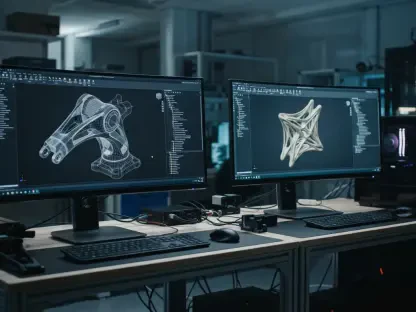
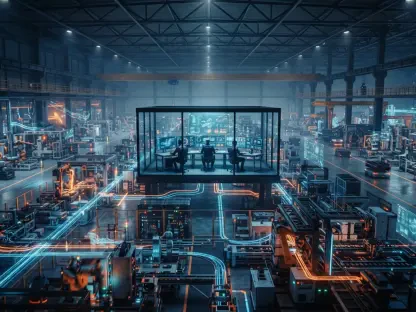
A vital component of this initiative is the extensive use of NVIDIA’s accelerated computing and the Omniverse simulation platform to create high-fidelity digital twins. These virtual replicas are not static maps but living models that mirror the real-time status of equipment, infrastructure, and personnel across a jobsite. By simulating every aspect of a project before a single shovel touches the ground, Caterpillar can identify potential bottlenecks and refine workflows with surgical precision. This level of visibility allows project managers to test various “what-if” scenarios, such as the impact of severe weather or the sudden failure of a critical machine. The integration of real-world data into these simulations ensures that the digital twin remains accurate throughout the project lifecycle, providing a reliable source of truth for decision-making. This methodology significantly reduces the risks associated with large-scale industrial operations, ensuring that physical deployments are as efficient and safe as possible.
Collaborative Integration: Bridging Skills and Technology
Strategic adoption of these technologies aligned with broader market trends indicating that physical AI could generate approximately $200 billion in manufacturing efficiencies by 2030. To realize these gains, organizations prioritized the creation of robust data pipelines that could feed advanced foundation models without compromising security. The collaboration focused on solving real-world operational problems through a modular approach, allowing for the gradual scaling of autonomous capabilities. This strategy addressed the immediate needs of the industry while building the infrastructure required for the next century of heavy industry operations. Stakeholders recognized that success depended on “wrapping” technology around existing skill sets rather than attempting wholesale replacement. By establishing clear protocols for human-robot interaction, the initiative provided a scalable model for modernizing global infrastructure projects while maintaining a high standard of operational safety and machine reliability.