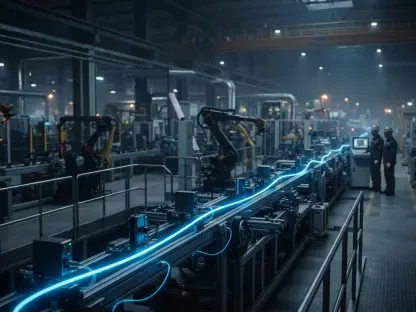

A profound shift is occurring within industrial hubs as traditional assembly lines shed their mechanical rigidness to adopt the fluid, cognitive capabilities of integrated artificial intelligence systems. This transformation represents more than a simple upgrade in machinery; it signifies a fundamental reimagining of how physical labor and corporate intelligence interact. By embedding logic directly into the mechanical “muscles” of the factory, businesses are finally closing the gap between the boardroom and the shop floor, creating a landscape where every movement is data-driven and strategically aligned.
The End of the Silent Factory Floor
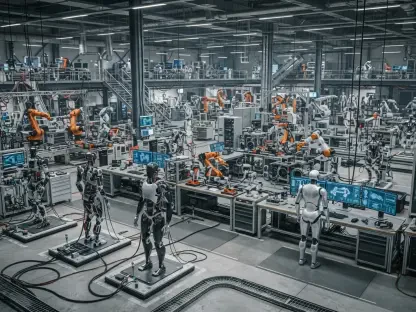
The era of the “dumb” robot, confined to a bolted-down spot and executing a singular, repetitive task, is rapidly fading. Today, the factory floor is evolving into a dynamic environment where machines no longer just operate; they interpret and execute complex business logic in real time. This transition marks a departure from the “black box” of traditional automation, where robots functioned in isolation from the broader corporate strategy. Instead, the current industrial revolution focuses on a seamless integration that allows physical movement to reflect executive-level priorities instantly.
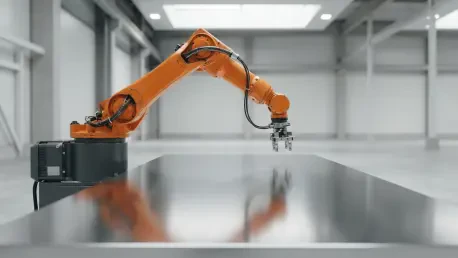
Physical AI serves as the vital bridge between high-level strategic planning and the granular actions of robotic hardware. By feeding Enterprise Resource Planning data directly into the sensors and actuators of the assembly line, manufacturers can ensure that every motion serves a specific purpose. This connection transforms manufacturing from a series of disconnected mechanical events into a cohesive, intelligent workflow. The result is a factory floor that is no longer silent in its communication, but rather a vocal and active component of the business ecosystem.
The Convergence of Intelligence and Infrastructure
Understanding the “closed-loop” manufacturing model is essential for any enterprise looking to remain competitive in the current landscape. This model functions by allowing data from the edge—the actual point of production—to flow back into the digital core, refining future instructions. However, a significant digital maturity gap persists, with recent data suggesting that 37% of companies are stalling at surface-level AI implementation. These organizations often use AI for isolated tasks but fail to integrate it into the underlying business infrastructure, missing out on the full potential of autonomous coordination.
The rise of agentic AI is providing the solution to this stagnation by moving beyond isolated tools toward governed, auditable extensions of the business. These autonomous agents do not just follow a script; they possess the agency to optimize their own paths and tasks within a set of corporate guardrails. This shift is particularly beneficial for mid-sized manufacturers who previously feared the high cost of entry. With the standardization of AI-driven workflows, the barriers to adopting sophisticated autonomous systems have lowered, allowing smaller players to achieve the same precision as global giants.
From Pilot Projects to Production Powerhouses
Real-world applications are proving that Physical AI is a practical reality rather than a conceptual vision. At Intel’s high-volume semiconductor hub in Chengdu, the integration of warehouse software with physical AI hardware has revolutionized logistics. Material transport is now managed via “robot missions” that are automatically triggered by inventory needs, ensuring that supply chain movements are perfectly synchronized with production requirements. This level of automation reduces human error and maximizes the efficiency of high-value asset transport in sensitive environments.
Other leaders, such as the Arçelik-LG joint venture, are solving multi-million-euro logistics challenges by deploying humanoid robots to address warehouse misplacements. By connecting these advanced machines to existing management systems, the company can automate inbound storage tasks with near-perfect accuracy. Similarly, Foxconn has implemented autonomous asset inspections that feed data back to executive oversight in real time. These inspections are not merely scheduled events but are triggered by predictive maintenance plans, ensuring that every check is necessary and data-rich.
Current trends reflect a massive surge in this type of industrial investment. A Deloitte study released in January 2026 indicates that 58% of companies have already begun utilizing physical AI to some degree. Furthermore, approximately 80% of enterprises are expected to increase their investment in industrial automation from 2026 to 2028. These statistics highlight a clear consensus: the transition to autonomous systems is no longer an optional upgrade but a core requirement for operational survival and growth in the modern economy.
Expert Perspectives: The Business Context of Motion
Industry experts emphasize that for robots to be truly effective, they must become active participants in the digital workflow. Dr. Lukasz Ostrowski of SAP argues that the value of Physical AI lies in its ability to turn physical execution into a governed extension of the business. This means that a robot is not just a piece of hardware but a strategic asset that understands its role within the larger corporate framework. When machines are “aware” of the business context, they can make better decisions regarding priority and safety.
Dr. Di Wang of Foxconn echoes this sentiment, noting the necessity of robots understanding the “why” behind their physical tasks. This context allows for a shifting role of the human workforce, transitioning employees from manual oversight to strategic AI governance. Instead of performing the labor or even micro-managing the machines, workers now focus on setting the parameters and goals for the autonomous systems. This evolution places context as the most valuable commodity in an autonomous ecosystem, where data is only as good as the logic driving it.
A Framework: Implementing Physical AI
A successful implementation starts with a hardware-agnostic strategy, allowing companies to integrate existing machinery into a modern AI framework without a total overhaul. This approach protects previous investments while enabling new capabilities through software-defined automation. By focusing on a “start small, scale specific” methodology, manufacturers can identify high-value use cases in logistics or maintenance where the return on investment is most visible. This builds internal confidence and provides a clear template for broader organizational scaling.
Leveraging the “digital thread” is the next step in closing the loop between planning and execution. Utilizing Extended Warehouse Management and Asset Management systems allows for a continuous flow of information that keeps the autonomous systems aligned with real-world inventory and equipment health. This connectivity ensures that the physical AI is never operating on outdated information. Finally, establishing a governed environment ensures that all autonomous actions remain compliant with safety standards and corporate precision requirements, providing the necessary auditability for large-scale operations.
The transition toward Physical AI provided a roadmap for modernizing the manufacturing sector. Organizations that prioritized the integration of ERP data with factory floor hardware established a significant competitive advantage. These entities focused on creating auditable and governed environments for their autonomous systems to ensure safety. By merging executive logic with robotic execution, the manufacturing industry secured a path toward sustainable and autonomous growth. Future success depended on the ability to turn raw physical data into actionable business intelligence through a hardware-agnostic approach.