
The global industrial electronics market is currently navigating a period of profound transformation, characterized by the convergence of traditional hardware with sophisticated digital intelligence. According to recent market intelligence, the sector is poised for substantial expansion, with its valuation expected to climb from USD 211.4 billion in 2026 to approximately USD 412 billion by 2035. This growth represents a compound annual growth rate of 6.9 percent and is primarily fueled by the aggressive integration of Smart Manufacturing, the Industrial Internet of Things, and advanced robotics across diverse industrial landscapes. The primary momentum behind this market stems from a global shift toward the digitization of manufacturing processes, where traditional factories are replaced by smart, connected ecosystems. This transition is essential for companies aiming to boost productivity and maintain a competitive edge in an increasingly automated global economy.
Key Drivers and Technological Breakthroughs
Advancing Efficiency Through AI and Robotics
Robotics and automation have become indispensable in high-precision fields like aerospace and automotive manufacturing, where human error must be minimized. Beyond simple mechanical movement, the integration of Artificial Intelligence and edge computing allows these systems to process vast amounts of data in real-time directly on the factory floor. This capability facilitates a transition from reactive to proactive management, enabling AI to identify potential equipment failures before they happen through vibration analysis and thermal monitoring. By deploying these intelligent systems, manufacturers are successfully saving significant operational costs and preventing the catastrophic financial losses associated with unexpected production downtime. The use of collaborative robots, or cobots, further enhances this efficiency by allowing human workers and automated machines to share tasks safely in confined workspaces.
The adoption of sophisticated control algorithms has transformed how industrial machines interact with their environments, moving toward a more autonomous state. These systems now utilize machine learning to optimize their own paths and energy usage, learning from repetitive cycles to shave seconds off production times. This level of refinement is particularly visible in the electronics assembly sector, where high-speed pick-and-place machines must operate with micrometer precision. Furthermore, the integration of 3D vision systems allows robots to identify and handle irregular objects that were previously impossible to automate. This technical evolution ensures that the industrial electronics market is no longer just about moving parts, but about creating highly perceptive machines that can adapt to changing production requirements without requiring manual reprogramming or extensive downtime.
Sustainable Energy Management and Power Electronics
Sustainability has emerged as a critical factor shaping the market landscape, as tighter environmental regulations push heavy industries to drastically reduce their carbon footprints. There is a growing investment in high-efficiency power electronics, such as wide-bandgap semiconductors and smart motor drives that minimize energy loss during power conversion. By optimizing energy consumption at the component level, these technologies help large-scale industrial operations meet rigorous green standards while simultaneously lowering their long-term utility expenses. Modern power conversion systems now include regenerative braking features in industrial lifts and conveyors, capturing energy that would otherwise be wasted as heat and feeding it back into the facility’s internal power grid. This shift toward circular energy usage is becoming a standard requirement for new industrial installations across North America and Europe.
In addition to hardware improvements, the implementation of intelligent energy monitoring software allows facility managers to track power usage patterns across the entire enterprise in real-time. This granular visibility enables the identification of “energy hogs” and the scheduling of high-demand tasks during off-peak hours to reduce strain on the regional grid. The rise of microgrids within industrial parks further highlights this trend, where industrial electronics manage the balance between solar arrays, battery storage, and the main electrical supply. As companies strive to reach net-zero goals, the demand for advanced rectifiers, inverters, and power factor correction equipment is expected to surge. These components are no longer seen as simple utility parts but as strategic assets that provide a measurable return on investment through improved efficiency and compliance with environmental mandates.
The Product Landscape and Connectivity
Core Components and Next-Generation Networking
The architecture of a modern smart factory is built upon a foundation of critical hardware segments, ranging from power distribution tools to complex control units. At the center of these operations are Programmable Logic Controllers and Human-Machine Interfaces, which act as the primary coordinators for automated workflows. These devices have evolved from simple relay replacements into powerful edge-computing hubs capable of executing complex logic and communicating with cloud-based analytics platforms. Modern factories also rely heavily on sensing and instrumentation to monitor variables like temperature, pressure, and fluid flow. These sensors provide the raw digital data required for automated systems to make precise adjustments, ensuring both product quality and worker safety in high-stakes environments like chemical processing or heavy metal fabrication.
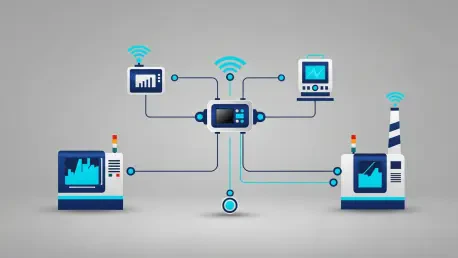
As connectivity becomes the backbone of modern production, there is a rapid shift toward wireless environments and high-speed networking solutions that replace traditional cabling. While older protocols like PROFIBUS and MODBUS are still present in legacy systems, the industry is rapidly migrating toward 5G, industrial Ethernet, and universal IoT gateways. This digital infrastructure is often supported by ruggedized industrial PCs and embedded systems designed to withstand extreme temperatures, vibrations, and electromagnetic interference common in manufacturing plants. The move to 5G is particularly significant, as it provides the low-latency communication necessary for mobile robots and autonomous guided vehicles to navigate crowded floors safely. This robust connectivity ensures that every sensor and actuator can contribute to a unified digital twin of the factory, allowing for remote monitoring and virtual optimization.
Digital Twins and Embedded Computing Systems
The deployment of embedded computing systems has enabled the creation of digital twins, which are virtual replicas of physical assets used for simulation and testing. By integrating high-performance processors directly into industrial machinery, manufacturers can run complex simulations alongside real-world operations to predict how changes in settings will affect final output. This technology allows for the virtualization of the commissioning process, where software is tested and refined before the physical machine is even built, drastically reducing the time-to-market for new production lines. The hardware supporting these functions must be incredibly durable, featuring fanless cooling and solid-state storage to ensure reliability in dusty or humid conditions. These embedded systems act as the bridge between the physical world of gears and motors and the digital world of big data.
Industrial PCs have also seen a shift toward modularity, allowing manufacturers to upgrade processing power or connectivity options without replacing the entire unit. This approach is gaining traction as it aligns with the move toward software-defined hardware, where functionality can be updated through firmware rather than physical intervention. These devices often include specialized security chips to protect against cyber threats, a growing concern as industrial equipment becomes more interconnected. By combining high-speed data processing with ruggedized protection, these computing solutions provide the necessary stability for critical infrastructure. As the industry moves toward 2035, the distinction between a computer and a piece of industrial equipment will continue to blur, leading to a landscape where every machine is an intelligent node in a vast, global network of manufacturing intelligence.
Geographic Influence and Industry Leadership
Regional Growth Patterns and Strategic Investments
Geographically, North America and the Asia-Pacific region are the primary engines of growth, though they are focusing on different aspects of the electronic ecosystem. In the United States and Canada, the focus is heavily weighted toward infrastructure modernization and the integration of AI-driven sensing platforms into existing manufacturing hubs. This region’s strength lies in software innovation and high-tech aerospace manufacturing, which requires the most advanced and reliable electronic components available. Significant government incentives are currently driving the domestic production of semiconductors and specialized industrial chips, aiming to secure supply chains against global volatility. This investment ensures that North American manufacturers remain at the forefront of the technological curve, particularly in sectors requiring high-level security and precision.
In contrast, the Asia-Pacific region, led by China, Japan, and India, remains the global powerhouse for large-scale production and rapid infrastructure expansion. China continues to dominate the assembly of industrial electronics, while India is seeing a massive influx of capital for smart factory development as it seeks to become a major global manufacturing hub. Japan remains a critical player through its leadership in high-end robotics and precision motion control components. Meanwhile, Europe maintains its position as a leader in automation and green electronics, guided by the high standards of German engineering and strict EU environmental directives. These regional dynamics create a diverse global market where specialized hubs focus on their unique strengths, from the high-precision sensors of Europe to the massive production scales found in Asia-Pacific.
Competitive Strategies for a Digital Future
Major industry players are currently undergoing a fundamental shift in their business models, pivoting toward software-defined hardware to meet the evolving needs of the industrial base. Companies like Siemens, ABB, and Schneider Electric are no longer just selling motors and switches; they are providing comprehensive digital ecosystems that include cloud analytics and lifecycle management services. This strategy creates a more “sticky” relationship with customers, who rely on the manufacturer’s software platform to run their entire operation. Rockwell Automation and Fanuc Corporation are similarly focusing on the “brains” of the assembly line, integrating more intelligence into their PLC and robotic offerings. These leaders are also engaging in strategic acquisitions of smaller AI and cybersecurity firms to bolster their internal capabilities and stay ahead of nimble tech startups.
To maintain their market positions, these engineering giants are increasingly adopting open-standard communication protocols, allowing their equipment to work seamlessly with devices from other manufacturers. This interoperability is a key demand from modern factory owners who want to avoid vendor lock-in while building complex, multi-brand production lines. Furthermore, there is a significant push toward “as-a-service” models, where companies pay for the performance of an electronic system rather than owning the hardware outright. This shift encourages manufacturers to build more durable and efficient products, as they remain responsible for maintenance and energy costs. Moving forward, the successful players in the industrial electronics space will be those who can successfully merge physical reliability with digital flexibility, offering solutions that are as easy to update as a smartphone.
Strategic Considerations for Long-Term Planning
Looking ahead, organizations should prioritize the adoption of modular and interoperable electronic systems to avoid the risks associated with proprietary technology silos. As the industrial electronics market continues its steady climb toward the projected 412 billion dollar valuation, the focus must shift from simple automation to full-scale digital integration. Decision-makers are encouraged to invest in workforce training that bridges the gap between traditional electrical engineering and modern data science, as the operation of next-generation hardware will require a blend of both skill sets. Furthermore, security must be integrated at the hardware level during the procurement phase rather than being treated as a software afterthought. Those who implement robust cybersecurity protocols today will be far better positioned to handle the increased connectivity of the next decade.
The final transition toward a fully digitized industrial sector will require a long-term commitment to energy efficiency and data-driven decision-making. Future-proofing production facilities involves selecting components that support 5G connectivity and edge processing, even if those features are not immediately utilized. By building a flexible digital foundation now, companies can ensure they remain competitive as the technology matures through 2035. The move toward sustainable power electronics is not just a regulatory hurdle but a significant opportunity to reduce operational overhead and improve corporate social responsibility profiles. Ultimately, the successful integration of these advanced electronics will lead to a more resilient, efficient, and transparent global supply chain that is capable of adapting to the rapid changes of the modern economy.