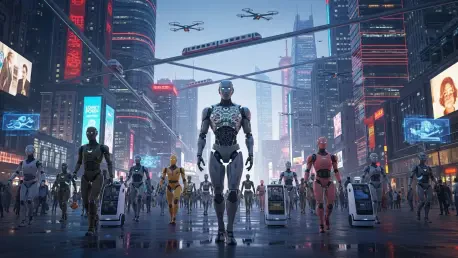

The gleaming halls of the Hong Kong Convention and Exhibition Center recently hummed with the collective whirring of over 100 humanoid robots, marking a definitive departure from the static machinery of the past. These sophisticated machines are no longer tethered to heavy-duty power cables or bolted to factory floors; instead, they are walking, talking, and interacting with a fluidity that suggests the age of “embodied intelligence” has finally arrived. This shift represents more than just a mechanical upgrade, as it signals a future where robots seamlessly integrate into social spheres, navigating the complexities of human emotion and physical unpredictability.
Beyond the Assembly Line: The Dawn of Embodied Intelligence
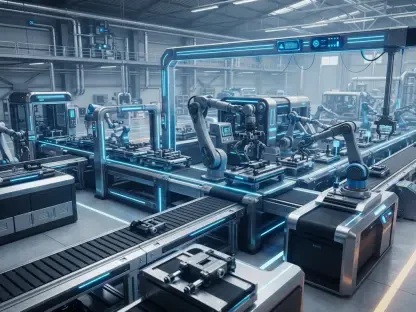
The transition from rigid industrial arms to versatile bipedal entities reflects a fundamental change in how technology perceives the world. While traditional automation focused on repetitive precision, modern humanoid development prioritizes adaptability and social resonance. These machines are designed to perceive their surroundings through advanced sensors, allowing them to mirror human movement and respond to subtle social cues in real time. This evolution transforms a robot from a mere tool into a collaborator capable of operating in dynamic environments like hospitals and hotel lobbies.
Integrating these entities into daily life requires a sophisticated blend of hardware and software that can simulate human-like presence. The goal is to move beyond the cold efficiency of the assembly line toward a reality where machines can assist with delicate tasks, such as elderly care or personalized education. By focusing on embodied intelligence, developers are creating a bridge between digital logic and physical empathy, ensuring that the next generation of automation feels more like a helping hand than a distant piece of hardware.
The Strategic Engine: Why the Robot Race Matters Now
The global pursuit of humanoid robotics has intensified as nations grapple with the pressing challenges of aging populations and shrinking labor pools. In this context, the development of versatile machines is not merely a technical hobby but a vital component of economic stability and resilience. Nations that successfully deploy these robots can mitigate the impact of workforce shortages, maintaining productivity in sectors that require a human touch. China has recognized this urgency, positioning humanoid technology at the core of its national industrial strategy for the years leading up to 2030.
By elevating robotics to a state-level priority, the focus shifts from experimental prototypes to practical, mass-produced tools. This strategic commitment ensures that resources are directed toward solving the most difficult hurdles in bipedal locomotion and cognitive processing. The objective is to establish a robust infrastructure where humanoid robots are as common and functional as smartphones. This proactive approach aims to transform the fundamental structure of the service industry, security, and hospitality, ensuring that technology serves as a pillar of future societal growth.
China’s Competitive Edge: Scale, Speed, and Open Innovation
China has emerged as a formidable powerhouse in the robotics sector, currently home to approximately 140 manufacturers and an expansive library of distinct robot models. This rapid proliferation is fueled by a unique ecosystem where government roadmaps provide the necessary stability for long-term scientific investment. Firms like UBTech and Unitree have leveraged this support to scale their operations at a pace that often leaves international competitors struggling to keep up. The result is a market saturated with diverse robotic solutions tailored for everything from heavy lifting to companion care.
Furthermore, a culture of collaborative technical exchange sets the region apart from the more guarded, proprietary nature of Western technology hubs. Chinese engineers often benefit from a shared pool of industrial knowledge, which accelerates the refinement of joint systems and battery technologies. By utilizing a pre-existing, world-class manufacturing infrastructure, these companies can maintain high shipment volumes while keeping production costs remarkably low. This efficiency makes advanced humanoid technology accessible to a wider range of businesses, solidifying a dominant position in the global supply chain.
From Athleticism to Empathy: Breakthroughs in Robot Capability
Recent exhibitions have showcased a dual-track evolution in robotic capabilities, focusing on both extreme physical agility and deep emotional intelligence. On one hand, machines such as EngineAI’s PM01 are redefining the limits of bipedal physics by performing complex maneuvers like front flips and navigating uneven terrain with ease. This high-level mobility is essential for robots intended for search and rescue or industrial maintenance, where the ability to traverse unpredictable environments is a prerequisite for success.
On the other hand, the industry is making significant strides in “companionship” robotics, exemplified by models like the AGIBOT X2 Ultra. These machines are equipped to recognize objects, hold multilingual conversations, and offer emotional support, bridging the gap between hardware and humanity. To further reduce the “interaction gap,” some designers are utilizing hyper-realistic synthetic materials and simulating biological functions like breathing. These aesthetic and cognitive enhancements ensure that when a robot acts as a museum guide or office assistant, its presence feels intuitive and helpful rather than jarring.
Navigating the Humanoid Integration: Key Strategies for Adoption
To successfully transition these machines from specialized labs to the public square, businesses must adopt a framework that prioritizes human-centric design. It is essential to identify high-touch roles where robotic “warmth” and constant availability provide the most value, such as in customer service or specialized educational support. By deploying robots in roles that benefit from consistent interaction, organizations can enhance the user experience without replacing the essential human elements of empathy and complex problem-solving.
As the industry moves toward mass deployment, the focus should remain on multimodal communication and scalable fleet management. Utilizing robots that combine visual recognition with natural language processing ensures that interactions remain seamless and productive. Furthermore, adopting high-efficiency manufacturing standards will allow for a more rapid integration of these tools into the broader economy. To prepare for this future, stakeholders must address the psychological aspects of human-robot interaction, ensuring that as these machines become more lifelike, they continue to serve as transparent and reliable assistants.
The landscape of global robotics shifted significantly as developers moved away from isolated experiments toward integrated, functional fleets. Industry leaders prioritized the reduction of production costs while simultaneously enhancing the emotional intelligence of their machines. This period was defined by a collective realization that the success of humanoid robots depended as much on their social acceptability as it did on their mechanical endurance. Consequently, the focus remained on creating a harmonious technological environment where innovation served the practical needs of a changing world.