
When a robotic arm pivots with the grace of a professional athlete to return a blistering ninety-mile-per-hour serve, the boundary between digital intelligence and physical reality effectively dissolves. This spectacle marks a pivotal transition in the history of automation, moving the focus from robots that follow rigid, pre-programmed instructions toward machines that possess genuine physical intuition. In the high-stakes environment of competitive sports, there is no room for the latency or hesitation that often plagues autonomous systems. Every millisecond counts, and every movement must be a perfect fusion of tactical foresight and mechanical precision.
The central challenge in this evolution involves bridging the gap between abstract AI logic and the messy, unpredictable nature of the physical world. While a software-based AI can process billions of data points in a vacuum, a physical robot must contend with friction, wind resistance, and the erratic behavior of a human opponent. This research explores whether reinforcement learning can finally provide machines with the “gut feeling” necessary to navigate environments where split-second timing is the difference between success and failure. By testing these capabilities on a table tennis court, engineers are seeking to prove that robotics has finally reached its own transformative milestone.
The Evolution of Robotics: From Industrial Repetition to Competitive Intelligence
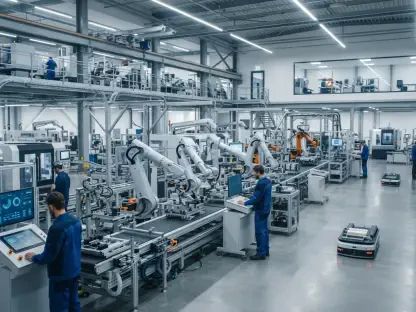
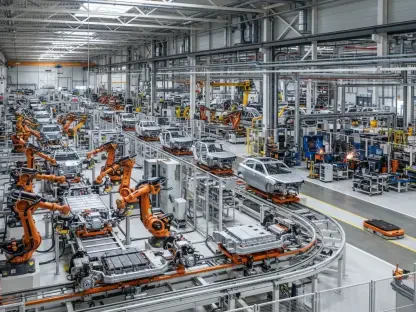
For decades, the standard for robotic excellence was defined by the industrial assembly line, where arms moved with unwavering but mindless consistency. These machines were exceptional at performing the same task a million times, provided nothing in their environment changed by even a fraction of a millimeter. However, the modern push for autonomous agents demands a departure from this static paradigm. The goal is no longer just repetition; it is adaptation. Researchers are now prioritizing the development of machines that can perceive their surroundings and adjust their behavior in real time, much like a living organism.
Sony’s “Ace” serves as a critical benchmark in this journey, representing a shift from scripted motion toward mastered motor skills. This project is not merely about winning a game of table tennis; it is a rigorous test of how far artificial intelligence has progressed in mimicking the fluid complexity of human movement. Mastering such a sport requires a level of coordination that was previously thought to be exclusive to biological entities. Understanding how a machine can achieve this level of agility is vital for the future of human-robot interaction, as it paves the way for machines that can safely and efficiently navigate the chaotic world alongside people.
Research Methodology, Findings, and Implications
Methodology
The technical architecture of the Ace system relies on a sophisticated fusion of high-speed hardware and adaptive software. At the core of the physical unit is an eight-joint robotic arm, providing a range of motion that mirrors the flexibility of a human torso and limb. This hardware is supported by a vision system comprising nine high-speed cameras positioned strategically around the court. These sensors capture data at a rate that far exceeds human visual processing, allowing the system to track the ball’s trajectory with microscopic accuracy.
Instead of using manual coding to define every possible stroke, the research team utilized reinforcement learning to train the agent. This allowed the robot to learn the nuances of the game through millions of simulated and physical trials, discovering which movements resulted in successful points. A particularly innovative aspect of the methodology involves the robot’s ability to read spin. By analyzing the rotation of the logo on the ball in real time, the computer vision system enables the robot to adjust its racket angle to compensate for complex aerodynamic forces, a feat that requires immense computational power and near-zero latency.
Findings
The results of the trials demonstrated that the robot could achieve competitive parity with high-level human athletes, provided certain constraints were maintained. Researchers intentionally limited the robot’s physical reach and speed to match the capabilities of a skilled human player. This decision ensured that any victory was the result of tactical intelligence rather than sheer mechanical dominance. In matches against professional opponents, the Ace system successfully defeated three out of four expert players, showcasing a level of strategic depth that surprised even the developers.
One of the most striking findings was the emergence of “physically impossible” shots. During the rallies, the robot executed maneuvers and ball placements that challenged the existing tactical limits of the sport as understood by humans. Professional players noted that the robot’s ability to process spin and trajectory allowed it to return balls from angles that a human player would typically consider a lost cause. This suggests that the AI did not just learn to play like a human; it discovered optimal physical strategies that humans had simply never explored.
Implications
The success of this research extends far beyond the confines of a sports arena, offering a glimpse into the future of advanced manufacturing and logistics. If a robot can track and return a spinning ball at high speeds, it can certainly be trained to handle irregular materials on a moving conveyor belt or navigate a crowded warehouse where obstacles appear without warning. This level of perception and adaptability is the “holy grail” for industries that require machines to operate in unstructured environments.
Furthermore, the study indicates a shift toward a more symbiotic relationship between humans and machines. Rather than simply replacing human labor, these advanced systems can serve as high-level training partners that push human boundaries. In broader societal terms, the deployment of such perceptive hardware could revolutionize sectors ranging from elder care, where robots must react to delicate and unpredictable human movements, to defense and emergency response. The ability to bridge the digital and physical divide transforms a machine from a tool into a capable, autonomous participant in reality.
Reflection and Future Directions
Reflection
Evaluating the success of the Ace project requires a careful look at the “sledgehammer” approach to technological development. While the robot achieved incredible feats, it did so by utilizing a massive array of sensors and computational resources that dwarf the biological efficiency of a human being. A person plays the same game with only two eyes and a fraction of the energy consumption. This contrast highlights the current gap between the brute-force capabilities of modern AI and the elegant, low-energy processing of the human brain.
The project also provided valuable insights into the “sim-to-real” gap, a notorious hurdle in robotics where behaviors learned in a digital simulation fail when applied to the physical world. By successfully translating simulated strategies into actual physical wins, the researchers proved that high-fidelity modeling combined with real-world fine-tuning can overcome this obstacle. The philosophical choice to prioritize fairness over raw mechanical power also stands as a significant reflection, suggesting that the future of robotics may be more about intelligence and harmony than simply building the strongest or fastest machine.
Future Directions
The next phase of this research involves exploring how these adaptive models can be applied to even more unstructured environments outside of the controlled conditions of a sports court. Table tennis, while fast, occurs on a flat surface with a predictable ball. Future experiments should focus on tasks that involve interacting with soft, deformable objects or navigating uneven terrain in real-world weather conditions. These challenges will test the limits of reinforcement learning and demand even more sophisticated integration of vision and haptic feedback.
There also remain unanswered questions regarding the scalability and energy efficiency of such systems. Deploying nine high-speed cameras and a massive compute cluster for a single robotic arm is not currently viable for most commercial applications. Researchers must find ways to achieve similar results with fewer sensors and less power. Additionally, there is an opening for further study into collaborative robotics, where humans and machines train together in a feedback loop, each pushing the other to reach new heights of physical performance and tactical innovation.
A New Benchmark for Physical Artificial Intelligence
Sony’s Ace project proved that reinforcement learning could bridge the divide between digital logic and the physical world with remarkable success. By reaching a level of play that challenged professional athletes, the system demonstrated that machines no longer had to be confined to repetitive, pre-programmed tasks. The experiment showed that a robot could learn to handle complexity, spin, and high-speed decision-making through trial and error, much like a human athlete. This achievement served as a catalyst for a new generation of adaptive machines that were capable of navigating the world with a sense of “physical intuition.”
The project ultimately redefined the benchmarks for what was possible in the realm of physical artificial intelligence. It moved the conversation away from mechanical strength toward a focus on tactical intelligence and perceptive agility. As these technologies integrated into the broader industrial and social landscape, they offered a new vision for the future of work and play. The milestone established by this research was not just about a game of table tennis; it was a demonstration of a future where machines could coexist and compete with humans in the most demanding physical arenas.