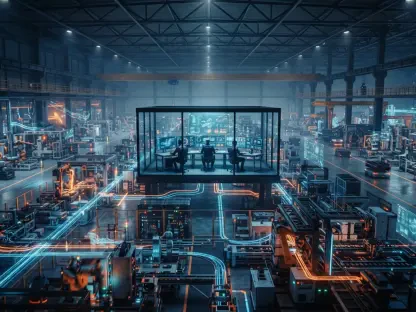

A factory capable of executing thousands of precise repetitions may still lack the cognitive capacity to understand why those actions are being performed in a broader business context. For more than two decades, the industrial sector has aggressively adopted the “smart” prefix, applying it liberally to everything from individual sensors to global supply chains. Billions of dollars have been directed toward Industry 4.0 initiatives, yet a fundamental disconnect remains between advanced automation and true operational intelligence. While modern facilities are undoubtedly more data-rich than their predecessors, the mere accumulation of information does not equate to the ability to reason through complex scenarios. Many organizations find themselves at a crossroads where their technology is highly connected but fundamentally rigid, unable to pivot when market dynamics or internal constraints shift. The current landscape in 2026 demands a rigorous re-evaluation of what constitutes intelligence in a manufacturing setting, moving beyond marketing jargon toward a system that possesses genuine agency.
The Limits of Connectivity and Predictive Analytics
The first generation of the smart factory focused heavily on the Internet of Things to eliminate traditional operational opacity. By embedding sensors across various production lines and logistics hubs, companies successfully achieved a level of real-time visibility that was once considered impossible. This transition allowed for the constant monitoring of temperature, vibration, and throughput, effectively creating a digital mirror of physical processes. However, this level of connectivity is merely a prerequisite for intelligence rather than the end state of a digital transformation. While these systems can report on what is happening at any given moment, they often lack the underlying logic required to interpret those data points within a broader organizational framework. A system that can stream gigabytes of data to a central server is not inherently smart if it cannot explain the significance of that data in relation to the company’s strategic objectives or the specific constraints of the current production run.
Following the initial push for connectivity, the industry pivoted toward predictive analytics to move from descriptive insights to foresight. This era saw the widespread adoption of machine learning models designed to anticipate equipment failures or optimize maintenance schedules based on historical performance patterns. While these advancements provided significant economic value by reducing unplanned downtime, they remained fundamentally rooted in advanced automation. These models generally execute predefined actions based on a set of codified business rules rather than evaluating a variety of alternative strategies. A system that performs a task with extreme precision or predicts a failure based on a narrow set of parameters is still just a highly sophisticated tool if it cannot adapt to variables outside its immediate programming. Without the ability to reason through non-linear problems, even the most advanced predictive systems remain constrained by the logic provided during their initial deployment.
Transitioning From Automation to Agency
The introduction of Agentic AI marks a significant turning point where industrial systems move from simply executing instructions to acting with a sense of intent and reasoning. This progression advances through several distinct stages, evolving from being merely connected and predictive to becoming adaptive and eventually autonomous. The core difference lies in the development of a robust Decision Architecture, where technology does more than just present information to a human operator. In this new paradigm, the system actively assists in the reasoning process by evaluating competing objectives and simulating various outcomes before recommending a path forward. This allows the operation to handle unexpected disruptions, such as sudden raw material shortages or fluctuating energy prices, by recalculating the most efficient way to maintain production without human intervention. The shift from Information Architecture to Decision Architecture represents the transition from a passive system to an active partner.
A common pitfall in contemporary industrial environments is the dashboard delusion, where organizations mistake high-tech visualization for intelligent decision-making. While a central control tower or a sophisticated digital twin might alert a human manager to an emerging problem, the actual process of reconciling disparate data sets and choosing a solution often remains manual and dangerously slow. The technology surrounding the decision is high-tech, but the decision process itself remains traditional, relying on fragmented communication and subjective judgment. True industrial intelligence bridges this gap by orchestrating the logic required to act, moving away from simple displays of status toward proactive problem-solving that reduces human bottlenecks. By integrating reasoning capabilities directly into the software layer, operations can move past the limitations of human reaction times. This ensures that the intelligence is not just present in the visualization of the data, but in the execution of the response based on that data.
Defining the SMART Framework for Intelligence
To move past the superficial use of industry buzzwords, a more rigorous standard for intelligence must be applied to modern systems. A truly smart operation must be capable of five distinct functions that work in a continuous loop: sensing environmental changes, making sense of those signals through contextual analysis, acting autonomously when the situation warrants, reasoning through potential risks, and transforming by learning from past outcomes. This framework ensures that the system is not just repeating a scripted process but is actually evolving based on its unique experiences and environmental interactions. For example, a system that senses a drop in power quality would not just log the event but would analyze the impact on sensitive equipment, adjust the production load, and record the outcome to improve its response next time. This level of self-contained logic is what separates a truly intelligent operation from one that is merely automated to perform a fixed set of responses.
This comprehensive approach does not aim to remove human expertise from the factory floor but rather to create a productive synergy between human judgment and machine-scale reasoning. The ultimate objective is to create a high-IQ facility where technology handles the heavy lifting of data processing and complex logic, allowing human experts to focus on high-level strategy and creative problem-solving. When a system can handle the nuances of routine decision-making, it frees up the workforce to address exceptions that require a deeper understanding of social or ethical contexts that AI cannot yet master. This collaboration ensures that the operation remains resilient enough to handle extreme pressure and complexity without requiring constant manual oversight for every minor adjustment. By integrating these five functions into the core of the operational strategy, companies can build a foundation that is capable of continuous improvement, making the entire organization more agile in the face of a rapidly changing global market landscape.
Aligning Operational Efficiency With Economic Value
A significant flaw in many current industrial systems is the persistent disconnect between technical optimization and the underlying economic reality of the business. A factory may successfully maximize its throughput on a particular production line, which looks like an undeniable victory on a technical report or an operational dashboard. However, if that extra inventory cannot be immediately sold or if it was produced during a window of peak energy costs, the decision actually destroys shareholder value rather than creating it. Intelligence must therefore be viewed through a financial lens, ensuring that every operational adjustment serves the company’s broader economic health. A system that optimizes for speed while ignoring the cost of resources or market demand is not smart; it is merely fast. True intelligence requires the ability to look beyond the immediate performance of a machine and understand the financial implications of every move made on the shop floor in real time.
Genuine industrial intelligence requires a system to balance production capacity with a complex array of variables, including market demand, energy fluctuations, and revenue margins. The ultimate measure of a smart system is its ability to determine what is actually worth optimizing at any given moment, rather than just optimizing everything by default. By connecting every operational heartbeat to measurable economic outcomes, businesses can move away from optimization in a vacuum and toward a model where technology drives genuine profitability and long-term sustainability. This requires a level of integration that goes beyond the factory walls, pulling in data from procurement, sales, and energy markets to inform the logic used by the production systems. When the software managing the floor understands the profit margin of each individual unit being produced, it can make autonomous decisions that prioritize high-value orders or energy-efficient shifts, directly contributing to the bottom line.
Strategic Implementation and Future Considerations
Leaders established clear protocols for moving beyond connectivity by auditing existing assets to identify where human intervention caused the most significant delays. They replaced passive monitoring tools with agentic systems that possessed the authority to make real-time adjustments based on economic variables. This strategic shift required the retraining of the workforce to manage AI-driven workflows rather than manual processes. Companies that prioritized the integration of financial data into the control layer realized greater returns on investment than those that focused solely on technical throughput. The successful implementation of these systems relied on a commitment to data quality and a willingness to decentralize decision-making power to the edge of the network. By adopting a SMART framework, these operations secured a competitive advantage that favored agility over rigid automation. Future efforts were directed toward enhancing the resilience of these cognitive systems against external market shocks.
Furthermore, the roadmap for the coming months necessitated a shift toward decentralized edge computing to support these agentic capabilities without latency. Leaders realized that processing reasoning tasks closer to the production line reduced the risk of system failures during network outages. They also invested in interoperability standards to ensure that different AI agents could share insights across the enterprise without friction. This systemic approach transformed the factory floor from a collection of isolated machines into a cohesive, thinking organism. Moving forward, the industry prepared for even greater levels of autonomy where human roles evolved into those of system architects and ethical overseers. By focusing on the quality of decision logic rather than the sheer volume of sensor data, organizations finally moved beyond the limitations of mere automation. These actions successfully closed the gap between technical capability and business value, setting a new standard for industrial excellence in a complex global economy.