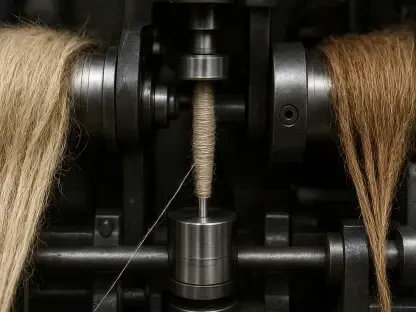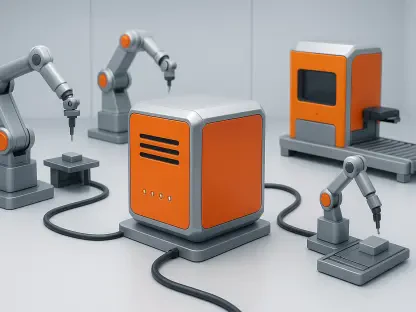

Synthesizing high-performance polymers like Tullomer requires lower energy inputs than standard materials, offering a more sustainable path for future industrial scaling. For decades, the narrative surrounding industrial progress centered almost exclusively on the advancement of robotic systems and the increasing intelligence of software algorithms. While these digital and mechanical improvements are significant, they often overlook the fundamental constraint that dictates the limits of any physical product: the material itself. Many manufacturing giants remain anchored to legacy substances like nylon and traditional carbon fiber, materials that have largely remained stagnant since the late 20th century. By shifting the primary focus toward the molecular foundation of engineering, the industry can finally bridge the gap between theoretical design and physical reality. This shift represents a transition from merely optimizing how we build to fundamentally transforming what we build with, enabling a new era where material properties no longer act as a ceiling for innovation but as its primary driver for growth.
The Breakthrough in High-Performance Polymers
Redefining Strength and Structural Integrity
The emergence of Tullomer marks a pivotal departure from the limitations of conventional industrial plastics, offering a high-performance filament that challenges the dominance of metals in critical sectors. This advanced polymer demonstrates a strength-to-weight ratio that exceeds that of high-grade steel while maintaining a flexibility that prevents the brittleness often associated with hardened alloys. Beyond its mechanical robustness, it introduces functional capabilities that carbon fiber cannot match, such as complete radar transparency. In the rapidly expanding drone and aerospace sectors, this characteristic is invaluable, allowing for the creation of structural components that do not interfere with sensitive communication arrays or detection systems. Such versatility ensures that engineering teams can prioritize both structural integrity and mission-specific functionality without being forced to compromise on the weight or the durability of the final assembly in demanding conditions.
Advancing Sustainability and Safety Standards
Modern industrial requirements extend beyond mere physical performance, placing an unprecedented emphasis on the ecological footprint and safety profiles of new materials. The synthesis of high-performance polymers now prioritizes reduced energy consumption, diverging from the resource-heavy thermal processes required for traditional carbon fiber or metallic production. These newer substances are engineered to minimize the emission of toxic byproducts during manufacturing, fostering a safer environment for shop-floor technicians and local ecosystems alike. Furthermore, the inherent fire-resistant properties of these materials expand their utility into extreme environments, such as professional sports equipment, protective garments for emergency responders, and specialized modules for space exploration. By integrating safety and sustainability directly into the molecular structure, manufacturers can meet rigorous global regulatory standards while simultaneously delivering products that survive the most demanding physical conditions.
Navigating the Barriers to Industrial Scaling
Overcoming the Economic Valley of Death
Translating a breakthrough from a controlled laboratory setting to a high-volume assembly line remains one of the most significant hurdles in materials science. This transition, frequently referred to as the “Valley of Death,” is where many promising startups falter due to the immense capital required to build dedicated production facilities. Unlike the software industry, which benefits from rapid iteration and low overhead, physical chemical engineering demands long-term investment cycles and extensive testing protocols to ensure reliability. The current venture capital landscape often favors the quick returns of digital products, creating a mismatch for innovators who need years to perfect a polymerization process. Overcoming this barrier requires a strategic alignment between long-term institutional investors and scientific pioneers, ensuring that the infrastructure necessary for mass-market scaling is treated as a foundational asset rather than a speculative risk for the global manufacturing base.
Expanding the Potential of Additive Manufacturing
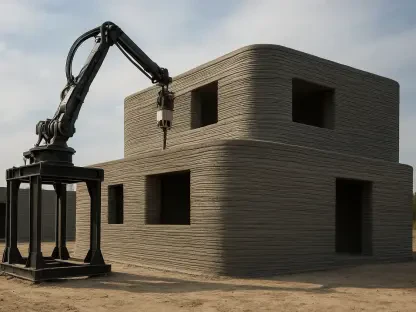
The integration of advanced polymers has breathed new life into the field of additive manufacturing, which was previously constrained by a narrow and often underwhelming selection of usable materials. For years, 3D printing was primarily relegated to prototyping because the available filaments lacked the heat resistance or structural longevity required for end-use parts. However, the introduction of next-generation resins and filaments allows engineers to rethink the entire production workflow, enabling the fabrication of complex, monolithic geometries that were once impossible to cast or machine. These new substances allow for the creation of lightweight components capable of withstanding extreme thermal fluctuations, making them ideal for high-stress applications in automotive engines and specialized industrial machinery. By leveraging these materials, companies can reduce part counts and simplify supply chains, moving away from complex assemblies toward unified structures that are both stronger and more efficient.
The Future of Materials Design and Production
Integrating Artificial Intelligence into Molecular Design
Artificial intelligence has become an indispensable tool in the modern laboratory, fundamentally altering how researchers approach the design of new molecular structures. By utilizing machine learning algorithms to scan massive datasets of chemical interactions, scientists can now predict how specific polymer chains will behave under various stressors before a single physical sample is synthesized. This data-driven methodology acts as a powerful accelerant, drastically reducing the trial-and-error phase that once defined chemical discovery. It allows for the precision tuning of attributes such as stiffness, elasticity, and thermal conductivity, ensuring that the resulting material is perfectly optimized for its intended application. As these digital twins of molecular structures become more sophisticated, the time required to move from a conceptual chemical formula to a certified industrial product will continue to shrink, allowing for a more responsive and agile manufacturing ecosystem that reacts to real-world needs in real time.
Reclaiming Economic Leadership through Domestic Innovation
Reclaiming leadership in the global materials market is not merely a scientific endeavor but a vital matter of economic resilience and national security. Over the past several decades, the offshoring of manufacturing led to a gradual erosion of the institutional knowledge and research talent required to sustain breakthroughs like the ones that produced Kevlar. To reverse this trend, a concerted effort must be made to localize the entire lifecycle of material development, from initial research and development to final industrial production. Close proximity between laboratories and factories fosters a unique feedback loop, where production challenges directly inform scientific inquiries, leading to more practical and scalable innovations. Investing in domestic material science ensures that a new generation of skilled workers and technical experts remains at the forefront of the industry, securing a competitive advantage that is rooted in high-value intellectual property rather than just low-cost labor or basic commodity production.
Strategic Progress: A New Path Forward
Industry leaders recognized that the next leap in manufacturing efficiency required a departure from traditional supply chain philosophies and a deeper investment in foundational science. They moved toward a model where material selection was integrated into the earliest stages of the design process, rather than being treated as an afterthought. This approach encouraged engineers to explore the possibilities of molecular customization, leading to the adoption of decentralized production hubs that utilized advanced 3D printing and AI-driven design. Stakeholders prioritized the development of specialized education programs to train a workforce capable of handling sophisticated polymer chemistry and automated manufacturing systems. By focusing on these high-performance materials, organizations successfully reduced their environmental impact while increasing the durability of global infrastructure. Future efforts were directed toward creating closed-loop systems where every specialized material could be recycled without losing its primary mechanical properties.