
Kwame Zaire is a leading figure in the evolution of modern manufacturing, known for his advocacy of blending high-tech automation with human-centric management. With a deep background in electronics and production oversight, he has become a pivotal voice in the transition toward “physical AI” and the integration of humanoid robotics into complex workflows. In this conversation, we explore how embodied AI is moving beyond mere pilots to transform the factory floor into a more inclusive, safe, and efficient environment that empowers the human workforce.
As we see humanoid robots moving into precision tasks like sheet-metal handling at major automotive plants, what specific results are convincing leadership to scale these deployments globally?
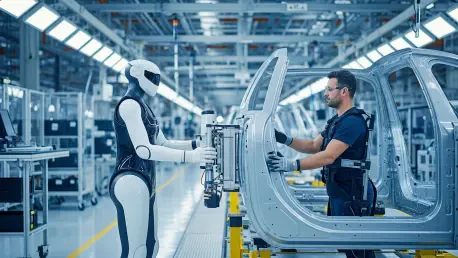
At the BMW plant in Spartanburg, South Carolina, the deployment of humanoid robots was driven by the urgent need to handle highly exacting sheet-metal positioning and welding that takes a significant physical toll on human joints. By delegating these monotonous and ergonomically demanding tasks to AI-enabled robots, the company reported such an improvement in working conditions that they are now preparing to scale these physical AI models across their European facilities. You can almost feel the shift in the shop floor’s energy when workers are no longer tasked with the repetitive straining of heavy metal components under the glare and heat of welding torches. The ultimate goal here isn’t just raw speed; it’s about creating a sustainable workplace where the most safety-critical and grueling tasks are handled by machines that never suffer from physical fatigue.
The industry is shifting toward “human-centric AI” through initiatives like SKillAIbility. How are these programs practically improving the daily experience for assembly workers who deal with high-noise environments or physical disabilities?
This is one of the most heartening developments I’ve seen, particularly with the prototype assistive tool developed through the collaboration of 14 organizations across nine European countries. In the deafening roar of a heavy industrial assembly line where verbal communication is impossible, this system uses a clever combination of haptic alerts on the skin, AI-driven live transcription, and visual assembly instructions. I witnessed a similar setup in Northern Germany where an equipment manufacturer used robots and a manufacturing execution system to specifically empower workers with disabilities on the shop floor. Seeing the look of focus and confidence on a worker’s face as they seamlessly interact with an AI agent to complete a complex assembly task proves that technology can be a massive inclusivity multiplier rather than a barrier.
In complex environments like Martur Fompak, where robots manage intralogistics, how does the layer of agentic AI bridge the gap between digital supply chain data and physical warehouse movement?
At Martur Fompak, the process is a beautiful choreography of data and motion where generative AI first interprets raw material requirements for automotive interiors in real time. This triggers a secondary AI agent to begin orchestrating a humanoid robot, which then navigates the facility to deliver components exactly where they are needed on the production line. What’s truly impressive is how other agents are simultaneously gathering signals from the supply chain and projected demand to reprioritize the robot’s sequencing on the fly. It transforms the warehouse from a static storage space into a living, breathing organism that responds instantly to the pulse of production, eliminating the frantic manual searching for parts that used to define the workday.
How does the recent testing at Bosch demonstrate the adaptability of embodied AI when compared to traditional, rigid automation systems that have dominated factories for decades?
The Bosch test program was a watershed moment because it proved that humanoid robots could handle unpredictability across three distinct bin configurations and three separate workstation layouts without being “hard-coded” for each one. Unlike traditional robots that require weeks of specialized reprogramming for even a minor change in the environment, these agentic-guided machines made autonomous decisions based on real-time delivery data and order priorities. They weren’t just following a static script; they were reading the room, adjusting their movements to suit the specific storage location and task context. This level of physical intelligence is what allows a factory to stay agile and responsive in a global market where customization and rapid turnover are the new standards.
Beyond just moving boxes, how are humanoid robots being used at companies like Vodafone to ensure the safety and structural integrity of warehouse operations?
In Vodafone Germany’s warehouses, robots are essentially acting as highly sophisticated safety inspectors that never blink or lose concentration. They are tasked with detecting misplaced or damaged products and, perhaps more importantly, assessing complex variables like pallet stacking stability and weight distribution that could cause a catastrophic collapse. By identifying unused storage space and flagging hazards like obstacles in the aisles or misaligned pallets, they prevent the kinds of accidents that can halt production for days and cause serious injury. There is a certain sensory precision involved when a robot detects a slight tilt in a heavy pallet or a small obstruction in a walkway that might be invisible to a tired human supervisor at the end of a long shift.
With many manufacturers struggling to move past the pilot phase, what specific governance and cultural strategies are necessary to achieve consistent performance across an entire enterprise?
The jump from a successful pilot to a global rollout is where most companies stumble, often due to a lack of technical know-how and deep-seated resistance to change, as highlighted in recent industry reports. To succeed, you need trusted data models and a “human-in-the-loop” governance structure where every AI output is transparent, easily validated, and readily auditable by the people on the floor. BMW showed us the blueprint for this: they used early, transparent communication to ensure the humanoid robots were seen as a natural part of everyday work rather than a replacement for human talent. Scaling requires a deliberate combination of technologies and a commitment to upskilling employees so they feel like the empowered masters of these new digital tools rather than bystanders to the automation.
What is your forecast for the evolution of embodied AI in the manufacturing sector over the next decade?
I believe we are entering a decade where the distinction between digital intelligence and physical action will completely dissolve, as embodied AI moves from experimental prototypes to the essential backbone of the factory floor. We will see these machines move beyond simple pick-and-place tasks into handling complex, unpredictable scenarios like full-scale material assembly and intricate quality inspections that currently require constant human intervention. As labor shortages continue to squeeze the industry, these robots will not just fill gaps; they will allow human workers to transition into higher-value roles focused on engineering, creative problem-solving, and the oversight of entire AI ecosystems. The factory of the future will be defined by a collaborative harmony where physical AI handles the grit, the danger, and the repetition, while humans provide the strategic spark and the final layer of ethical judgment.