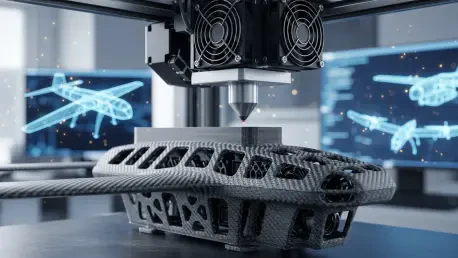

The rapid proliferation of unmanned aerial vehicles across logistics, agriculture, and defense sectors has created an unprecedented strain on traditional manufacturing supply chains that were never designed for such high-velocity output. As the industry navigates the complexities of 2026, the demand for sophisticated drone technology has evolved from niche hobbyist applications into a fundamental pillar of global infrastructure. Companies are no longer satisfied with long lead times that span several months for custom components; instead, they require a manufacturing partner capable of pivoting within days to accommodate design changes or sudden spikes in market demand. This shift has placed Protolabs at the center of a manufacturing revolution, where digital-first strategies are used to bridge the gap between initial concept and mass deployment. By leveraging a comprehensive suite of automated services, the organization has managed to streamline the procurement process, ensuring that the next generation of aerial robotics can be deployed with minimal friction.
Integrating Digital Tools: The New Standard for Speed
Digital manufacturing has fundamentally altered the timeline for drone development by merging design and production into a singular, cohesive workflow that eliminates traditional downtime. In the current 2026 landscape, the use of automated CNC machining allows for the rapid creation of structural components, such as motor mounts and landing gear, using aerospace-grade aluminum and lightweight composites. Unlike older methods that required weeks of setup, these digital systems interpret CAD files instantly to generate toolpaths and price quotes within seconds. This immediacy allows engineering teams to perform multiple iterations in a single week, refining the aerodynamic properties and weight distribution of their aircraft with high precision. By utilizing these advanced manufacturing techniques, companies can move from a concept on a screen to a physical prototype that is ready for flight testing in less than forty-eight hours. This level of responsiveness is no longer a luxury but a requirement for those competing in the global drone market.
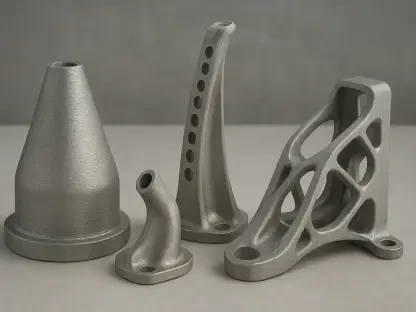
Material selection has become a critical differentiator in drone performance, particularly as specialized applications in environmental monitoring and medical delivery demand higher durability. The integration of high-performance 3D printing materials, such as carbon-fiber-reinforced nylon and flame-retardant resins, has enabled the production of complex geometries that were previously impossible to manufacture. Protolabs has expanded its additive manufacturing capabilities to support these advanced materials, providing drone developers with the ability to create intricate internal cooling channels and integrated sensor housings. This technological leap reduces the overall part count of the vehicle, which in turn lowers the risk of mechanical failure and simplifies the final assembly process. Furthermore, the ability to produce these components without the need for expensive molds allows for the cost-effective production of specialized fleets tailored to specific missions. This flexibility ensures that manufacturers can address diverse market needs without being hindered by excessive overhead.
Scaling Operations: Bridging the Gap to High Volume
As drone programs transition from experimental phases into commercial reality, the need for scalable production methods like injection molding becomes paramount for maintaining profitability. The bridge tooling approach utilized by digital manufacturing leaders allows for the production of several thousand parts in a matter of days, filling the gap between low-volume prototyping and mass-market production. By utilizing aluminum molds instead of traditional steel, companies can significantly reduce the initial investment while still achieving the high-quality surface finishes and structural integrity required for high-speed flight. This method is particularly effective for large-scale components such as drone fuselages and propeller blades, where consistency across a large fleet is essential for safety and regulatory compliance. The ability to quickly scale from ten parts to ten thousand allows companies to respond to sudden market opportunities or government contracts without the risk of being stuck in a production queue. This scalability is the engine driving the massive growth of the sector in 2026.
Successful organizations recognized that the transition to autonomous flight required more than just innovative software; it demanded a hardware strategy that favored agility over rigid, long-term contracts. By prioritizing partnerships with digital manufacturers, these companies reduced their capital expenditure on tooling while maintaining the ability to iterate on the fly. Looking toward the end of the decade, the focus shifted toward decentralized production hubs that could print or mill parts closer to the point of use. This evolution suggested that the most effective way to manage drone fleets involved a hybrid approach where high-volume injection molding was supplemented by on-demand additive manufacturing. Engineering teams started integrating automated design-for-manufacturability feedback earlier in their workflows to avoid costly revisions during the final stages of production. This strategic shift ensured that supply chains remained resilient in an increasingly volatile global market environment while paving the way for future innovations in robotic flight.