
Schaeffler’s investment in the Taicang plant represents a paradigm shift toward a closed-loop manufacturing system where humanoids produce the next generation of machines. Located in the heart of China’s high-tech industrial zone, this new 7,500-square-meter facility is not merely a production site but a specialized lighthouse factory that redefines the boundaries of motion technology. The sheer scale of this operation reflects a strategic commitment to the rapidly evolving robotics sector, moving away from traditional static automation toward dynamic, anthropomorphic systems. By centralizing the development and mass production of humanoid robotics, the company addresses the global demand for versatile machines capable of operating in human-centric environments. This facility integrates an intelligent assembly line with sophisticated data acquisition hubs, creating an ecosystem where mechanical design and artificial intelligence converge to solve complex industrial challenges.
Hardware Integration: The Architecture of Autonomous Systems
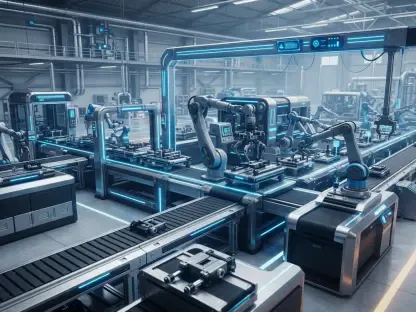
The internal operations of the Taicang facility revolve around the high-precision manufacturing of essential robotic components, including advanced linear and rotary actuators alongside joint modules. At the center of this technological hub is a fully automated assembly line where six humanoid robots actively participate across five distinct workstations. These machines perform intricate duties such as sorting, joining, inspecting, and packaging the specific parts that will eventually power their own mechanical successors. This self-sustaining cycle of production minimizes human intervention in high-repetition tasks, ensuring a level of consistency that was previously unattainable in robot assembly. By utilizing these specialized machines to build their own kind, the factory serves as a live demonstration of how physical AI can be deployed to manage complex mechanical integrations. This approach not only boosts production capacity but also allows for a more flexible manufacturing setup.
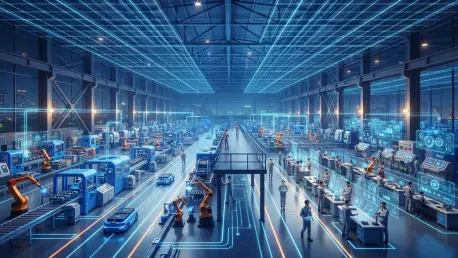
Beyond the physical hardware, the factory leverages a sophisticated digital twin platform that acts as a virtual mirror of every process occurring on the floor. This digital replica allows engineers to monitor critical real-time parameters, ranging from energy consumption metrics to the exact sub-millimeter precision of assembly maneuvers. By analyzing this constant stream of data, the system can identify potential bottlenecks or mechanical wear before they lead to downtime. Furthermore, the virtual environment serves as a sandbox for simulating and optimizing process changes without disrupting the physical workflow. This capability significantly reduces the time required to move from the design phase to full-scale production, providing a competitive edge in a market that demands rapid innovation. The integration of this digital infrastructure ensures that the facility remains at the cutting-edge of smart manufacturing, blending virtual and physical realms for efficiency.
Market Expansion: The Future of Industrial Intelligence
The establishment of this facility coincides with a remarkable surge in commercial interest for humanoid technologies, evidenced by Schaeffler securing global orders totaling approximately €400 million. This financial milestone was significantly bolstered by the acquisition of two major new customers within the Greater China region, highlighting the area’s pivotal role in the global robotics landscape. The demand for these systems is driven by a need for advanced automation that can bridge the gap between traditional industrial machinery and human labor. By situating the plant in Taicang, the company places itself at the nexus of a supply chain that is increasingly focused on high-end motion technology and physical AI. This strategic localization allows for closer collaboration with regional partners and faster response times to the evolving needs of the market. The significant capital investment demonstrates that humanoid robotics have transitioned from experimental prototypes to essential assets.
The inauguration of the Taicang factory successfully established a new benchmark for the integration of physical AI within a real-world industrial laboratory. By replicating the operational environments found across a hundred global manufacturing sites, the facility provided a unique training ground where robotic systems mastered practical skills under authentic conditions. Stakeholders recognized that the transition to autonomous production required more than just advanced hardware; it demanded a holistic approach where data-driven insights and mechanical expertise operated in tandem. Moving forward, the industry was encouraged to adopt similar closed-loop systems to enhance scalability and reduce reliance on static assembly methods. The project effectively demonstrated that the path toward widespread robotic adoption relied on creating environments where machines could learn and refine their abilities independently. This shift suggested that future growth would depend on the ability to synchronize simulations.