
The global pharmaceutical landscape is currently undergoing a fundamental transformation that has fundamentally redefined how life-saving medications reach the patient. As of 2025, the Contract Development and Manufacturing Organization market reached a significant valuation of approximately USD 4.02 billion, and recent data indicates a steady climb toward USD 5.46 billion by 2035. This expansion is not merely a result of increased production volume but rather a strategic realignment where drug developers are intentionally moving away from the capital-intensive “factory-owner” model. By choosing to mitigate the high financial risks associated with building and maintaining internal production facilities, pharmaceutical firms are redirecting their liquidity toward high-level research and early-stage innovation. This shift toward a collaborative manufacturing model allows companies to remain agile in a volatile market while leveraging the specialized infrastructure of external partners. Consequently, the CDMO sector has evolved into the essential backbone of the modern healthcare industry, providing the technical expertise necessary to handle the increasingly complex requirements of next-generation therapies.
Regional Powerhouses and Supply Chain Realignment
The geography of pharmaceutical manufacturing is shifting as traditional centers of excellence in the West meet the aggressive expansion of emerging markets in the East. India and China continue to function as the primary growth engines of the global industry, offering cost-competitive production capabilities and an expansive infrastructure for the manufacturing of Active Pharmaceutical Ingredient substrates. India is currently projected to maintain a robust growth rate of 6.6%, while China follows closely at 5.8%, driven by massive capacity additions and a workforce specialized in chemical synthesis. In contrast, the United States and Germany remain the global benchmarks for high-end biologics and advanced therapies, such as mRNA and viral vectors. These regions benefit from mature ecosystems and stringent quality standards that prioritize innovation and precision over mere volume. This regional specialization creates a balanced global network where different territories provide specific strengths, ranging from the mass production of generic foundational blocks to the artisanal creation of personalized medicines.
Beyond these regional growth rates, the industry is witnessing a significant realignment of global supply chains through a process commonly referred to as “nearshoring” or “friend-shoring.” To avoid the vulnerabilities exposed by recent global disruptions and logistical bottlenecks, many pharmaceutical companies are actively seeking to shorten the physical distance between manufacturing sites and their primary patient markets. This strategic move is intended to ensure a more resilient supply of critical medications while reducing the carbon footprint associated with long-distance shipping. This trend has triggered an unprecedented wave of mergers and acquisitions, as major industry players look to secure specialized capabilities in high-growth areas like cell and gene therapy across diverse continents. By acquiring boutique firms with niche technical expertise, larger CDMOs can offer a localized presence in key markets, effectively providing a “one-stop-shop” service that simplifies the complex logistics of global drug distribution while maintaining the highest levels of quality control.
Technological Evolution and Digital Integration
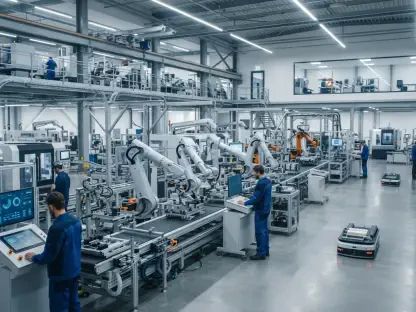
Modern CDMOs are rapidly evolving from simple service providers into high-tech strategic partners by fully embracing the sophisticated principles of Industry 4.0. The integration of Artificial Intelligence and digital twins has completely revolutionized process optimization, allowing for predictive maintenance that prevents equipment downtime before it occurs. These digital tools create a virtual replica of the production line, enabling engineers to simulate various manufacturing scenarios and identify potential bottlenecks without wasting physical materials. This level of digital integration is particularly critical during the scale-up phase of drug production, where moving from a laboratory setting to commercial volumes often introduces unforeseen chemical variations. By utilizing AI-driven analytics, CDMOs can ensure that manufacturing remains consistent and efficient, which is a non-negotiable requirement for maintaining the rigorous data integrity standards demanded by global regulatory bodies during the approval process.
In addition to these digital advancements, hardware innovations such as continuous manufacturing and single-use technologies are rapidly becoming the new industry standard for excellence. Unlike traditional batch processing, which requires the equipment to be stopped and cleaned between every run, continuous manufacturing allows for a seamless flow of production that reduces waste and significantly improves product quality. Simultaneously, single-use systems—comprising disposable bioreactors and filtration units—offer the extreme flexibility needed to switch between different product runs quickly without the risk of cross-contamination. These technological advancements allow CDMOs to accelerate the time-to-market for their clients, providing a decisive competitive edge in an industry where being the first to launch can determine the long-term commercial success of a therapy. As these technologies become more accessible, the barrier between clinical development and commercial manufacturing continues to blur, creating a more integrated and responsive pharmaceutical supply chain.
Strategic Procurement and Regulatory Excellence
The criteria for selecting a manufacturing partner have shifted from a narrow focus on the lowest cost-per-batch to a much more holistic “total value” approach that spans the entire drug lifecycle. Pharmaceutical sponsors now prioritize partners who possess an impeccable regulatory track record and the proven ability to provide end-to-end support, from the initial process development through to the final commercial launch and regulatory filing assistance. This shift emphasizes the paramount importance of regulatory agility, as CDMOs must navigate a complex and ever-changing landscape of international standards, such as FDA 21 CFR and EU GMP guidelines. A CDMO that can demonstrate a history of successful inspections and robust quality management systems becomes an invaluable asset to a pharmaceutical company, as any regulatory delay can result in millions of dollars in lost revenue. Consequently, the relationship between the sponsor and the manufacturer has become more of a long-term marriage based on mutual trust and shared compliance goals.
Environmental, Social, and Governance factors have transitioned from being optional corporate social responsibility initiatives to becoming essential competitive differentiators in the modern marketplace. Major biopharma sponsors are increasingly demanding that their manufacturing partners adopt green chemistry protocols and energy-efficient processes to align with global climate goals. This focus on sustainability includes the reduction of hazardous waste, the implementation of water recycling systems, and the use of renewable energy sources to power manufacturing facilities. CDMOs that proactively invest in these sustainable practices find themselves at a distinct advantage during the procurement process, as they help their clients meet their own internal ESG targets. This commitment to ethical and sustainable manufacturing, combined with a focus on data transparency and operational excellence, ensures that a CDMO can meet the multifaceted demands of the modern healthcare industry while securing stable, long-term contracts in a highly competitive global environment.
Future Considerations and Actionable Strategies
The evolution of the contract manufacturing sector was characterized by a transition from tactical outsourcing to deep strategic integration. Stakeholders looking to capitalize on this growth should prioritize the acquisition of specialized technical capabilities, particularly in the realm of complex biologics and orphan drugs, where margins remain high and competition is limited by the need for advanced expertise. For pharmaceutical companies, the move forward involves shifting from a multi-vendor strategy to a “preferred partner” model, which reduces the administrative burden of managing dozens of different suppliers and ensures a more consistent quality profile across the product portfolio. Investing in digital infrastructure, specifically cloud-based data sharing platforms, will be essential for maintaining real-time visibility into the manufacturing process, allowing for faster decision-making and more collaborative problem-solving between the sponsor and the CDMO. These steps will be crucial for navigating the next phase of industry expansion.
Furthermore, the industry must prepare for an era where personalized medicine moves from niche applications to broader therapeutic use. This will require CDMOs to develop decentralized manufacturing capabilities, where small batches of patient-specific treatments are produced closer to the point of care. Organizations that begin developing the logistical frameworks for this “hub-and-spoke” model today will be the leaders of the market in the coming decade. Additionally, the integration of blockchain technology for supply chain traceability will likely become a requirement to combat the rise of counterfeit medications and ensure the integrity of the cold chain for temperature-sensitive biologics. By focusing on these forward-looking technological and operational strategies, companies can ensure they are not merely reacting to market changes but are actively shaping the future of global healthcare delivery. Success will ultimately belong to those who view manufacturing not as a commodity service, but as a critical driver of therapeutic innovation.