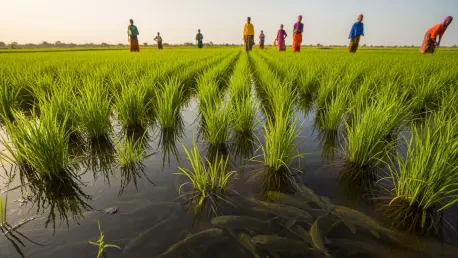

Jason Rohr, a Professor of Biological Sciences at the University of Notre Dame, is leading a transformative shift in how we approach the intersection of global health and sustainable agriculture. His pioneering research focuses on schistosomiasis, a debilitating parasitic disease that currently affects more than 220 million people worldwide, with a staggering majority of these cases concentrated in sub-Saharan Africa. By reimagining the ecology of rice paddies in the northern Senegal River basin, Rohr and his team are demonstrating that the solution to a global health crisis might not just be found in a pill bottle, but in the restoration of natural ecosystems. Their work explores a “win-win-win” strategy that simultaneously combats disease, boosts food security, and alleviates poverty through the integration of native fish into traditional farming landscapes.
How does the traditional method of rice cultivation inadvertently contribute to the cycle of disease and poverty for families in sub-Saharan Africa?
Rice farming is the lifeblood of many rural communities, yet the standing water required for these crops creates a perfect breeding ground for the freshwater snails that carry parasitic worms. These parasites cause schistosomiasis, a chronic condition that drains the energy and health of over 220 million people, making it one of the most persistent neglected tropical diseases on the planet. While mass drug administration has been the primary strategy for decades, it fails to prevent immediate reinfection; a farmer or a child can be cured one day and infected again the very next time they step into the water to tend their crops. This creates a devastating cycle where the very work intended to provide food and income leads to a decline in physical health, trapping families in a persistent state of economic and medical vulnerability.
What led your team to believe that introducing native fish species could disrupt this ecological pathway for infection?
We recognized that the snails hosting these parasites are a vulnerable link in the transmission chain, and by introducing natural predators like the African Bonytongue and Nile tilapia, we could strike at the source of the problem. In our research involving more than 400 households, we saw a clear pattern: children in rice-farming families had much higher infection rates than those in non-farming households, confirming the specific risk posed by the paddies. By placing these native fish into the fields, we observed that they either consumed the snails directly or outcompeted them for the vital resources they need to survive. It was incredible to watch these fish thrive in the environment without any supplemental feeding, effectively acting as a biological shield that protects the farmers and their children from the parasites lurking in the water.
Beyond reducing the risk of disease, how does this co-culturing technique fundamentally change the agricultural output and soil health of these regions?
The impact on the land itself was one of the most rewarding aspects of the study, as we saw rice yields jump by more than 25 percent in the fields where fish were present. The fish contribute to a more robust ecosystem by naturally aerating the water and providing organic fertilization, which significantly improves the nutrient profile of the soil without the need for expensive chemical inputs. This creates a secondary harvest of high-quality protein, giving families a reliable source of nutrition or a new product to sell at the market for extra income. Walking through these vibrant, multi-species fields feels like seeing a blueprint for the future of farming, where the environment is restored rather than depleted to provide for human needs.
Based on your research in Senegal, what are the most significant hurdles to scaling this model across other regions where schistosomiasis is endemic?
The primary challenge moving forward is transitioning from successful localized trials to a wide-scale implementation that can reach millions of people across diverse rice-growing regions. We need to ensure that the infrastructure exists to provide farmers with healthy stocks of these native fish and that the community understands the long-term health benefits of maintaining this ecological balance. This is a multidisciplinary effort that requires coordination between health officials, agricultural experts, and local leaders to ensure the solution remains sustainable and culturally integrated. If these results hold as we expand, this model could serve as a global standard for addressing health, food security, and poverty through a single, elegant agricultural intervention.
What is your forecast for the future of rice-fish farming as a global health strategy?
I believe we are entering an era where sustainable development will be defined by our ability to find these rare, multifaceted solutions that benefit both people and the planet simultaneously. In the coming years, I forecast that rice-fish co-culturing will become a cornerstone of public health policy in sub-Saharan Africa, moving beyond the laboratory to become a standard practice for millions of smallholder farmers. By restoring the natural predators of disease-carrying snails, we can drastically reduce the global burden of schistosomiasis while providing a pathway out of poverty through increased crop yields and new revenue streams. This approach proves that we don’t have to choose between a healthy population and a productive environment; with the right ecological design, we can achieve both.