
The company is preparing to test a radical open-fan engine architecture on an A380 testbed as a leading propulsion contender for its future single-aisle aircraft program. This strategic move marks the beginning of a comprehensive effort to develop a successor to the A320 family, with an entry into service planned for the late 2030s. As the manufacturer looks beyond current narrow-body limitations, the focus shifts toward an industrial and technological revolution that promises to redefine commercial flight. The ambition is high: achieving a 20-30% reduction in fuel consumption while simultaneously scaling production to levels never before seen in the aviation industry. To reach these goals, the organization is leveraging high-tech demonstrators and digital engineering to solve complex aerodynamic challenges. This roadmap is not just about a new airframe; it is a fundamental redesign of the entire lifecycle of an aircraft, from initial concept and certification to final assembly and global deployment.
Radical Industrial Scaling: Reaching the 100-Jet Target
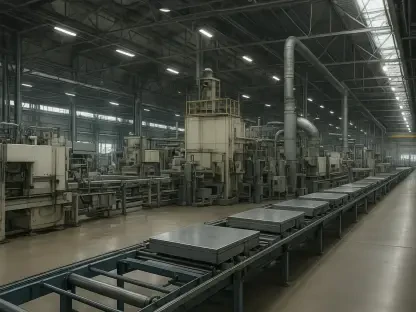
Central to this future vision is an unprecedented industrial target of producing 100 narrow-body jets per month, a feat that would result in the delivery of 1,200 aircraft annually. This goal represents a significant escalation from current stretch targets of 75 aircraft per month, which have already strained the global supply chain and required massive investments in manufacturing capacity. Moving from 75 to 100 units requires a paradigm shift in assembly line philosophy, moving away from traditional manual processes toward a highly automated, robotic-driven environment. The company currently manages ten final assembly lines across four major global hubs, but the next generation will require even more integrated and resilient facilities. By 2027 and 2028, the industrial footprint must evolve to handle the logistical complexity of high-speed production while maintaining the highest quality standards. This ramp-up is essential to meet the growing global demand for efficient single-aisle travel.
Achieving such a breakneck production pace is inextricably linked to the stability and maturity of the supply chain, which must be reinforced starting from 2026. The organization is currently working to overcome persistent bottlenecks, particularly in engine availability and raw material sourcing, which have previously hampered delivery schedules. To build the necessary resilience, the manufacturer is implementing advanced digital tracking systems that provide real-time visibility into every tier of the supplier network. This allows for proactive management of potential disruptions, ensuring that parts arrive exactly when needed for the accelerated assembly process. Furthermore, the development of the A320 successor provides an opportunity to co-design components with suppliers for easier manufacturing. By simplifying the assembly process and reducing the part count where possible, the company aims to minimize the risk of delays, creating a reliable industrial engine that can support the global fleet for decades to come.
Engineering and Strategy: The Path to Market Dominance
In tandem with industrial scaling, the search for extreme aerodynamic efficiency has led to the development of the X-Wing project, a demonstrator aimed at perfecting high-aspect-ratio wing designs. These wings are significantly longer and thinner than those on current aircraft, which substantially reduces drag but creates structural vulnerabilities in turbulent conditions. To counter these effects, engineers are testing folding wingtips and active control surfaces that can adjust in real-time to mitigate structural loads. This technology is being flight-tested on a modified business jet platform to validate the performance gains before the design is finalized for the next-generation narrow-body jet. These aerodynamic improvements are essential for achieving the targeted 20-30% fuel burn reduction, ensuring the new aircraft remains competitive in an increasingly carbon-conscious market. This focus on airframe innovation ensures that the successor will be as efficient in the air as it is productive on the assembly line.
The move toward virtual-first certification established a new paradigm, allowing the organization to collect critical safety evidence through digital simulations long before the physical prototype took flight. This shift effectively turned traditional flight tests into a final validation phase, significantly reducing the lead times that historically delayed new aircraft programs. Looking ahead, the focus must shift to ensuring that global regulators can maintain the pace of these digital innovations while upholding stringent safety standards. Airlines and maintenance providers should prioritize the adoption of data-driven monitoring tools to fully integrate with the aircraft’s advanced digital twins. Furthermore, as the industry moves toward 2030, the emphasis will be on developing a workforce skilled in both aeronautical engineering and high-level data science. These steps were essential to ensure that the transition to the next-generation fleet was not only technologically sound but also operationally sustainable for the mid-21st century.