
The quiet transformation of the regional automotive landscape reached a significant milestone as a leading Chinese manufacturing entity successfully extended its industrial influence into the heart of the South Korean vehicle market. This strategic development involves a substantial $75 million investment from Chery Automobile into KG Mobility, a company seeking to redefine its identity after years of corporate restructuring. This financial infusion, channeled through convertible bonds, provides Chery with a pathway to claim a 10 percent equity stake in the manufacturer formerly recognized as SsangYong Motor.
Far from a simple injection of cash, the agreement signals a sophisticated evolution in how East Asian automotive players navigate the complexities of a transitioning industry. Rather than pursuing a hostile takeover or a basic licensing deal, the two companies are forging a symbiotic relationship designed to combine Chinese technological scale with South Korean manufacturing heritage. This alliance establishes a unique precedent for cross-border cooperation in a region where competitive friction often supersedes collaborative potential.
A $75 Million Strategic Bet: The Future of East Asian Auto Manufacturing
The financial mechanics of this partnership reflect a cautious but ambitious approach to market integration. By utilizing convertible bonds, Chery maintains flexibility while securing a vested interest in the long-term success of KG Mobility. This $75 million commitment serves as a foundational pillar for a broader strategy that aims to elevate both brands within the increasingly competitive global theater. The infusion of capital is specifically targeted toward upgrading production lines and integrating more efficient manufacturing protocols.
This investment underscores a shift in regional power dynamics, where established South Korean infrastructure is being revitalized by the rapid growth and technological momentum of Chinese automotive giants. The move allows Chery to tap into a sophisticated industrial ecosystem, while KG Mobility gains the financial breathing room necessary to execute its ambitious growth plans. This partnership is not merely about surviving the current market cycle; it is a calculated attempt to rewrite the rules of regional vehicle production.
Understanding the Stakes: KG Mobility in a Congested Global Market
KG Mobility currently operates within a challenging environment where international exports represent nearly 60 percent of its total business volume. While this global footprint is impressive, the manufacturer faces immense pressure within its domestic market, where giants like Hyundai and Kia hold a dominant majority. To remain viable, the company must find ways to distinguish its product offerings and modernize its internal processes without the massive research budgets available to its larger rivals.
Aligning with Chery, China’s top vehicle exporter, provides a necessary lifeline by granting access to a more robust global supply network and advanced vehicle architectures. This partnership allows the South Korean firm to scale its operations more effectively, addressing the logistical and technological gaps that previously hindered its ability to compete on a level playing field. For KG Mobility, the stakes involve more than just profitability; the goal is to transform into a high-tech contender capable of holding its own in the international arena.
Project SE-10: Merging South Korean Design With Chery’s T2X Platform
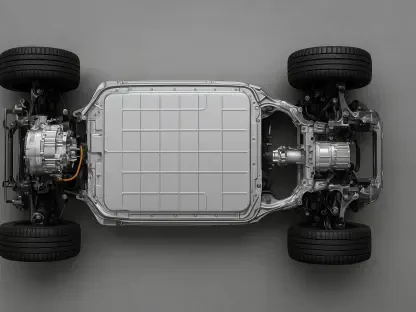
The most immediate manifestation of this collaboration is the SE-10, a midsize SUV that serves as a tangible proof of concept for the joint venture. Built on Chery’s highly regarded T2X platform, the vehicle represents a fusion of engineering philosophies that prioritizes both performance and adaptability. By adopting a proven architectural foundation, KG Mobility can significantly reduce development timelines and costs, bringing a high-quality product to the market with unprecedented speed.
Consumer choice remains at the forefront of the SE-10 project, as the vehicle is designed to accommodate both traditional gasoline engines and sophisticated plug-in hybrid powertrains. This versatility ensures that the model can cater to diverse global markets, from regions with robust charging infrastructure to those still reliant on internal combustion. While the initial focus is on South Korea and existing export hubs, the project creates a viable pathway for potential future entries into the North American market, provided the regulatory landscape remains favorable.
Expert Perspectives: Bypassing Tariffs Through Collaborative Manufacturing
Leadership at Chery International views this collaboration as a strategic masterstroke for navigating the complexities of modern international trade. By leveraging KG Mobility’s existing production facilities, the partnership can effectively implement a “local-for-local” manufacturing strategy. This approach allows for the assembly of vehicles within established markets, thereby minimizing the impact of shifting tariff structures and reducing the logistical expenses associated with long-distance shipping.
This collaborative model reflects a broader industry trend where manufacturers utilize underused factory capacity to optimize global supply chains. By sharing manufacturing footprints and distribution channels, both entities can maximize their operational efficiency and maintain competitive pricing in sensitive markets. This strategy not only bypasses traditional trade barriers but also fosters a more resilient production network that is less susceptible to localized economic fluctuations or political pressures.
A Practical Framework: Scaling High-Tech Automotive Supply Chains
The roadmap for this partnership extends far beyond the assembly of individual vehicle models, focusing instead on a comprehensive industrial framework. A dedicated joint task force was established to oversee the integration of research initiatives targeting semiconductors and robotics. These efforts aimed to enhance the intelligence and autonomy of future vehicle lineups, ensuring that both companies remained at the cutting edge of automotive innovation. By pooling their intellectual resources, the partners sought to create a more sophisticated technological ecosystem.
This collaborative effort also prioritized the stabilization of critical supply chains through the cooperative sourcing of raw materials and steel. The organizations successfully implemented a strategy that insulated their production schedules from the volatility of global commodity markets. This framework ultimately ensured that the transition toward hybridized mobility solutions was both rapid and sustainable. By focusing on shared research and development, the partnership solidified its position as a resilient force in the evolving international automotive market.