
BMW is collaborating with Qualcomm to introduce navigation-guided assistance on city streets under the new European Driver Control Assistance Systems framework. This technological leap serves as a cornerstone for a broader industrial transformation that aims to redefine the premium automotive experience through high-level automation and seamless digital integration. As the global automotive landscape faces increasing volatility from trade shifts and evolving consumer demands, the Group is pivoting toward a leaner and highly regionalized operational model. This movement is not merely a technical upgrade but a fundamental shift in how the company approaches vehicle architecture, manufacturing efficiency, and customer interaction. By prioritizing technological openness and a surgical focus on premium value, the organization seeks to navigate a path that balances traditional driving pleasure with the rigorous demands of an AI-driven future. This comprehensive strategy, detailed during recent industry summits, sets a clear course for the company to reclaim its position as a dominant force in both financial performance and technological innovation.
Financial Architecture: Targeting Long-Term Profitability
The financial recovery strategy is currently structured as a rigorous two-stage process designed to insulate the organization from market fluctuations while funding the transition to next-generation mobility. Management has established a critical milestone for 2028, where the group expects to realize the initial benefits of its widespread restructuring efforts, projecting a temporary margin threshold of 3% to 5%. This period functions as a foundational phase, allowing the company to stabilize its internal processes before pushing toward an ambitious 8% to 10% Automotive EBIT margin target by 2030. Alongside these margin objectives, the group is focused on strengthening its free cash flow within the automotive segment to a minimum of €7 billion, ensuring that there is ample liquidity to support ongoing research and development in electric drivetrains and autonomous systems. This disciplined financial approach ensures that every technological advancement is backed by a sustainable business case that provides long-term security for stakeholders and employees alike.
This financial roadmap represents a radical repositioning that moves away from the traditional one-size-fits-all global production model in favor of a more flexible and value-oriented strategy. While the group maintained significant sales volume throughout the current fiscal year, leadership has emphasized that the modern market necessitates a courageous shift in how assets are deployed across its 30 production sites. Instead of chasing volume at the expense of profitability, the new focus centers on maximizing the contribution margin of every vehicle delivered. This involves a fundamental re-evaluation of production costs, supply chain logistics, and regional pricing strategies. By optimizing the balance between local demand and specialized production, the organization intends to reduce its exposure to geopolitical risks and currency fluctuations. The goal is to build a more resilient corporate structure that can maintain high profitability even during periods of economic uncertainty or shifts in regional trade policies.
Product Philosophy: Streamlining the Vehicle Portfolio
A central pillar of this strategic comeback is the aggressive reduction of complexity within the vehicle lineup to significantly lower manufacturing overhead. Engineers and product planners are currently conducting an exhaustive review of the entire portfolio to identify models that do not meet high contribution margin thresholds. This process has already resulted in the decision to phase out several variants that offer overlapping customer value or high production costs relative to their sales volume. For instance, the 2 Series Active Tourer is among the models that will not see a successor, as the company prioritizes segments with higher growth potential and better brand alignment. By narrowing the product range, the organization can focus its resources on perfecting the “Neue Klasse” architecture, which serves as the technological backbone for the upcoming generation of electric and hybrid vehicles. This reduction in complexity simplifies everything from the body shop to the final assembly line, allowing for faster production cycles and higher quality control.
In tandem with streamlining its core offerings, the group is sharpening its high-end brand identities to capture a larger share of the luxury market. This includes a more integrated approach to the ALPINA brand, with new high-performance models designed to sit strategically between the standard core offerings and the ultra-luxury Rolls-Royce segment. These niche products allow the company to cater to specific high-value customer groups while maintaining a unified technological platform. Furthermore, the expansion of the “Neue Klasse” architecture is being managed with a dual-focus strategy: moving upward into the flagship luxury segments and downward into high-volume entry-level models by 2028. This versatility ensures that the brand remains accessible to a broad range of drivers while simultaneously setting new benchmarks for luxury and performance. By leveraging a single, highly adaptable architecture, the company can deploy the latest e-drive technologies and digital features across its entire fleet with unprecedented speed and efficiency.
Global Operations: The Shift to Localized Production
The organization is actively transitioning from a centralized export model to a “local-for-local” production and development strategy to better serve its key global regions. In China, which remains a critical theater for the group’s long-term evolution, the target is to achieve a 95% localization rate for vehicles by 2030. This initiative goes far beyond simple vehicle assembly; it involves a deep integration of local technological development and supply chain management to ensure that products are perfectly aligned with Chinese consumer preferences and regulatory environments. This transformation is expected to turn the Chinese manufacturing network into a regional export hub capable of serving Southeast Asian markets, effectively reducing the reliance on long-distance logistics and minimizing tariff exposure. This decentralized approach allows for a more agile response to local market trends, ensuring that the brand stays ahead of domestic competitors in one of the world’s most innovative automotive landscapes.
In North America, the strategy revolves around maximizing the potential of the “SAV Stronghold” at Plant Spartanburg, which is currently operating at full capacity to meet the sustained demand for Sports Activity Vehicles. To further capitalize on the American preference for larger, more versatile platforms, the company is evaluating the introduction of a new flagship model positioned above the X7. This move is part of a broader push to produce vehicles closer to where they are sold, which not only lowers shipping costs but also provides a buffer against global trade instability. Meanwhile, in Europe, the focus is directed toward the rapid rollout of the “Neue Klasse” supported by fossil-free energy and digital twin technology at the Debrecen plant in Hungary. This facility serves as a global blueprint for sustainable manufacturing, utilizing the latest sixth-generation e-drive technology to lower fleet-wide emissions and meet the stringent environmental regulations of the European Union. By balancing these regional strengths, the company creates a robust global network that is both ecologically responsible and commercially competitive.
Industrial Intelligence: Integrating Physical and Agentic AI
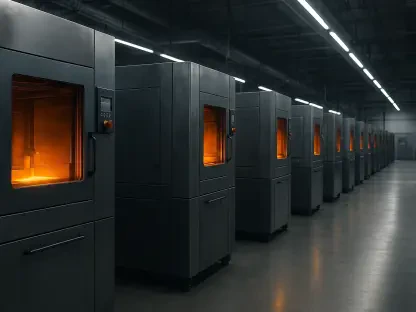
Artificial Intelligence has moved from being a series of pilot projects to becoming the primary lever for operational efficiency within the “iFactory” framework. The company is now aggressively deploying “Physical AI” across its production lines, where self-learning robots and digital agents work autonomously to solve complex manufacturing challenges and manage intralogistics. These systems are capable of identifying bottlenecks in real-time and adjusting workflows to prevent downtime, significantly enhancing the overall throughput of the assembly plants. By integrating AI-supported inspections, the organization has achieved a higher level of precision in quality control, ensuring that every vehicle meets the brand’s exacting standards before it leaves the factory. This technological shift allows for a more dynamic production environment where changes in vehicle specifications can be implemented almost instantly, providing a level of flexibility that was previously impossible in traditional automotive manufacturing.
Beyond the factory floor, the integration of AI is fundamentally changing the core of vehicle engineering through specialized partnerships with leading technology firms like Mistral. The group is building “Large Industry Models” that are trained on decades of proprietary engineering data and simulation results, creating a powerful toolset known as Agentic AI. These applications are designed to automate routine testing procedures, analyze thousands of technical requirements, and run crash simulations with a speed and accuracy that far exceeds human capabilities. By delegating these repetitive and administrative tasks to intelligent systems, the engineering workforce can focus on brand-distinguishing innovations and high-level creative problem-solving. This shift not only accelerates the development cycle for new models but also ensures that the final products are more reliable and technologically advanced. The use of AI in development represents a shift from reactive engineering to predictive modeling, where potential issues are identified and resolved long before a physical prototype is ever built.
Connectivity and Automation: The AI-Defined Vehicle Era
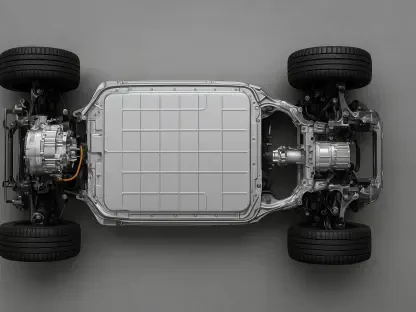
The automotive industry is currently undergoing a transition from software-defined to AI-defined vehicles, and the group is positioning itself at the forefront of this digital evolution. The next generation of vehicles will utilize a sophisticated zonal electrical and electronics infrastructure that allows the car to function as a unified digital entity rather than a collection of isolated software modules. This architectural shift enables the vehicle to interact intuitively across various domains, including infotainment, cabin comfort, and driver assistance systems, creating a seamless and personalized user experience. By centralizing the vehicle’s computational power, the organization can provide continuous over-the-air updates that improve performance and add new features throughout the car’s lifecycle. This approach ensures that the vehicle remains at the cutting edge of technology long after it has been purchased, maintaining its value and relevance in a fast-paced digital world.
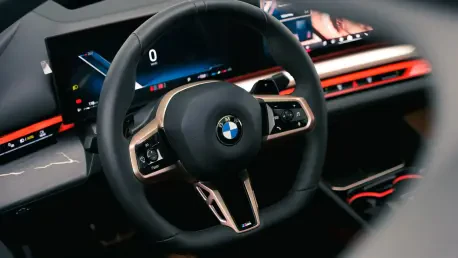
In the realm of autonomous driving and safety, the company is pursuing a multi-track strategy to implement Level 2++ and Level 3 capabilities across its global fleet. In the Chinese market, a new “Symbiotic Drive” system is set to debut on the iX3, offering a sophisticated blend of driver control and automated assistance tailored to complex urban environments. In Europe and Germany, the partnership with Qualcomm is bringing navigation-guided assistance to city streets, allowing drivers to navigate secondary roads with increased safety and reduced stress. The “Highway Assistant” system, which allows for hands-free driving at highway speeds, is already operational in 21 countries and continues to be refined through real-world data collection. The philosophy behind these systems remains focused on intuitive interaction, ensuring that the driver can easily take control at any time without deactivating the safety features. This balance between automation and engagement is designed to enhance the driving experience rather than replace it, staying true to the brand’s heritage of performance.
Organizational Agility: Restructuring for a Modern Market
To support these massive technological and regional shifts, the company is undergoing a significant internal overhaul aimed at creating a faster and more agile management structure. By mid-2027, the group plans to reduce the number of internal divisions and management roles by approximately 20%, a move coordinated closely with labor representatives through a voluntary severance program. This leaner corporate hierarchy is designed to eliminate bureaucratic delays and accelerate decision-making processes, which is essential in an industry where the pace of innovation is constantly increasing. By flattening the organization, the company ensures that insights from the engineering and production teams reach the executive level more quickly, allowing for a more responsive approach to market changes. This internal transformation is a necessary step to ensure that the group can remain competitive against new, highly agile entrants in the electric vehicle and technology sectors.
The commercial side of the business is also evolving through the implementation of a “genuine agency model” that fundamentally changes the relationship between the brand and its customers. This shift involves moving away from the traditional dealership structure to a model where the manufacturer has direct access to customer data and pricing control. This agency model has already been successfully launched for the MINI brand in over 20 markets and is scheduled to expand to the primary brand in 2027. By owning the customer relationship more directly, the company can utilize AI to optimize every touchpoint, from the initial online configuration and test drive to long-term aftersales service. This data-driven approach allows for more personalized marketing and more efficient service scheduling, ensuring a premium experience that is consistent across all regions. The move to an agency model represents a modernization of the sales process, aligning it with the digital expectations of today’s luxury consumers while providing the company with valuable insights into driver behavior and preferences.
Strategic Implementation: Building the Future of Mobility
The leadership group finalized the comprehensive roadmap for the margin comeback and technological pivot after extensive analysis of the 2026 market landscape. Executives prioritized a leaner operational model that integrated advanced intelligence into both the factory floor and the vehicle’s software core. By selecting specific technologies like zonal electrical architectures and regionalized production hubs, the company ensured that its infrastructure remained resilient against global trade pressures. The decision to phase out low-margin models reflected a disciplined approach to capital allocation, while the expansion of the “Neue Klasse” provided a clear path toward a fully electric future. The strategy balanced aggressive innovation with financial prudence, setting a trajectory that aimed to redefine the brand’s role in a rapidly evolving industry.
Engineers and strategists focused on creating a future where the vehicle acted as a proactive digital partner, rather than a passive machine. They implemented “Physical AI” to streamline manufacturing and “Agentic AI” to accelerate the design of next-generation safety systems. These actions were taken to ensure that the organization reached its 2030 margin targets while maintaining a leadership position in autonomous driving and connectivity. The transition to an agency sales model further secured the company’s ability to respond to customer needs with precision and agility. Looking ahead, the focus remained on the continuous refinement of these systems, ensuring that the brand stayed at the intersection of luxury, performance, and digital intelligence. This commitment to a unified strategic vision provided a stable foundation for growth as the industry moved deeper into the era of artificial intelligence.