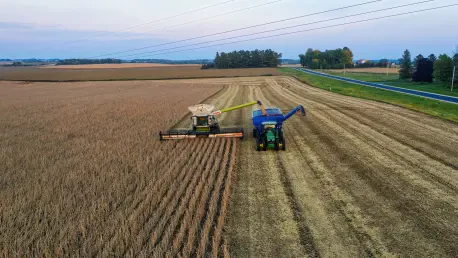

Logistical and financial hurdles continue to compromise the effectiveness of government schemes designed to reward farmers for environmental stewardship and resilience. This reality has defined the 2026 harvest, which stands as the most devastating period for English agriculture since record-keeping began in 1984. The Department for Environment, Food and Rural Affairs has confirmed that yields for cereals and oilseeds have hit unprecedented lows, creating a ripple effect across the domestic supply chain. This year’s failure is not an isolated event but part of a worsening trend, with data showing that four out of the five most meager harvests in the nation’s history have occurred within the last six years. As fields yield far less than anticipated, the intersection of erratic weather patterns and shifting policy frameworks has left the sector in a state of high alert, forcing a reevaluation of how the country secures its food in a period of climate instability and economic uncertainty at this stage.
The Climatic Drivers: A Season of Extreme Volatility
The 2026 growing season suffered from a sequence of weather events that experts have described as a “triple threat” to crop development. It began with an abnormally dry April that prevented many young plants from establishing the robust root systems necessary to survive summer heat. This initial stress was compounded by a June heatwave that researchers from World Weather Attribution characterized as virtually impossible without the persistent influence of global temperature rises. Crops that had managed to survive the spring drought were then subjected to the driest July on record, which effectively desiccated cereal grains before they could fully mature or reach optimal weight. These conditions represent a fundamental shift in the predictability of the English climate, where traditional windows for planting and harvesting are being compressed or destroyed by sudden, intense shifts in temperature and precipitation that leave little room for natural or mechanical error during the cycle.
Total production volumes for 2026 have set new negative benchmarks for wheat, winter and spring barley, and oats. While initial projections from earlier in the spring suggested a return to average yields, the rapid onset of summer heat stripped away any early gains. Wheat yields, specifically, were recorded at approximately 7.2 tonnes per hectare, falling well short of the ten-year average of 7.9 tonnes. Even though some oilseed rape crops demonstrated a localized resilience, their output was nowhere near sufficient to cover the massive deficits left by the cereal sector. The failure of spring-sown crops was particularly acute, as these varieties have less time to recover from early-season moisture deficits compared to their winter-sown counterparts. This widespread decline highlights a systemic vulnerability in the current selection of crop varieties, which were largely bred for a temperate stability that no longer exists in the current environment across the country.
Economic Strain: The Path Toward Systemic Agricultural Reform
Beyond the physical loss of crops, the 2026 harvest has triggered a severe financial crisis that threatens the very solvency of many family-run farms across the country. The Energy and Climate Intelligence Unit has highlighted that the combination of reduced yields and high operational costs is creating a “perfect storm” for agricultural businesses. Farmers who invested heavily in seeds and labor during the spring are now finding that their final revenue cannot cover their initial outlays. This economic pressure is exacerbated by the rising costs of energy and machinery maintenance, which have remained high despite the lower output. Many producers are now facing difficult decisions regarding their operations for the remainder of the 2026 season, with some considering land abandonment or a total exit from the industry. The instability of farm incomes is no longer just a concern for individual growers; it is a national risk that could lead to higher food prices for consumers at large.
The failure of the 2026 harvest demonstrated that existing support structures, such as the Sustainable Farming Incentive, were insufficient to manage the scale of the crisis. While the government intended to reward environmental stewardship, logistical bottlenecks and the rapid depletion of funding pools left many producers without the means to implement necessary changes. To move forward, policymakers recognized that reactive measures were no longer enough to protect the domestic food supply. Practical next steps involved the establishment of a robust, ring-fenced resilience fund that ensured financial stability for those transitioning to regenerative practices. Furthermore, investment in drought-resistant crop varieties and improved regional water infrastructure became a primary focus of agricultural research. By shifting the national strategy from emergency relief to proactive land management, the industry began to safeguard its future against the inevitable climatic shifts.