
The Strategic Evolution of Antibody-Drug Conjugate Production
Designing a therapeutic molecule that bridges the gap between precision biology and lethal chemistry requires an infrastructure that few global facilities can truly claim to possess. The biopharmaceutical landscape is currently undergoing a transformative shift toward targeted therapies, with Antibody-Drug Conjugates (ADCs) leading the charge. Lonza’s Visp campus in Switzerland has emerged as the epicenter of this revolution, evolving into a premier integrated ecosystem designed to handle the immense complexity of these hybrid molecules. ADCs require a delicate marriage of monoclonal antibodies and potent cytotoxic payloads, a process that traditionally involves fragmented supply chains and high logistical risks. By centralizing these operations, Lonza provides a vital solution to a modern industry challenge: the need for seamless, high-containment manufacturing that bridges the gap between large-molecule biologics and small-molecule chemistry. This timeline explores how Lonza’s strategic investments at Visp have redefined the standard for CDMO services, offering a “one-stop-shop” model that supports the journey from initial drug substance to final commercial product.
Two Decades of Innovation: A Timeline of Growth and Integration
Lonza has methodically expanded its capabilities to stay ahead of the technical demands required for next-generation oncology treatments. This evolution has been marked by several key eras of development.
2006. The Foundation of Bioconjugation Services
Lonza initiated its formal entry into the ADC space by establishing specialized bioconjugation services at the Visp site. This early move recognized the potential of linking antibodies to chemical agents, setting the stage for the facility’s future as a specialized hub for complex manufacturing. By investing in these foundational services, the company began building the chemical expertise necessary to handle potent substances alongside biological components.
2007 to 2020. Building the Integrated Three-Platform Ecosystem
During this period, Lonza transformed Visp from a niche service provider into a comprehensive manufacturing powerhouse. The site integrated mammalian manufacturing for antibody production with high-containment suites for payload-linker synthesis. This era saw the development of a unified quality management system, ensuring that both biological and chemical components of an ADC could be produced under one roof. Moreover, the facility expanded its analytical capabilities to ensure the stability of the final conjugate, effectively eliminating the need for external testing vendors and reducing the overall complexity of the production cycle.
2021 to 2025. Scaling for the Outsourcing Boom
As the industry trend shifted toward outsourcing, with over 70% of ADC production moving to CDMOs, Lonza ramped up its capacity to serve a diversifying client base. While continuing to support Big Pharma, the company adapted its “plug-and-play” model to accommodate small-to-mid-sized biotech firms, which now account for more than half of its ADC portfolio. This period was characterized by the rapid expansion of cleanroom space and the implementation of more flexible manufacturing protocols to handle smaller, specialized batches for rare cancer types.
2026 to 2028. Strengthening the Fill-and-Finish Pipeline
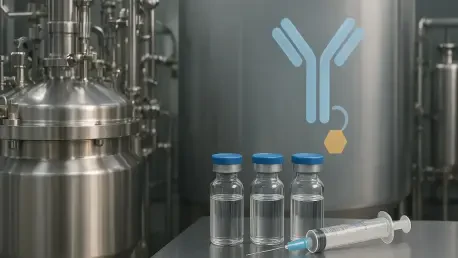
To complete the end-to-end journey, Lonza focused on its Stein facility to complement the Visp campus. The completion of dedicated and multipurpose aseptic fill-and-finish lines, concluding in 2026, ensures that the drug products synthesized at Visp can be transitioned immediately into clinical and commercial vials, further reducing lead times. This strategic synchronization between the two sites allows for a streamlined workflow where the synthesized ADC drug substance is formulated and filled into its final presentation without leaving the secure Lonza network.
2029 and Beyond. Reaching Peak Capacity and Technological Maturity
Lonza is currently executing plans for new multipurpose suites and advanced purification laboratories at Visp, expected to be fully operational by 2029. These investments are designed to meet the projected surge in demand for bispecific conjugates and other complex variations, with the infrastructure expected to reach its peak sales performance by the mid-2030s. The long-term vision includes the adoption of modular manufacturing units that can be scaled rapidly to meet the needs of emerging oncology markets.
Analyzing the Impact of Centralized Manufacturing and Industry Shifts
The most significant turning point in Lonza’s strategy was the shift from fragmented production to a centralized, “one-stop-shop” model. This transition addressed the primary pain point of the ADC industry: the logistical nightmare of shipping highly potent materials across different global sites. By consolidating the antibody, payload, and conjugation processes, Lonza successfully mitigated cross-contamination risks and streamlined the regulatory filing process for its partners. An overarching theme in this evolution is the democratization of high-tech manufacturing; by providing the necessary infrastructure, Lonza has enabled smaller biotech firms to compete on a global scale without the need for massive capital expenditure in private facilities. This centralized approach has effectively lowered the barrier to entry for innovative therapies, allowing life-saving treatments to reach the clinic significantly faster than under previous models.
Competitive Advantages and the Future of Bioconjugation
The strategic expansion at Visp created a significant competitive moat, as few competitors replicated the site’s ability to handle the full end-to-end journey of such sensitive molecules. Beyond the standard ADC, emerging innovations in bispecific conjugates and new payload classes required the extreme precision and high-containment protocols that the facility perfected over the previous decades. It was observed that the synergy between the Visp and Stein sites solidified the industry benchmark for operational efficiency and risk mitigation. To further advance, stakeholders explored automated modular systems to enhance throughput while maintaining the rigorous safety standards established during this growth phase. Future considerations shifted toward the integration of real-time analytical monitoring to further refine the production of life-saving cancer therapies, ensuring that the next generation of precision medicine remained both accessible and scalable.