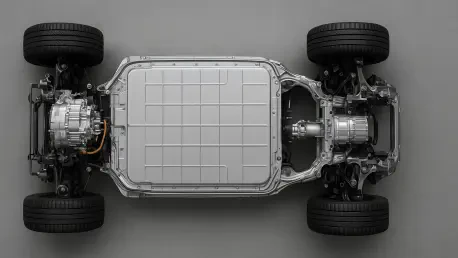

Battery packs remain the single most expensive component of an electric vehicle and typically account for thirty-five percent of the total manufacturing cost. As the global automotive industry navigates the current fiscal landscape of 2026, the initial surge of adoption driven by government incentives has evolved into a fiercely competitive market-oriented environment. Manufacturers are now grappling with a significant profitability deadlock where rising sales numbers no longer guarantee healthy bottom-line margins. This stagnation is exacerbated by the phasing out of historical policy supports and the continued volatility of essential raw materials such as lithium and nickel. To break this cycle, the focus must shift from traditional back-end cost-cutting to a sophisticated “cost-by-design” philosophy. Recent industry data suggests that the majority of a vehicle’s cost structure is firmly established during the initial architectural phase, making front-end design the most powerful lever for financial sustainability and long-term market viability.
The Shift Toward Cost-Oriented Architectural Logic
Designing for Economic Efficiency in a Mature Market
The competitive landscape for electric mobility has fundamentally changed, moving from an era of experimental adoption to one defined by pure economic efficiency and consumer value. Current analysis shows that the cost of goods sold can vary by as much as twenty to fifty percent between different brands competing within the same vehicle segment. Approximately one-third of this variance is directly attributable to product design and material selection, rather than labor or overhead. This realization has forced a total recalibration of how vehicles are engineered from the ground up. If an architecture is inherently over-engineered or lacks integration, even the most efficient manufacturing plant in the world cannot recover the lost margin. By prioritizing structural optimization at the conceptual stage, automakers can target a reduction in total material costs ranging from ten to twenty-five percent, effectively decoupling production growth from escalating expenses.
Eliminating Invalid Costs Through Strategic Product Definition
A critical component of this transition involves the identification and elimination of what experts call “invalid costs”—expenditures on features or performance metrics that provide little to no perceptible value to the end user. For years, many manufacturers fell into the trap of feature stacking, adding expensive hardware and high-end materials simply to match the perceived specifications of luxury competitors. In 2026, successful companies are using granular consumer data to strip away these redundancies. For instance, replacing genuine leather with high-quality synthetic alternatives or simplifying power-seat mechanisms that are rarely utilized can significantly lower the bill of materials without impacting customer satisfaction. This disciplined approach ensures that every dollar spent is visible to the driver, focusing resources on core experiences like infotainment responsiveness and cabin comfort while trimming the hidden technical vanity that often inflates production costs.
Maximizing Battery Performance and Energy Efficiency
Systematic Energy Optimization as a Cost Reduction Lever
Because the energy storage system represents the largest single expense for any electric car, reducing the size of the battery without compromising the advertised range is the most direct path to profitability. This is not achieved by simply removing cells, but by optimizing the entire vehicle as a cohesive energy system. Engineering teams are increasingly focusing on reducing aerodynamic drag and rolling resistance while simultaneously improving the efficiency of the electric drive unit and thermal management system. When these components work in harmony, the vehicle requires less energy to cover the same distance, allowing for a precise downsizing of the battery pack. This strategy, often referred to as “designing for efficiency,” allows a manufacturer to maintain a competitive three-hundred-mile range with a sixty-kilowatt-hour pack instead of a seventy-kilowatt-hour unit, directly saving thousands of dollars per vehicle produced.
Technical Route Selection for Performance and Margin
Choosing the appropriate technical foundation for a specific market segment is another vital aspect of the design-driven profitability strategy. For mainstream, volume-driven models, there is a clear trend toward adopting lithium iron phosphate (LFP) chemistry over more expensive high-nickel alternatives. While high-nickel batteries offer superior energy density, LFP provides a more stable cost structure and longer cycle life, which aligns better with the needs of the average commuter. Furthermore, designers must make strategic decisions between standard 400V systems and premium 800V architectures based on the vehicle’s intended price point. Utilizing silicon carbide semiconductors for 800V systems offers faster charging and better efficiency but comes at a premium that only certain segments can absorb. By matching the technical route to the consumer’s willingness to pay, automakers ensure they are not over-designing their entry-level offerings.
Integration and Software-Driven Standardization
Achieving Leaner Manufacturing Through Deep System Integration
The movement toward highly integrated mechanical and electrical components has become a hallmark of profitable vehicle architecture in 2026. Instead of sourcing separate units for the motor, inverter, and gearbox, leading manufacturers have transitioned to “multi-in-one” electric drive systems. This consolidation reduces the number of housings, connectors, and heavy-gauge cables required, which in turn lowers both material costs and assembly complexity. Furthermore, integrating the thermal management loops for the battery, cabin, and powertrain allows for the elimination of redundant pumps and auxiliary heaters. This level of physical integration does more than just save money; it also reduces the overall weight of the vehicle and frees up internal space, providing designers with more flexibility to enhance passenger comfort or luggage capacity without increasing the external dimensions of the car.
The Decoupling of Hardware and Software Complexity
One of the most effective ways to streamline the modern supply chain is the decoupling of software functionality from physical hardware components. In the past, different vehicle trims often required unique hardware modules, leading to a fragmented and expensive inventory system. The contemporary approach utilizes a unified, high-volume hardware base across multiple models and trim levels, where specific performance characteristics or luxury features are “unlocked” through software configuration. This standardization allows for massive economies of scale in procurement and significantly reduces the logistical burden of managing hundreds of different part numbers. By simplifying the hardware variety, manufacturers can save between one hundred and fifty to four hundred dollars per vehicle in logistics and quality control alone, while still offering consumers the tiered feature sets they expect from a modern automotive brand.
Structural Innovation and Modular Platforms
Reimagining the Vehicle Chassis for Material Savings
Electrification provides a unique opportunity to fundamentally rethink the structural integrity of the vehicle body. Advanced techniques such as Cell-to-Chassis or Cell-to-Body technology allow the battery pack to serve as a load-bearing member of the frame, rather than just being a heavy component carried by it. This integration enhances the torsional rigidity of the vehicle while allowing engineers to remove redundant structural reinforcements from the “body-in-white.” Such innovations can reduce the total weight of the frame by approximately three percent, which contributes to better energy efficiency and lower material usage. Additionally, by simplifying the physical structure, automakers can reduce the number of individual parts that require stamping and welding, leading to a lower initial investment in manufacturing tooling and a faster, more automated assembly process on the factory floor.
Economies of Scale via Multi-Energy Modular Foundations
Developing bespoke platforms for every different type of powertrain is a capital-intensive strategy that few companies can justify in today’s market. The most successful players in 2026 have adopted multi-energy modular platforms that support both pure electric and extended-range powertrains using a shared set of core components. This modularity allows for massive procurement volumes for suspension systems, steering racks, and climate control modules, driving down the unit cost through sheer scale. These platforms are designed to be flexible enough to accommodate different wheelbases and body styles, enabling a rapid iteration cycle for new models. By spreading the high costs of research and development across a wider variety of vehicle types, manufacturers can significantly lower the R&D amortization per unit, ensuring that even niche models can contribute to the overall profitability of the company.
Modernized Standards and AI-Powered Engineering
Eliminating Redundancy Through Updated Industry Specifications
Many of the standards used in the automotive industry today were inherited from the era of internal combustion engines and do not necessarily reflect the operational realities of electric propulsion. By re-evaluating these legacy specifications, engineers can eliminate “standard redundancy” that adds unnecessary cost to the vehicle. For example, optimizing motor designs to reduce or eliminate the use of expensive heavy rare earth materials while maintaining strict reliability standards can save between ten and twenty dollars per motor. Systematic demand optimization across the entire vehicle—from the durability requirements of the door hinges to the cooling capacity of the radiator—can yield total savings of several hundred dollars per unit. This process involves a rigorous look at how parts actually fail in the field versus how they are tested in the lab, allowing for more realistic and cost-effective engineering targets.
Generative AI as a Catalyst for Design Optimization
The integration of Generative AI into the research and development phase has fundamentally accelerated the quest for structural efficiency. AI-driven simulation tools are now capable of running thousands of design iterations in the time it used to take an engineering team to complete one. These tools can identify the “sweet spot” where material usage is minimized without compromising safety or performance, often suggesting complex geometries that human designers might overlook. Furthermore, AI can analyze vast datasets of consumer preferences and warranty claims to predict which design choices will yield the best long-term return on investment. By leveraging these advanced computational tools, automakers can avoid the expensive trial-and-error cycles that characterized previous development programs, ensuring that every new vehicle is optimized for maximum profitability from the moment it is conceived on the digital drafting board.
The Transformation of Profitability Frameworks
The analysis of the current automotive landscape revealed that the transition to a design-centric profitability model was no longer optional for those seeking to lead the industry. Automakers identified that the previous strategy of focusing on manufacturing speed and procurement pressure had reached its limit, necessitating a fundamental shift toward architectural intelligence. By implementing the structural design measures discussed, manufacturers demonstrated that it was possible to reclaim lost margins and achieve financial sustainability even in a market without heavy subsidies. The path forward required a disciplined commitment to system integration, the modernization of outdated engineering standards, and the adoption of cutting-edge simulation tools to eliminate waste before production began. These actions provided a clear blueprint for navigating the complexities of the 2026 to 2030 market cycle.
Moving beyond the current profitability deadlock will involve a continuous focus on refining the relationship between software and hardware to create distinct brand value without increasing physical complexity. Future considerations must prioritize the development of circular design principles, where the ease of disassembly and material recovery is built into the initial architecture to offset the rising costs of raw materials. Companies that successfully integrated these design philosophies into their core operations secured a competitive advantage that transcended simple price competition. As the industry looks toward the next decade, the ability to balance extreme structural efficiency with a superior user experience will remain the primary differentiator for success. The shift from “growth at any cost” to “growth through disciplined design” finalized the maturation of the electric vehicle market, establishing a sustainable foundation for the future of global mobility.