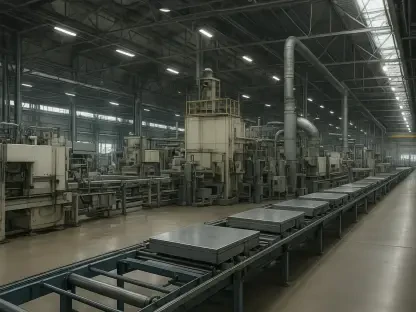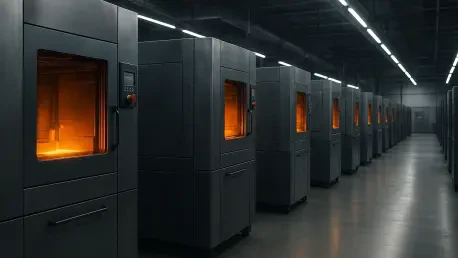

High-volume service providers are becoming the backbone of the additive industry by managing the complexities of 24/7 industrial printer operations. The initial dream of decentralized manufacturing, where every home or office would house a high-end 3D printer, has largely been replaced by a reality defined by massive, specialized production centers. This shift reflects a fundamental change in how corporations view additive technology, transitioning from an experimental toy into a serious manufacturing asset that requires professional oversight. Rather than burdening internal teams with the steep costs of maintenance and environmental controls, modern enterprises are looking toward experts who can guarantee output quality at scale. This professionalization allows companies to bypass the steep technical hurdles while still reaping the benefits of rapid iteration. As we navigate the complexities of global supply chains in 2026, the reliance on these high-output service hubs is only intensifying, proving that the future of the industry lies in shared capacity.
The Industrial Shift: From Machine Ownership to Outsourced Production
Historically, the success of the additive manufacturing sector was measured by the number of individual machines sold to traditional factories. The expectation was that manufacturers would eventually replace their milling and turning stations with rows of internal 3D printers to handle all their custom parts. However, current market statistics tell a different story, with service bureaus growing at double the rate of general machine sales. While traditional equipment purchases by individual firms have leveled off, third-party suppliers are aggressively expanding their fleets to meet rising demand. Even in periods where overall machine shipments remained relatively flat across the industry, the specific segment of service providers experienced growth exceeding fifteen percent. This indicates that the market is not shrinking but rather consolidating its production power into the hands of specialists who can maximize machine utilization and ensure consistent part quality for various clients.
The surge in contract manufacturing is being fueled by a strategic need to reshore supply chains and lower the barrier to entry for industrial-grade hardware. We are seeing massive investments from relatively young service firms that are acquiring dozens of printers at a single time to build out high-capacity production lines. For example, recent commitments by leading service providers to add nearly one hundred industrial units to their facilities mark some of the largest hardware transactions in the history of the sector. These entities act as localized production hubs that can respond to shifts in consumer demand without requiring the end client to invest millions in capital expenditures. By centralizing the technological risk, these bureaus allow smaller firms to compete on a global scale by providing access to the latest powder-bed fusion and multi-jet technologies. This model has effectively turned 3D printing into a utility, where companies pay for the parts they need rather than the machines.
Learning from the Past: The Injection Molding Model
The current evolution of the additive manufacturing ecosystem mirrors the long-standing trajectory of the injection molding industry. Most original equipment manufacturers integrate plastic components into their final products, yet very few of them actually own or operate the complex molding equipment required for production. Instead, they rely on specialized contractors who have the technical proficiency to manage molds, material temperatures, and cycle times. Additive manufacturing is rapidly maturing into this exact structure as it moves away from simple prototyping toward the creation of end-use parts, jigs, and fixtures. By adopting an outsourced model, companies can bypass the intense learning curves and high maintenance costs that are inherent to industrial printing. This specialization ensures that parts are produced with high precision by operators who understand the nuances of material science and thermal management, which is critical for safety-regulated industries.
This professionalization of the supply chain is moving 3D printing into the realm of reliable, large-scale manufacturing that can stand alongside traditional methods. As technology becomes more complex, the specialized bureau becomes an indispensable part of the product development cycle. These bureaus do not just provide machine time; they offer engineering expertise that helps refine designs for additive manufacturing, ensuring that parts are optimized for cost and performance. This collaborative environment allows designers to push the boundaries of what is possible without being tethered to the physical limitations of their own internal shop floors. Consequently, the industry is seeing a shift where the value proposition is no longer about the printer itself, but about the quality and predictability of the final output. This maturity allows for the broader adoption of 3D printing in sectors like aerospace and medical devices, where the margin for error is nonexistent.
Strategic Bridges: Integrating Design and Production
To facilitate this transition between internal design and external production, major hardware manufacturers have introduced strategic bridge machines designed specifically for engineering environments. These systems offer a lower-cost entry point into industrial powder-bed technology without the need for specialized facilities or heavy infrastructure. Unlike the massive units found in service bureaus, these printers are engineered to run on standard power connections and require minimal environmental controls. The primary goal is to provide engineers with the ability to iterate on designs using the same professional materials that will be used in final production at a contract manufacturer. This creates a seamless workflow where the material properties and tolerances of a prototype perfectly match those of the mass-produced component. By filling the gap between desktop filament printers and high-output industrial fleets, these systems empower designers to finalize their parts with confidence.
This accessibility is essential for organizations that have reached the functional limits of basic fused filament systems but are not yet ready to commit to a full production environment. While desktop printers are excellent for visual models, many professional applications require the mechanical strength and geometric precision that only powder-bed systems can provide. By placing these bridge machines in the hands of design teams, manufacturers ensure that the transition to high-volume production through a service bureau is frictionless. This democratization of professional technology allows for more rapid innovation cycles, as engineers no longer have to wait for external shipments to verify a critical design change. It also fosters a more robust relationship between designers and service providers, as both parties are working within the same technological framework. This strategy has proven vital in maintaining a healthy pipeline of new products that are ready for industrial scaling.
Future Trajectory: Elastic Capacity and Innovation
One of the most transformative advantages of the modern service bureau model is the provision of elastic production capacity. Because 3D printing removes the need for expensive fixed tooling or complex molds, manufacturers can scale their orders up or down almost instantly to react to market trends. This agility is particularly valuable in a landscape where consumer preferences shift rapidly and global supply chains remain unpredictable. For an original equipment manufacturer, this means they can maintain a small internal fleet for urgent development while overflowing high-volume needs to a contract partner with the click of a button. This approach drastically reduces the financial risk associated with launching new products, as companies no longer need to carry vast inventories of spare parts. By leveraging a digital inventory, businesses can print exactly what they need, exactly when they need it, ensuring that capital is not tied up in storage.
In retrospect, the decision to move toward a service-based model proved to be the most viable path for the long-term health of the additive industry. Stakeholders realized that centralized expertise and high machine utilization were the keys to making 3D printing cost-competitive with traditional manufacturing. The introduction of bridge hardware effectively connected the design phase with the production phase, ensuring that innovation remained fluid and scalable. Meanwhile, the integration of artificial intelligence successfully eliminated the variability that once hindered the widespread acceptance of printed parts. Looking forward, companies that prioritized partnerships with specialized bureaus found themselves better positioned to adapt to economic shifts. The focus shifted away from the novelty of the printer and toward the strategic value of the digital supply chain. Ultimately, the industry delivered on its promise of a flexible future by building a robust network of factories.