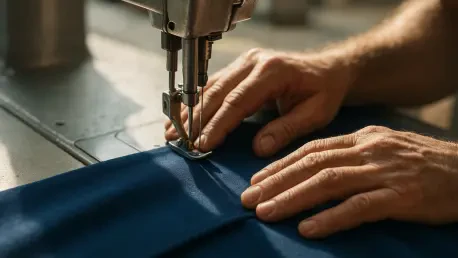

Current capacity utilization in global manufacturing facilities sits at approximately 71 percent, which remains significantly below the 80 percent threshold required for a healthy profit margin. This specific metric serves as a sobering reminder that while the global textile industry is no longer in the freefall observed during the previous few years, the path to a full recovery remains obstructed by systemic hurdles. The latest data suggests a fragile stabilization, where manufacturers are slowly clawing back from the historic lows of late 2023, yet find themselves operating in a “new normal” characterized by cautious optimism and restricted growth. This stabilization is not a return to the high-volume expansion of the past decade but rather a survivalist equilibrium. Companies are navigating a landscape where the cost of production often outpaces consumer demand, forcing a fundamental rethink of traditional business models. As the sector moves through 2026, the focus has shifted from rapid expansion to maintaining liquidity and managing a volatile supply chain that is increasingly sensitive to external shocks.
Regional Divergence: The Shift Toward Emerging Manufacturing Hubs
The prevailing business climate reveals a stark and growing divergence between different geographical regions, essentially creating a two-speed global textile economy. In South Asia and parts of Africa, the manufacturing index has actually moved into positive territory, signaling that these regions are capturing a larger share of the current market momentum through competitive labor costs and localized vertical integration. Conversely, traditional textile powerhouses in Europe and the Americas are struggling under the weight of a severe contraction. For instance, manufacturers in South America have recently reported some of the most challenging conditions on record, with order intakes plummeting as local inflation and political instability erode domestic purchasing power. This regional disparity suggests that the recovery is highly localized rather than a universal trend. While emerging hubs are positioning themselves for future growth, established markets are focusing on consolidation and cost-cutting measures just to stay afloat. This shift is fundamentally remapping the global supply chain, moving production centers closer to emerging consumer markets.
Sectoral Fragmentation: Disparities Across the Textile Value Chain
Within the industry itself, fragmentation is equally evident across the various segments of the value chain, from raw material processing to final garment assembly. Fiber producers currently enjoy a position of relative strength, reporting higher confidence levels because the demand for basic materials persists even when consumer appetites for finished fashion goods fluctuate. In direct contrast, spinning mills and textile finishers find themselves in a precarious financial position, caught between high energy prices and the unpredictable costs of raw cotton and synthetic fibers. This squeeze on margins has led to a noticeable investment drought within the textile machinery sector. Because fabric manufacturers are prioritizing the preservation of cash over the acquisition of new technology, capital expenditure has been largely deferred until 2027 or later. This lack of investment in modern equipment could have long-term consequences, as it slows the overall pace of innovation and efficiency gains across the industry. Without the integration of newer, more efficient machinery, those manufacturers struggling today may find it difficult to compete when global demand eventually returns to healthy levels.
Lean Inventory: Operational Strategies for a Volatile Market
A critical shift in operational strategy is currently being defined by the adoption of lean inventory management, particularly across manufacturing hubs in Southeast Asia. For years, the industry relied on producing for stock, but the volatility of the mid-2020s has forced a move toward a “hand-to-mouth” existence where production is strictly tied to confirmed orders. While this approach minimizes the risk of carrying unsold inventory and protects a company’s balance sheet from sudden market shifts, it also creates a significant lack of flexibility. Factories operating at 71 percent capacity with zero stock are unable to respond quickly to sudden surges in demand, potentially leaving money on the table if consumer sentiment rebounds faster than expected. This conservative stance is a direct response to the inventory glut that plagued the industry in 2025, where overproduction led to massive discounting and brand erosion. Today, the priority is clearly on financial stability rather than market share, a strategy that ensures survival in a high-interest-rate environment but limits the ability of firms to scale operations effectively during the windows of opportunity.
Trade Diversification: Adaptation Through Technology and New Markets
In response to the evolving geopolitical landscape and shifting trade policies, many textile firms are proactively diversifying their market exposure to mitigate the “tariff effect” and other protectionist measures. Approximately 29 percent of surveyed companies have already begun pivoting away from US-centric trade models to explore burgeoning opportunities in intra-Asian trade and emerging African consumer bases. This diversification is often paired with a renewed focus on high-tech automation and artificial intelligence to streamline production lines. By investing in digital twins and automated sewing technologies, manufacturers are attempting to decouple their operational costs from the rising price of labor. This strategy is particularly prevalent in regions where labor costs have spiked, as automation provides a way to maintain competitiveness without the need for massive, low-wage workforces. For these companies, the goal is not just to survive the current downturn but to emerge as leaner, more technologically advanced entities that are less reliant on traditional shipping routes and more integrated into digital supply networks. This technological pivot represents the most significant structural change the industry has seen in several decades.
Systemic Barriers: Navigating Geopolitical Uncertainty and Weak Demand
The road to a sustained industry-wide recovery is currently blocked by a triple threat of weak global demand, escalating input costs, and persistent geopolitical instability. More than half of industry leaders identify the lack of consumer appetite as their primary hurdle, as households continue to prioritize essential spending over discretionary apparel purchases. This sluggish demand is exacerbated by the ongoing conflict in Iran, which has injected fresh volatility into global energy markets and disrupted critical shipping lanes through the Middle East. High energy costs directly translate to higher operational expenses for dyeing and finishing plants, further compressing already thin profit margins. Moreover, the uncertainty surrounding international trade relations makes long-term strategic planning nearly impossible. Manufacturers are often forced to make split-second decisions regarding logistics and material sourcing based on the latest news cycle rather than long-term economic forecasts. This environment of perpetual crisis management has drained many companies of the resources they would otherwise use for research and development, effectively stalling the industry’s progress toward sustainability and circular economy goals.
Future Implementation: Strategic Next Steps for Lasting Resilience
Looking ahead toward 2027, the textile industry moved cautiously toward a more resilient operational framework by prioritizing structural agility over raw volume. Manufacturers that successfully navigated the challenges of 2026 did so by embracing a multifaceted approach that combined regional diversification with targeted technological investments. The most successful firms transitioned away from high-risk, single-market dependencies and instead cultivated diverse supply networks that could withstand localized shocks. They also integrated advanced data analytics to better predict consumer shifts, allowing for more precise production cycles that reduced waste and improved overall profitability despite lower capacity utilization. Moving forward, the industry was required to address the widening gap between fiber production and final garment assembly to ensure that efficiency gains were shared across the entire value chain. By focusing on sustainable practices and circular manufacturing, the sector eventually began to decouple its growth from raw material volatility. These strategic next steps were essential for transforming the fragile stabilization of the current period into a robust and sustainable foundation for long-term global growth.