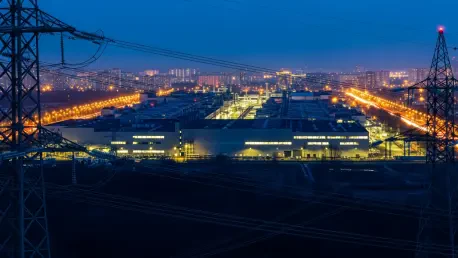

The shift from theoretical energy warnings to a full-blown industrial crisis has manifested in Romania as the nation’s two largest car manufacturers were forced to halt production to prevent a total grid collapse. This unprecedented suspension of operations at the Dacia and Ford Otosan facilities, scheduled to last until mid-August, serves as a stark reminder that the country’s energy infrastructure is struggling to keep pace with its economic ambitions. While the government has framed these measures as a necessary sacrifice to maintain residential stability during a period of extreme demand, the implications for the nation’s GDP and its international reputation are profound. The automotive sector is a cornerstone of the Romanian economy, and this forced downtime highlights a systemic vulnerability that could deter future foreign direct investment. By requesting that industrial giants slash their consumption, the state has prioritized short-term grid safety over the continuity of high-value manufacturing, exposing a fragility that demands immediate and comprehensive attention from policymakers.
Strategic Trade-offs: The High Cost of Grid Stability
Assessing the Impact: Industrial Load Reduction Strategies
The sudden removal of approximately 200 megawatts from the national demand through the suspension of manufacturing at these massive facilities provided a vital, albeit painful, safety net for a system teetering on the edge. This immediate reduction in load was not a strategic success of energy efficiency but rather a desperate emergency measure intended to prevent rolling blackouts across major urban centers and critical public services. By forcing industrial leaders to bear the burden of infrastructure shortcomings, the government secured short-term stability at the expense of long-term economic predictability. This approach shifts the responsibility of grid management onto the private sector, creating an environment where operational continuity is no longer guaranteed by the state’s utility framework. Such a move signals to global markets that Romania’s energy grid is incapable of supporting its most productive sectors during peak periods, which essentially penalizes the very industries that drive the nation’s technological and economic growth.
Cascading Economic Disruptions: Effects on the Supply Chain
Beyond the assembly lines in Mioveni and Craiova, this forced production freeze has triggered a massive ripple effect that is currently destabilizing the regional economy and its extensive supplier networks. Modern automotive manufacturing relies on a delicate “just-in-time” delivery model where components arrive exactly when they are needed; when the primary plants stop, hundreds of secondary and tertiary suppliers are immediately plunged into financial uncertainty. These firms, which provide everything from electronic sensors to interior upholstery, often lack the capital reserves to withstand prolonged idleness, leading to fears of permanent closures or significant downsizing. Thousands of workers are now navigating a period of profound instability, as reduced hours and temporary layoffs become the only way for these suppliers to survive the production freeze. This disruption does not just stall the current quarter’s output; it breaks the momentum of the entire industrial ecosystem and threatens the logistical reliability that is crucial for international trade.
Institutional Resilience: Addressing the Broader European Landscape
Political Risks: Administrative Credibility in Question
This energy crisis has arrived at a particularly precarious time for the administration in Bucharest, which is currently under intense scrutiny from the European Union regarding fiscal discipline and the implementation of structural reforms. The inability to provide a steady and reliable power supply to the country’s flagship exporters raises significant alarms regarding Romania’s administrative capacity and its readiness for further industrial expansion. International observers and credit rating agencies may view this as a fundamental credibility problem, suggesting that the nation’s rapid growth has far outpaced its basic utility maintenance and infrastructure investment. Investors are increasingly concerned that the state has prioritized short-term political goals over the capital-intensive task of upgrading transmission lines and diversifying energy generation. If the grid continues to show signs of instability, the next wave of industrial investment may bypass the region in favor of more stable markets, undermining years of progress in becoming a hub for manufacturing.
Navigating EU Industrial Ambitions: Meeting Energy Realities
The resolution of the industrial energy crunch required more than just temporary shutdowns; it demanded a fundamental shift in how the nation approached its energy strategy. Decision-makers were forced to acknowledge that sustaining a high-tech automotive industry was impossible without a parallel and aggressive investment in resilient power sources. Stakeholders established a dedicated industrial energy fund, which utilized carbon tax revenues to subsidize the transition of large-scale factories toward self-sustained microgrids and high-capacity battery storage. Furthermore, the government fast-tracked the modernization of the high-voltage transmission network and expanded the integration of modular nuclear reactors to provide a stable baseload. These structural improvements worked to ensure that industrial output was no longer sacrificed for residential grid stability. By the time production resumed, new transparency protocols and real-time monitoring had restored the confidence of global investors and secured the nation’s economic trajectory.