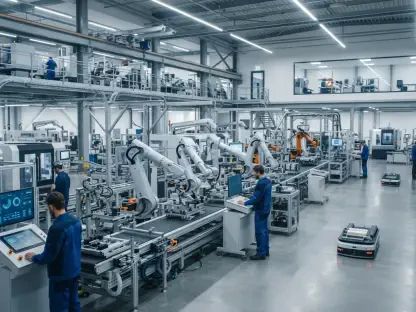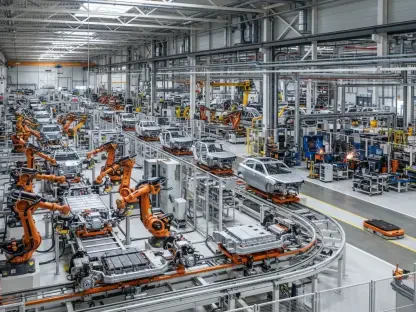

Toyota, Honda, Mazda, Suzuki, and Mitsubishi are collaborating on non-competitive manufacturing areas to build a more resilient domestic supply chain against Chinese automotive expansion. This unprecedented alliance signals a fundamental shift in the Japanese automotive landscape, where the historical emphasis on isolationist perfectionism is being replaced by a pragmatic model of strategic cooperation. For decades, these manufacturers operated as fierce competitors, each guarding their proprietary standards with extreme caution. However, the rapid ascent of international competitors and the complexities of modern vehicle production have forced a reconsideration of traditional boundaries. The initiative, known as Smart Standard Activity (SSA), represents a collective effort to harmonize manufacturing protocols across the domestic industry. By focusing on shared efficiencies rather than individual brand distinctions, these companies aim to reduce costs and streamline their supply chains. This movement is not merely a defensive maneuver but a proactive evolution designed to ensure the long-term viability of the sector.
Redefining Quality: Function Over Aesthetics
The central pillar of this new industrial strategy involves a radical redefinition of what constitutes automotive quality in the eyes of both the manufacturer and the consumer. Historically, Japanese carmakers were synonymous with an uncompromising pursuit of aesthetic perfection, often rejecting components for microscopic scratches or minor color variations that were entirely invisible once the vehicle was fully assembled. Under the Smart Standard Activity framework, engineers are now trained to distinguish between critical quality, which impacts safety, durability, and essential performance, and superfluous quality, which refers to cosmetic details that offer no tangible value to the end-user. For example, a plastic bracket located behind a door panel or a structural support beam inside the dashboard no longer requires a flawless finish if its mechanical integrity remains uncompromised. This shift allows for a more realistic assessment of parts, significantly reducing the volume of perfectly functional components that were previously discarded as waste.
By adopting this function-oriented perspective, Japanese manufacturers are successfully mitigating the high costs associated with over-engineering. This transition to data-driven pragmatism ensures that manufacturing resources are allocated where they matter most, prioritizing the longevity and safety of the vehicle over unnecessary cosmetic refinement. The reduction in industrial waste is substantial, as fewer parts are rejected during the quality control process, which in turn lowers the energy consumption and carbon footprint of the entire production cycle. Furthermore, this approach empowers line workers and quality inspectors to make informed decisions based on the actual usage of the part rather than adhering to rigid, outdated checklists. The implementation of these smarter standards does not imply a reduction in overall vehicle reliability; instead, it represents a more sophisticated understanding of engineering efficiency. By aligning production standards with consumer needs, the industry is creating a more sustainable manufacturing model that can better withstand global economic fluctuations.
The Strategic Necessity: Rival Collaboration
The impetus for this collaborative movement was the stark realization that internal optimization within individual companies had reached a point of diminishing returns. Major Japanese suppliers often produce similar components for several different automakers simultaneously, yet they were historically forced to manage a chaotic web of conflicting quality requirements for each specific client. A single factory production line might have been required to adhere to five different sets of aesthetic criteria for nearly identical internal clips or fasteners, depending on whether the final destination was a Toyota or a Honda assembly plant. This fragmentation created massive logistical hurdles, increased the overhead for suppliers, and ultimately drove up the unit price for every manufacturer involved. By coming together to standardize these non-competitive elements, the major automakers are effectively removing a significant layer of bureaucracy from their shared supply chains, allowing for smoother production flows and more predictable inventory management across the board.
This collective effort reached a significant milestone when over 100 professionals from rival firms and various parts suppliers gathered at Toyota’s Tahara factory to engage in a hands-on inspection of standardized manufacturing processes. This gathering was more than a mere technical workshop; it served as a symbolic turning point where former adversaries acknowledged that their survival in the global market depends on their ability to stand together in the factory. The participants scrutinized parts like rear-seat air-conditioning vents, agreeing that minor scuffs on the underside of a vane—which would never be seen by a passenger—should not result in a rejected part. This consensus marks a definitive move toward “co-opetition,” where companies compete fiercely in the showroom while collaborating on the mundane but essential details of production. By simplifying the demands placed on the domestic supply base, these automakers are fostering a more agile and resilient industrial ecosystem that is better equipped to handle the rapid expansion and aggressive pricing of international rivals.
Harmonizing the Supply Chain: Economic Stability
To ensure that these collaborative efforts lead to lasting structural change, the Japanese Automobile Manufacturers Association and the Japan Auto Parts Industries Association have formally integrated these smart standards into an industry-wide mandate. The creation of a joint working group and the subsequent promotion declaration signify a unified commitment to fortifying the domestic manufacturing landscape against external pressures. This harmonization is vital because it provides a clear and consistent set of expectations for the thousands of small and medium-sized enterprises that form the backbone of the Japanese automotive sector. When these suppliers can rely on a single set of quality benchmarks for non-critical components, they can invest more heavily in automation and process improvements rather than wasting resources on managing multiple client-specific protocols. This alignment not only stabilizes the financial health of the suppliers but also ensures that the entire industry can maintain its competitive edge in an era where speed and efficiency are the primary determinants of market success.
The economic benefits of these revised quality standards are already becoming evident across the industry, with Toyota reporting a high adoption rate for the new protocols within its internal supply networks. By formalizing these efficiencies through major trade associations, the industry is ensuring that the gains made in production speed and cost reduction become permanent fixtures of the Japanese manufacturing environment. These smarter quality rules provide a necessary buffer against global economic volatility and the rising costs of raw materials, allowing manufacturers to keep their vehicle prices competitive without sacrificing their profit margins. Moreover, this movement serves as a stabilizing force for the national economy, given that the automotive sector employs millions of people and accounts for a significant portion of the country’s industrial output. By prioritizing functional integrity over cosmetic perfection, the Japanese auto industry is building a more robust and sustainable foundation that will support continued innovation and growth in the coming years, even as the global competitive landscape continues to shift rapidly.
Shared Standards: Balancing Competition and Cooperation
A critical aspect of the Smart Standard Activity is the carefully maintained boundary between collaborative manufacturing and proprietary innovation, ensuring that each brand retains its unique market identity. While the major automakers are sharing data on manufacturing efficiencies and appearance standards, they are not exchanging engine blueprints, software code, or any other technology that defines their specific brand philosophy. This selective transparency allows companies like Mazda to continue perfecting their rotary engine technology and Subaru to maintain their signature boxer engine configurations without interference. The collaboration is strictly confined to “non-competitive” areas, such as the quality standards for hidden plastic clips, internal structural brackets, or the underside of seating components. By deciding which areas do not require competition, these manufacturers can focus their limited resources on the features that truly matter to the consumer, such as advanced safety systems, performance tuning, and cabin design, thereby maintaining a diverse and competitive marketplace.
The successful implementation of the Smart Standard Activity across the Japanese automotive industry demonstrated that strategic cooperation in non-competitive areas was a viable path toward long-term resilience. By 2026, the movement expanded its reach beyond domestic borders, with manufacturers initiating similar standardization programs in their North American and European production hubs. This global rollout suggested that the industry viewed these pragmatic quality standards as a primary competitive advantage in an increasingly crowded market. Stakeholders who prioritized functional integrity over aesthetic perfection found themselves better positioned to invest in next-generation electric and autonomous technologies. The shift toward these unified manufacturing protocols proved that collective efficiency could coexist with individual brand innovation. Moving forward, the industry established a precedent for other sectors, proving that the key to surviving global economic shifts lay in identifying shared vulnerabilities and addressing them through unified action.