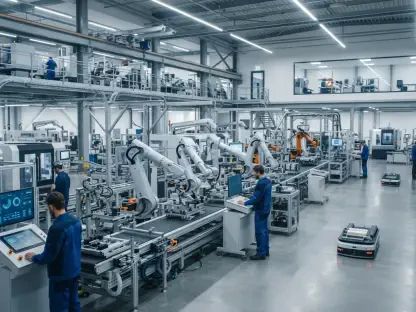

Emerging biotech firms often find the capital expenditure for building internal HPAPI-compliant facilities and analytical teams to be prohibitive. This financial barrier comes at a time when the oncology sector is undergoing a profound transformation fueled by the rapid ascent of Antibody-Drug Conjugates. Once relegated to the fringes of experimental research, these sophisticated agents have emerged as a definitive cornerstone of modern precision medicine. The industry now recognizes them as “biological missiles” capable of delivering potent cytotoxic payloads with surgical accuracy that was previously unimaginable. Market projections underscore this momentum, with the global valuation expected to climb significantly from 2026 to 2034. This growth trajectory is supported by an expanding clinical pipeline and a renewed sense of confidence among developers. As the field matures, the transition to complex formats introduced technical hurdles that demand a fusion of biology, chemistry, and precision engineering.
Structural Complexity: The Integration of Biology and Chemistry
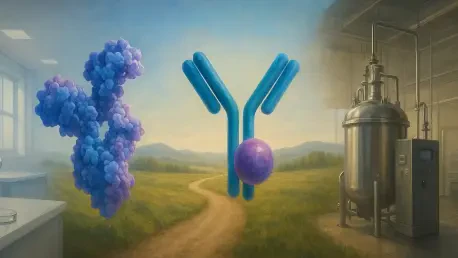
Designing a successful ADC requires achieving a perfect harmony between three distinct yet entirely interdependent components: the monoclonal antibody, the chemical linker, and the cytotoxic payload. While early development efforts primarily targeted well-established markers such as HER2, today’s researchers are pushing boundaries with bispecific antibodies that offer even greater specificity. These advanced delivery vehicles are engineered to navigate the complex human circulatory system to find tumor cells while leaving healthy tissues unharmed. The chemical linker remains perhaps the most technically demanding element of the entire construct, as it must maintain absolute stability during systemic transport to prevent premature release and systemic toxicity. Conversely, the linker must also ensure efficient payload release once the ADC has been internalized by the target cell. Handling the payloads themselves adds complexity, as these Highly Potent Active Pharmaceutical Ingredients require specialized high-containment environments and rigorous safety protocols.
Given the massive capital requirements and the need for highly specialized multidisciplinary knowledge, the vast majority of the industry has pivoted toward a heavy reliance on outsourcing. It is currently estimated that between 70% and 80% of active ADC programs are managed through partnerships with Contract Development and Manufacturing Organizations. For many smaller developers, constructing internal facilities that meet the stringent requirements for handling dangerous cytotoxic agents is simply not a viable option. Consequently, the selection of a manufacturing partner has evolved into a high-stakes strategic decision that can determine the ultimate success of a drug candidate. Beyond mere physical infrastructure, a partner’s regulatory pedigree is an essential asset for successfully navigating the journey from clinical trials to commercialization. A truly effective collaborator must possess the intellectual depth necessary to troubleshoot the unique chemical hurdles that arise during the development of these highly specialized and sensitive therapeutic molecules.
Modern Innovations: Advancing Precision and Scalability
The current landscape of ADC development is being redefined by a definitive shift toward site-specific conjugation and the introduction of novel toxin classes. Earlier generations of these drugs often relied on random conjugation methods, which unfortunately resulted in a heterogeneous mixture of molecules with varying drug-to-antibody ratios. This lack of uniformity often led to unpredictable pharmacokinetic profiles and inconsistent safety data, complicating the regulatory approval process. In contrast, modern site-specific techniques allow researchers to attach payloads to precise, predetermined locations on the antibody structure. This evolution has paved the way for a much more uniform drug product, offering predictable safety outcomes and consistent therapeutic behavior in patients. However, achieving this level of homogeneity requires an unprecedented degree of coordination between the teams responsible for protein engineering and those handling the chemical conjugation, as the protein itself must often be modified to accommodate specific attachment sites.
A persistent challenge within the sector remains the scalability gap, a phenomenon where molecules that demonstrate exceptional potential in a laboratory setting fail to survive the transition to large-scale commercial manufacturing. Decisions made during the preclinical or Phase I stages regarding purification strategies or analytical methods often carry long-lasting implications for a product’s commercial viability. To address these risks, the industry is increasingly adopting an integrated development model that views antibody production, linker synthesis, and conjugation as a single, unified process rather than a series of disconnected steps. This holistic approach is essential for identifying potential manufacturing bottlenecks before they escalate into expensive delays during late-stage clinical development. By streamlining the transfer of knowledge from the bench to the production line, developers can significantly reduce cycle times and ensure that their innovations are both scientifically sound and practically manufacturable for a global patient population.
Strategic Evolution: Securing Long-Term Success
The journey toward sophisticated ADC development demonstrated that bioconjugation expertise became the primary differentiator for success in a crowded market. Stakeholders realized that the transition from early-generation constructs to site-specific, multi-functional therapies required a level of technical depth that few organizations could maintain independently. As the sector moved toward a multi-billion-dollar valuation, the integration of advanced chemical synthesis with complex protein engineering defined the leaders of the industry. Developers prioritized early collaboration with experienced partners who treated the conjugation process as a fundamental design element rather than a final assembly step. This shift in perspective allowed for more robust therapeutic candidates that withstood the rigors of late-stage clinical evaluation and commercial scaling. By addressing technical and logistical hurdles early, the oncology community secured a more sustainable path for treatment innovation.
The industry successfully transitioned from a state of experimental uncertainty to a period of standardized excellence by prioritizing the harmony of biological and chemical disciplines. Leaders in the space recognized that the complexity of modern oncology required a departure from siloed development practices in favor of collaborative frameworks. This evolution allowed pharmaceutical companies to navigate the intricate regulatory landscape with greater confidence, ensuring that safety and efficacy remained the primary metrics of progress. By focusing on site-specific precision and scalable manufacturing early in the design phase, developers avoided the pitfalls that previously hampered the commercialization of biological conjugates. These strategic choices solidified the role of ADCs as a primary modality in cancer care, providing a blueprint for future therapeutic innovations. Ultimately, the integration of specialized expertise and advanced infrastructure proved to be the most effective path toward success.