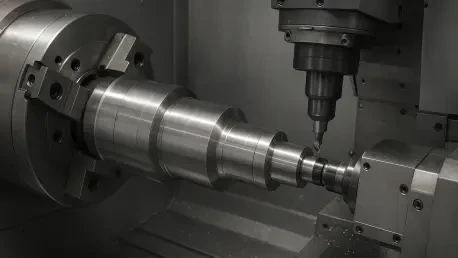

Safety during high-speed turning is managed through a specialized enclosure featuring laminated safety glass and a reinforced cabin top designed for operator protection. This strategic launch of the C 22 MT by HERMLE AG marks a definitive pivot in the landscape of high-precision manufacturing, addressing an industry-wide push for consolidated workflows. Traditionally, producing complex, rotationally symmetrical components required a fragmented array of specialized machines, each necessitating unique setups and manual transitions. The C 22 MT disrupts this outdated paradigm by enabling a holistic process known as complete machining, where milling and turning occur within a single workstation. This integration is not merely a convenience but a technical necessity for modern aerospace and medical manufacturers who must achieve tighter tolerances without increasing production costs. By merging these capabilities, the system provides a seamless pathway from raw stock to finished parts, setting a high benchmark for operational flexibility and technical sophistication in a high-demand global market.
The Engineering Foundation: Rigidity and Thermal Control
At the mechanical core of the C 22 MT lies a meticulously engineered swiveling rotary table from the SRT 320 MT series, which serves as the foundation for its multi-tasking prowess. Unlike standard milling tables, this component was specifically redesigned to absorb the significant torsional loads and centrifugal forces generated during high-speed turning operations. To maintain accuracy under these strenuous conditions, the engineering team implemented an optimized C-axis bearing and a reinforced A-axis housing that prevents structural deformation. Thermal stability remains a critical concern for operators seeking micron-level precision, which is why the machine employs a sophisticated water-cooled axis structure to mitigate the effects of heat friction. This proactive thermal management ensures that the machine retains its geometric integrity throughout extended production cycles, allowing for the reliable manufacturing of components with demanding form and position tolerances in a single clamping.
Transitioning between heavy-duty roughing and delicate finishing requires a versatile range of performance specifications, which the C 22 MT provides through its integrated motor spindle. Capable of reaching speeds up to 20,000 rpm, the spindle allows for high-velocity milling, while the machining table itself supports turning speeds up to 1,500 rpm. This dual capability is supported by a robust clamping torque of 400Nm, providing the raw power necessary to process difficult materials such as titanium, inconel, and various heat-resistant alloys. By accommodating workpieces with a diameter of up to 320mm and weights up to 300 kg, the machine bridges the gap between small-scale precision and heavy industrial machining. This technical synergy allows manufacturers to execute complex power skiving or grinding tasks without transferring the part to secondary equipment, thereby maintaining the absolute reference points established during the initial setup throughout the workflow.
Economic Efficiency: Floor Space and Automation
Beyond its technical specifications, the C 22 MT addresses the economic realities of the modern factory floor by optimizing the physical and financial footprint of the production line. Consolidating milling and turning into a single footprint allows manufacturers to significantly reduce floor space requirements, which in turn lowers facility overhead and energy consumption. A key component of this efficiency is the integration of the HERMLE Pallet Clamping System (PCS) directly into the machining table. This design choice eliminates the need for additional clamping plates, thereby reducing the total height of the setup and enhancing overall rigidity. By lowering the center of gravity and shortening the distance between the tool and the workpiece, the machine achieves a higher degree of stability during aggressive material removal. This lean approach to machine architecture not only improves the quality of the output but also shortens the return on investment for high-precision machine shops.
To remain competitive in a landscape increasingly defined by autonomy, the C 22 MT was designed with a “future-proof” philosophy that prioritizes native compatibility with advanced automation solutions. The machine features standardized interfaces that facilitate seamless integration with various handling systems, such as the HS flex, or complex robotic platforms like the RS 05-2 and RS 2. This connectivity allows companies to transition from manual operations to fully autonomous “lights-out” manufacturing, where the machine operates unattended throughout the night. Such scalability is essential for scaling production volumes without a proportional increase in labor costs. Furthermore, the ability to automate the loading of complex parts ensures that the high-precision capabilities of the machine are utilized at maximum capacity. By creating a modular environment where automation can be added incrementally, HERMLE provides a clear path for businesses to modernize their production workflows effectively.
Operational Stability: Chip Management and Safety
Effective debris management is often the deciding factor in the reliability of a mill-turn system, as the different shapes and volumes of milling chips versus turning swarf can quickly clog a workspace. The C 22 MT addresses this challenge with a specialized hinged belt conveyor and an internal cooling system that includes bed flushing to actively clear the work zone. This continuous removal of hot chips prevents thermal transfer to the machine bed, maintaining a stable temperature environment that is vital for long-term accuracy. Additionally, the inclusion of laminated safety glass and a reinforced cabin top provides a secure environment for operators, shielding them from the high-energy projectiles common in turning. These features combine to create a robust operational environment where maintenance requirements are minimized, and process stability is prioritized. This focus on the physical realities of the workshop ensures that the machine performs consistently during high-volume production.
The launch of the C 22 MT successfully addressed the growing industrial demand for integrated manufacturing solutions that prioritize precision over process fragmentation. By eliminating the risks associated with reclamping, HERMLE provided a clear technical path for manufacturers to improve the quality of rotationally symmetrical parts while reducing overall production times. The integration of grinding and skiving capabilities within a single setup proved to be a decisive factor for companies operating in the aerospace and medical sectors. Looking forward, the shift toward such multi-tasking centers suggested that the future of precision engineering would depend on the ability to maintain absolute geometric references across diverse machining disciplines. Stakeholders who invested in this technology positioned themselves to handle increasingly complex designs with a higher degree of economic efficiency. This evolution in machine tool design marked a significant milestone in the pursuit of the fully autonomous and highly accurate modern factory.