
The automotive landscape in Western Europe has reached a critical inflection point where traditional manufacturing giants must embrace unconventional alliances to remain competitive against emerging global rivals. Ford Motor Company has officially confirmed a landmark partnership with Geely Holding Group to breathe new life into its Almussafes facility in Valencia, Spain, a site that had previously faced an uncertain future amidst the industry-wide shift toward electrification. This strategic collaboration signifies a major shift in how legacy automakers manage their underutilized industrial footprints by integrating the technological prowess and cost-efficient platforms of Chinese manufacturers. By combining Ford’s deep-rooted heritage and regional expertise with Geely’s modular architectures, the Valencia plant is poised to become a central hub for a new generation of hybrid vehicles. This move secures thousands of local jobs and demonstrates a pragmatic approach to navigating global trade.
The Strategic Alignment: Industrial Stability and Growth
The decision to bring Geely into the fold at the Valencia plant reflects a broader trend of industrial pragmatism where speed to market outweighs the desire for proprietary development in every segment. For Ford, the partnership provides an immediate solution for the Almussafes site, which has been transitioning away from older internal combustion models like the Mondeo and S-Max. Geely gains a vital foothold within the European Union, bypassing trade barriers and logistical hurdles that accompany importing vehicles from Asian production centers. This arrangement allows both companies to share the massive capital expenditures required for developing new vehicle architectures and battery management systems. The synergy leverages Ford’s established supply chain in Europe while utilizing Geely’s highly efficient manufacturing protocols and software-defined vehicle capabilities. This collaborative model ensures that the facility remains operational at high capacity.
Beyond high-level corporate strategy, the revitalization of the Spanish factory serves as a cornerstone for regional economic stability during a period of labor transition in the manufacturing sector. Local government officials and labor unions have long advocated for a clear roadmap for the Almussafes plant, and this partnership provides the necessary assurance that the site will remain a key player in Spain’s industrial sector. The workforce is expected to undergo retraining programs to adapt to the specific assembly requirements of the new joint platforms, which prioritize modularity and integrated electronics. As the facility moves from 2026 into 2028, the production lines will be reconfigured to handle a diverse mix of powertrains, ensuring that the plant can respond dynamically to fluctuating consumer demand. This stability is crucial for the hundreds of tier-one and tier-two suppliers in the Valencia region who rely on the plant’s continued operation.
Technological Integration: Production Roadmaps and Future Capabilities
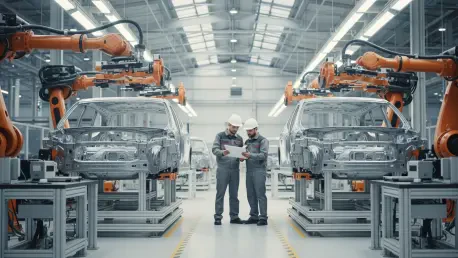
Technological integration at the heart of this deal centers on the adoption of Geely’s proven Compact Modular Architecture, which has already demonstrated success in various Volvo and Polestar models. By utilizing this flexible platform, Ford can significantly reduce the lead time for bringing new competitive models to European showrooms without starting from a blank sheet of paper. The Valencia facility will be equipped with updated robotics and digital twin modeling technologies to ensure that the transition to these new architectures is seamless and meets global quality standards. Furthermore, the partnership includes a focus on localized battery assembly and energy management software, which are critical components for the next generation of plug-in hybrid and full electric vehicles. This technical exchange allows Ford to benefit from Geely’s rapid innovation cycles in battery chemistry. The integration of these systems represents a merger of Western assembly and Eastern tech agility.
Industry observers monitored the initial phases of this rollout as a blueprint for future cross-continental automotive ventures that sought to balance local manufacturing with global technology sharing. Stakeholders recognized that the success of the Valencia project depended on the effective harmonization of different corporate cultures and engineering philosophies. To ensure long-term viability, management established a joint task force focused on streamlining the supply chain and maximizing the efficiency of shared components between the two brands. Leaders prioritized the development of a localized ecosystem for power electronics, which reduced reliance on external markets and mitigated risks associated with shipping disruptions. These actions provided a clear path forward for other legacy brands facing similar capacity challenges. By the time the first units rolled off the line, the partnership proved that collaborative investment was the most effective way to sustain high-tech jobs.