
The global manufacturing landscape has reached a point where the traditional procurement model of sourcing components from a dozen different vendors is no longer sustainable for original equipment manufacturers seeking rapid market entry. When an engineering team in North America or Europe has to coordinate between a raw material supplier, a separate CNC machining shop, and a third-party surface finisher, the logistical complexity often leads to cascading delays that can stall multi-million dollar product launches. This fragmentation creates a significant risk of quality disputes, as each vendor may shift blame when a finished component fails to meet the required specifications upon arrival. To navigate these challenges, forward-thinking manufacturers are now pivoting toward a vertically integrated “one-stop” production model that consolidates the entire lifecycle of a mechanical part. This approach eliminates the administrative friction of managing multiple contracts and ensures that a single point of contact maintains accountability for every detail from initial casting to final inspection.
Strategic Integration: Mastering the Upstream Material Supply
Building on this foundation of efficiency, the one-stop model begins with the strict management of the upstream material chain to ensure the highest structural integrity of every component. By controlling the development of raw materials such as custom aluminum extrusions, die castings, and forged blocks, engineers can implement rigorous Design for Manufacturability (DFM) reviews at the earliest possible stage. This early intervention allows for the optimization of material properties and part geometries before any metal is actually cut, which significantly reduces the likelihood of encountering unexpected structural failures during the high-precision machining phase. When the manufacturer also functions as the material developer, they can tailor the alloy composition and grain structure to meet the specific mechanical demands of the final application. This synergy between material science and machining not only lowers overall production costs but also ensures that the base material is perfectly suited for the complex geometries required.
Managing the material supply in-house further eliminates the volatility associated with external material lead times, which have historically plagued global supply chains during periods of high demand. Because the production facility maintains its own inventory of specialized ingots and extrusion dies, they can pivot quickly to accommodate design changes or urgent scale-up requests from their international partners. This level of vertical integration means that the manufacturing process is no longer at the mercy of third-party metal stockholders who may prioritize larger orders or face their own logistical bottlenecks. Furthermore, having a direct link between the material source and the machining floor allows for immediate feedback loops where any inconsistencies in the metal can be identified and corrected before thousands of units are processed. This proactive stance on quality ensures that the final product possesses the necessary durability to withstand the extreme operational environments common in the heavy industry and automotive sectors.
Precision Engineering: Achieving Sub-Micron Accuracy in Production
Once the material is secured and optimized, the focus shifts to high-end technical capabilities that allow for the creation of components with incredibly tight tolerances, often reaching ±0.005mm. Utilizing a sophisticated mix of 5-axis machining centers and Swiss-type lathes, modern facilities can produce an extensive variety of parts ranging from massive structural frames to the smallest, most intricate turned components. These advanced machines allow for the completion of complex features in a single setup, which drastically reduces the margin of error that typically occurs when a part must be moved between different workstations. For global OEMs, this precision is not just a luxury but a fundamental requirement when building sophisticated assemblies that rely on perfect alignment and synchronization. The ability to execute such demanding work within a single facility ensures that the technical intent of the original design is preserved throughout the entire manufacturing process without any dilution of quality.
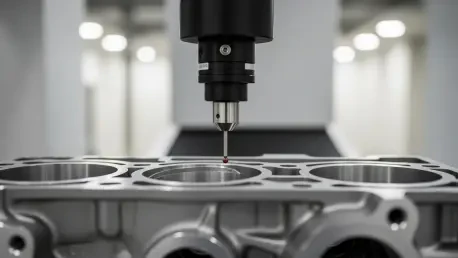
The verification of these ultra-precise components is conducted using advanced metrology tools such as Coordinate Measuring Machines (CMM) and high-resolution digital scanners to ensure total compliance. By housing these inspection technologies within the same environment as the production floor, manufacturers can perform real-time quality audits that catch minute deviations before they escalate into systemic issues. This rigorous verification process is essential for high-stakes industries like aerospace and medical technology, where even a microscopic flaw can lead to catastrophic failure or regulatory non-compliance. The integration of digital inspection data back into the machining workflow allows for a self-correcting system that constantly refines its own output to maintain peak performance. Consequently, international buyers receive detailed inspection reports that provide full traceability for every dimension, fostering a level of trust that is difficult to achieve when dealing with multiple disparate vendors. This data-driven approach to precision engineering serves as a cornerstone for long-term industrial partnerships.
Finishing and Assembly: Delivering Industrial Solutions
The comprehensive nature of the one-stop approach extends deep into the downstream processes of finishing and assembly, offering a wide array of specialized surface treatments. By providing in-house services such as anodizing, PVD coating, and electroplating, manufacturers maintain a single quality management system that spans the entire production cycle. This internal control prevents the common risks associated with shipping sensitive parts to external finishers, such as accidental surface damage, contamination, or the delays caused by inter-facility logistics. Moreover, keeping these finishing stages under one roof eliminates the “finger-pointing” that often happens between vendors when a part fails a final aesthetic or functional inspection after it has already left the machine shop. The result is the delivery of “ready-to-install” units that arrive at the OEM facility prepared for immediate use, which significantly simplifies the buyer’s internal logistics and reduces the administrative burden of tracking multiple purchase orders across different companies.
The adoption of a one-stop CNC machining strategy provided a clear pathway for organizations to overcome the persistent bottlenecks associated with fragmented manufacturing. By consolidating material sourcing, precision engineering, and specialized finishing, manufacturers delivered a streamlined experience that allowed global OEMs to launch products with greater confidence and speed. This transition proved that the integration of diverse technical processes into a single workflow was the most effective way to eliminate logistical waste and ensure uncompromising quality across complex projects. Moving forward, companies found that the most successful path involved auditing their existing supply chains to identify areas where consolidation could yield immediate improvements in lead times and accountability. They recognized that selecting a partner with a broad range of in-house capabilities was not just a procurement decision but a strategic move to secure their market position. Ultimately, the industry moved away from the risks of vendor dispersion and embraced the reliability of a unified production partner to drive long-term industrial success.