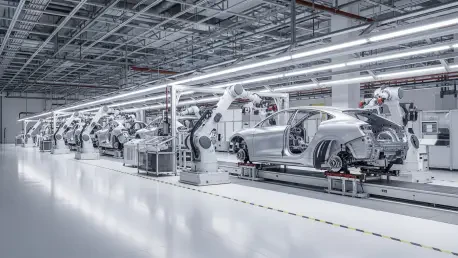

For over a century, the automotive industry followed a predictable path defined by massive factories, complex supply chains, and toxic paint lines, but the emergence of the Cybercab marks the definitive end of that era. Rather than merely addressing the carbon emissions that exit a tailpipe, this new paradigm focuses on the environmental cost of a vehicle’s birth, targeting the manufacturing phase as the primary site for ecological intervention. The integration of autonomous technology with a radically simplified assembly strategy, known as the Unboxed Process, offers a dual solution to the persistent challenges of industrial pollution and the inherent wastefulness of private vehicle ownership. By reconsidering every component from the ground up, the design minimizes the total environmental footprint from the moment raw materials enter the facility. This shift ensures that the transition to sustainable energy is not undermined by the very processes used to build the hardware, establishing a new standard for global manufacturing.
Cutting Emissions through Radical Assembly Changes
The Innovation: Elimination of Toxic Paint Processes
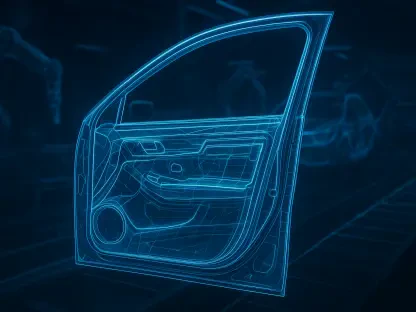
One of the most transformative innovations in development is the implementation of Reaction Injection Molding, which effectively eliminates the traditional paint shop from the factory floor. In standard automotive facilities, paint shops are the most energy-intensive sections, requiring massive ovens to bake finishes onto metal frames and consuming vast amounts of natural gas in the process. By using this molding technique, polyurethane body panels are created with pigment already integrated into the material, which successfully shortens production cycles from several hours to a mere matter of minutes. This transition removes the need for energy-heavy drying and curing stages, significantly cutting down the total electricity and gas required for every unit produced. Because the color is baked into the structure of the panel itself, the finished product is more durable and resistant to minor abrasions, while the factory avoids the massive thermal load typically required for industrial finishes.
Chemical Safety: Mitigating Waste and VOC Emissions
Beyond the immediate energy savings, the move to advanced molding technology allows for the total elimination of Volatile Organic Compounds, which have long been a hazardous byproduct of traditional spray painting. While modern factories often use complex scrubbers and filtration systems to manage these emissions, the Cybercab’s manufacturing process removes the source of the pollution entirely, rendering such mitigation systems unnecessary. This structural change ensures that the air quality surrounding production facilities is not compromised by chemical sprays, protecting both the workforce and neighboring communities from potential exposure. By reimagining the vehicle’s surface treatment, the production line becomes cleaner and safer, proving that industrial efficiency and environmental health can coexist. It highlights that industrial scaling does not have to come at the cost of ecological integrity, provided that manufacturers are willing to abandon legacy systems in favor of integrated, chemically inert solutions.
Streamlining the Factory for Peak Performance
Facility Optimization: Maximizing Floor Space in Production
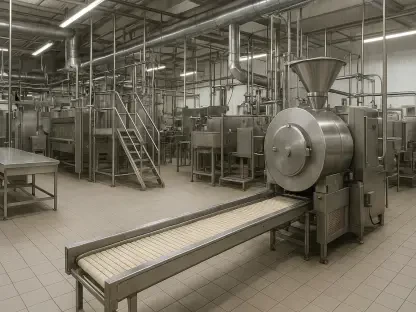
The efficiency of the Cybercab is further enhanced by the Unboxed Process, a modular assembly strategy that builds the vehicle in parallel sections rather than on a linear conveyor belt. This shift allows the manufacturing facility to operate within a footprint that is approximately 40% smaller than traditional facilities, leading to lower requirements for heating, lighting, and general climate control. Consequently, the embedded carbon of each vehicle is reduced, and reports indicate a 35% drop in manufacturing and supply chain emissions compared to older assembly methods. This optimized use of space and resources demonstrates how streamlining the assembly line directly contributes to a more sustainable industrial model. By minimizing the land use and operational overhead typically associated with heavy industry, the factory itself becomes a highly efficient machine. This strategy highlights a crucial lesson: the most sustainable factory is not just one powered by renewables, but one that requires fewer total resources.
Energy Efficiency: Enhancing Operational Performance
On the road, the vehicle stands as the most efficient production electric vehicle ever created, achieving a record-breaking performance of 165 Wh/mile. This hardware efficiency is over 30% better than previous leading models, but the true environmental gain lies in its role as a high-utilization autonomous taxi. While private cars remain idle for the vast majority of their lives, the Cybercab is designed for near-constant motion, serving multiple passengers throughout the day. By spreading the environmental cost of its production over a much higher number of service miles, the vehicle pays off its carbon debt far faster than any privately owned alternative. This model effectively decouples mobility from the need for excessive vehicle production, maximizing the utility of every kilogram of material used. As a result, the lifecycle carbon footprint per passenger-mile is drastically reduced, presenting a compelling case for shifting toward autonomous fleet services as the primary method for urban resource management.
Integrating Future Standards for Industrial Growth
Strategic Evolution: Implementing Shifts for Long-Term Viability
The successful implementation of this production model proved that the automotive industry was capable of an ecological reset when traditional constraints were discarded. Stakeholders recognized that the removal of the paint shop and the adoption of modular assembly were not just technical milestones but essential steps toward a circular economy. To capitalize on these advancements, manufacturers focused on retrofitting existing facilities with parallel processing capabilities and invested heavily in material science to replace traditional finishing methods. Policymakers also shifted their focus toward incentivizing vehicle utilization rates rather than just unit sales, ensuring that autonomous fleets reached their full potential in reducing urban congestion. By prioritizing hardware longevity and ease of recycling, the industry moved closer to a closed-loop system where the end of a vehicle’s life provided the raw materials for the next. This transition successfully demonstrated that the future of mobility depended on smarter manufacturing.
Resource Stewardship: Adopting Holistic Lifecycle Management
The industry ultimately adopted a mindset where vehicle performance was measured by total lifecycle impact rather than just zero-emission status. Stakeholders across the supply chain coordinated to standardize the use of recyclable polyurethanes and advanced molding techniques, which significantly reduced the complexity of vehicle decommissioning. Financial models transitioned from individual ownership toward fleet-based services, which maximized the utility of every manufactured unit and reduced the overall demand for new resource extraction. This holistic approach demonstrated that the path to a sustainable future required a complete reimagining of how products were designed, built, and shared across society. By focusing on these actionable strategies, the global community took a decisive step toward a truly clean and efficient transportation network. The transition successfully proved that industrial progress and environmental stewardship were not mutually exclusive but were, in fact, the dual pillars of modern mobility.