
The landscape of the South African automotive sector is undergoing a profound shift as global manufacturers transition from simple distribution models to fully integrated industrial hubs within the region. Chery has moved beyond its initial status as an agile vehicle importer to establish itself as a powerhouse in South African manufacturing. By securing a dedicated production facility in Rosslyn, Pretoria, the Chinese automotive giant is signaling a robust, long-term commitment to the Southern African economic zone. This strategic pivot represents a major evolution in how the brand interacts with the local market, effectively transforming South Africa into a central hub for regional production and technological development. As the company embeds itself into the local industrial fabric, it is creating a blueprint for how international firms can navigate the complexities of emerging markets while simultaneously fostering growth through capital investment and infrastructure modernization.
Industrial Evolution: Infrastructure and Strategic Foundations
Modernizing Historical Production Infrastructure
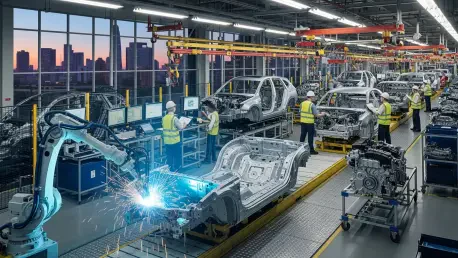
The cornerstone of this industrial transformation involves the comprehensive modernization of a historic plant in Rosslyn that possesses a manufacturing legacy dating back to 1963. Chery intends to overhaul this facility with cutting-edge robotic equipment and digital infrastructure designed to meet the most rigorous global standards of the current decade. While full-scale operations are scheduled to commence in mid-2027, the organization has already established an ambitious target of producing 15,000 vehicles during the initial rollout phase to ensure a seamless transition into domestic manufacturing. This revitalization project is not merely about updating old machinery; it is an overhaul of the entire production ecosystem to support high-precision assembly. By repurposing an existing site, the company is bridging the gap between historical industrial capacity and modern automotive innovation, creating a facility capable of scaling production efficiently.
Integration through the Local Presence Philosophy
Central to this expansive strategy is a core philosophy of deep integration which the leadership has summarized as being “In Somewhere, For Somewhere, and Be Somewhere.” This methodology marks a definitive departure from temporary market participation, focusing instead on the construction of a sustainable and permanent industrial presence. By aligning its corporate objectives with local government goals to bolster domestic manufacturing capacity, Chery is systematically reducing its reliance on international imports and positioning itself as a permanent fixture in the Southern African industrial landscape. This alignment ensures that the company remains resilient against global supply chain disruptions while contributing to the nation’s broader industrialization targets. The move to localize production also allows for more competitive pricing and faster delivery times for local consumers, further solidifying the brand’s footprint in a market where reliability is now paramount.
Economic Impact: Growth and Market Expansion
Economic Revitalization and Workforce Development
The recent financial investment serves as a significant victory for the local labor market, as it effectively guarantees the job security of current employees while creating nearly 3,000 new professional positions. Beyond the scope of direct hiring, the project incorporates a rigorous localization program designed to integrate top-tier regional suppliers into the manufacturing framework by 2028. This comprehensive strategy empowers local small and medium-sized enterprises by providing them with the opportunity to join a sophisticated global supply chain, which in turn fosters high-level skills development across the manufacturing sector. By mandating that a significant percentage of components be sourced locally, the initiative stimulates economic activity far beyond the walls of the Rosslyn plant itself. This ripple effect creates a more robust industrial base, ensuring that the benefits of the automotive expansion are distributed throughout the provincial economy.
Portfolio Diversification and New Energy Technology
Chery’s decision to commit to local assembly was fueled by unprecedented sales growth, particularly within the popular Tiggo SUV range which has dominated several market segments recently. The company’s diverse portfolio, which includes brands like OMODA, JAECOO, and the award-winning Jetour, demonstrates its unique ability to capture a wide variety of consumer preferences and lifestyle needs. Furthermore, the introduction of the iCAUR brand highlights a strategic pivot toward new energy vehicles, suggesting that the newly renovated Rosslyn plant will eventually support a hybrid production mix of traditional internal combustion engines and electric technology. This multi-brand approach allows the manufacturer to mitigate risks associated with fluctuating consumer demand while leading the charge in the transition toward sustainable mobility. The presence of these varied sub-brands ensures that the factory remains versatile, catering to both domestic needs and export demands.
Social Progress: Diversification and Corporate Responsibility
Innovation in Robotics and Sustainable Systems
The broader vision for the region extends well beyond the standard automotive assembly line into the creation of a complete and diversified industrial value chain. Plans are currently underway to explore new ventures in smart agricultural machinery, industrial robotics, and renewable energy solutions, effectively turning the Pretoria region into a live laboratory for technological advancement. This diversification reflects a significant global trend where modern carmakers evolve into broad-based mobility and technology providers, contributing directly to the modernization of the country’s agricultural and energy sectors. By applying automotive-grade manufacturing precision to other industries, the organization is helping to solve critical local challenges such as food security and energy stability. This forward-thinking strategy ensures that the industrial footprint in South Africa is multi-faceted, providing a hedge against market volatility while driving innovation.
Holistic Social and Environmental Stewardship
Complementing these industrial goals are significant social and environmental commitments, including a multi-million dollar partnership with UNICEF to promote science and technology education for local youth. On a regional level, the company is also collaborating with the International Union for Conservation of Nature to fund critical biodiversity projects and the restoration of local ecosystems. These initiatives ensure that industrial growth is balanced with a sense of corporate citizenship that prioritizes the long-term well-being of the community and the health of the environment. By investing in STEM education, the manufacturer is essentially cultivating the next generation of engineers and technicians who will eventually manage its high-tech facilities. This holistic approach to corporate responsibility suggests that the firm views its presence in South Africa as a partnership with society, where economic profit is linked to social progress and environmental health.
Strategic Outcomes: Regional Export Viability
The strategic moves undertaken by the manufacturer established a new benchmark for how international automotive firms operated within the Southern African development community. Industry analysts observed that the decision to localize production provided the company with a significant competitive advantage in terms of pricing flexibility and market responsiveness. To maintain this momentum, stakeholders within the regional automotive sector focused on streamlining cross-border logistics to facilitate easier exports from the Pretoria hub to the rest of the continent. Government officials recommended that further investments be directed toward specialized battery manufacturing facilities to support the rising demand for the iCAUR brand and other electric models. These actions solidified the region’s status as a premier manufacturing destination, proving that industrial integration was the most effective path toward stability. The success of this model encouraged other global entities to reconsider their local investment strategies.