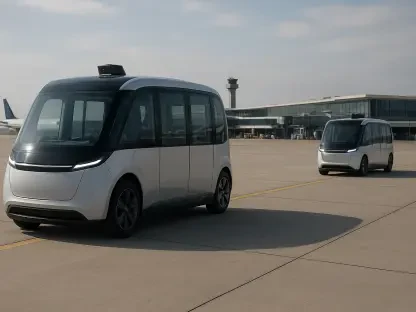

Despite the former president’s dismissal of a secret plan to allow Chinese entry, his public comments have ignited a fierce debate over the future of American national security and trade. The proposal involves a conditional invitation for Chinese electric vehicle manufacturers to establish assembly plants within the United States, provided they employ American workers and utilize local labor unions. This strategy is presented as a way to bolster domestic manufacturing and revitalize the industrial heartland by forcing foreign competitors to invest directly in the local economy rather than relying on imports. Proponents argue that this could mirror the success of the Japanese automotive influx during the late twentieth century, which eventually created thousands of high-paying jobs and integrated foreign expertise into the American industrial fabric. However, this optimism is tempered by a significant shift in the technological landscape. Unlike the purely mechanical vehicles of the past, modern connected cars serve as sophisticated mobile data platforms. The prospect of allowing an adversarial nation to manage the software and hardware infrastructure that powers a primary mode of transportation raises unprecedented questions about digital sovereignty and physical safety.
National Security Directives: Regulatory and Legislative Countermeasures
The primary regulatory barrier to this potential investment resides within the Department of Commerce’s Bureau of Industry and Security, which has implemented stringent rules regarding connected vehicle technology. In early 2025, federal authorities introduced a definitive prohibition against the sale or operation of vehicles containing critical software or hardware from entities owned by or under the jurisdiction of China. These regulations are designed to eliminate the threat of remote vehicle manipulation, unauthorized data harvesting, and the potential for a foreign power to disable domestic transportation networks during a national emergency. Under current guidelines, software restrictions are scheduled to take effect for the 2027 model year, while hardware mandates will follow by 2030. This timeline effectively creates a legal vacuum for Chinese automakers attempting to set up shop in the United States, as their proprietary technology stacks are often inseparable from their vehicle designs. Without a total overhaul of their supply chains to exclude Chinese-sourced systems, these manufacturers will find it legally impossible to market their products to American consumers, regardless of where the final assembly line is physically located.
Complementing these executive actions is a robust legislative movement aimed at securing the American automotive supply chain through permanent statutory measures. The Connected Vehicle Security Act of 2026 stands as a major piece of legislation that prohibits the use of integrated technologies from foreign adversaries in any vehicle sold within the country. This act is supported by a bipartisan coalition of lawmakers who maintain that the economic benefits of foreign-owned factories do not outweigh the risks of state-sponsored espionage or infrastructure sabotage. Additionally, the Motor Vehicle Modernization Act provides a framework for accelerating the production of domestic semiconductor chips and sensors, ensuring that American manufacturers do not remain dependent on foreign-controlled components. The Alliance for Automotive Innovation and other industry advocacy groups have actively lobbied for these protections, arguing that a level playing field requires strict adherence to cybersecurity standards that Chinese firms may be unable to meet. This unified front between the government and private industry indicates a long-term commitment to decoupling essential automotive technologies from geopolitical rivals.
The resolution of the tension between foreign investment and national defense required a comprehensive strategy that prioritized technological autonomy over short-term industrial expansion. Industry leaders determined that the most viable path forward involved the establishment of clean manufacturing zones where strictly vetted domestic technologies replaced imported systems. To navigate this complex environment, manufacturers were advised to form strategic partnerships with local software firms to replace prohibited hardware modules and data processing units. Policymakers suggested that any foreign direct investment should be contingent on the full disclosure of source code and the verification of hardware origins by independent federal auditors. Furthermore, stakeholders were encouraged to invest in redundant cybersecurity protocols that protected the broader electric grid from vehicle-to-grid vulnerabilities. By focusing on the development of a secure, transparent supply chain, the automotive sector successfully mitigated the risks associated with foreign-controlled platforms while continuing to innovate. These steps ensured that the American transportation network remained resilient and that consumer privacy was upheld against the backdrop of global competition. The transition toward a verified security model provided a clear blueprint for future trade negotiations and industrial policy.