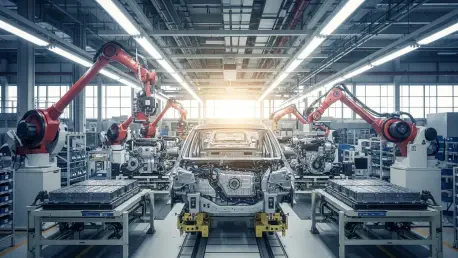

The landscape of American automotive manufacturing is undergoing a profound transformation as federal authorities move to dismantle rigid mandates in favor of a more flexible, market-responsive strategy. This shift is most evident in the Department of Energy’s recent decision to overhaul $1.7 billion in manufacturing grants, which were originally designed to force an immediate transition to purely electric vehicles. By pivoting away from a singular focus on battery-electric platforms, the current administration is acknowledging the complex realities of consumer demand and the economic hurdles that have slowed the adoption of zero-emission technology. This redirection of funds signifies a broader movement toward technological neutrality, where the government supports various forms of advanced propulsion rather than picking a definitive winner in the race for future mobility. The move aims to stabilize the domestic supply chain while ensuring that legacy automakers can adapt their existing infrastructure without facing the catastrophic financial risks associated with abandoned assembly lines and unsold inventory.
Strategic Reconfiguration of Federal Manufacturing Grants
Transitioning From Mandates to Market Flexibility
The Department of Energy, under the leadership of Secretary Chris Wright, has initiated a comprehensive review of green energy spending to ensure that federal investments align with current economic conditions. This process resulted in the modification of agreements with several major automotive players, including General Motors and Stellantis, to broaden the scope of eligible projects. Instead of being restricted to the production of battery-electric vehicles, manufacturers are now empowered to utilize these funds for the development of hybrid systems and advanced internal combustion components. This change reflects a growing consensus that the previous administration’s “EV-or-nothing” approach failed to account for the cooling of consumer interest in high-priced electric models. By providing what officials call “optionality,” the federal government is allowing companies to hedge their bets, ensuring that factory floors remain active even if the transition to full electrification takes longer than initially projected by policymakers.
The economic rationale behind this policy shift is grounded in the reality of current sales data, which shows that hybrid vehicles are significantly outpacing pure electrics in terms of market growth. Energy Information Administration reports suggest that consumers are increasingly drawn to the reliability and lower price points of hybrids, which offer improved fuel efficiency without the range anxiety often associated with charging infrastructure gaps. By restructuring these grants, the DOE is essentially following the money and the buyer, prioritizing a pragmatic path to emissions reduction over ideological purity. This strategy also serves as a protective measure for the American workforce, as it prevents the sudden obsolescence of workers trained in traditional engine assembly. Rather than forcing a total retraining of the labor force overnight, the new guidelines allow for a gradual integration of electrified components, such as regenerative braking systems and hybrid drivetrains, into existing production cycles between 2026 and 2030.
Financial Redistribution Among Industry Leaders
The scale of this financial restructuring is substantial, involving hundreds of millions of dollars that are being redirected to support diversified manufacturing efforts across several states. For instance, Stellantis has secured $584.8 million to bolster its operations in Illinois and Indiana, where the focus will now include a mix of electrified and traditional propulsion technologies. Similarly, General Motors is set to receive $500 million to modernize its facilities, with the new terms allowing for greater flexibility in how that capital is deployed to meet fluctuating market demands. These companies have expressed strong support for the revised terms, noting that the ability to pivot between vehicle types is essential for maintaining a competitive edge in a global market. By loosening the strings attached to federal capital, the government is effectively de-risking the massive investments required to upgrade aging factories, ensuring that these hubs of American industry remain viable through the end of the decade.
Beyond the major domestic brands, international manufacturers with a significant American footprint, such as Mercedes-Benz and Volvo, are also benefiting from this shift toward technological inclusivity. Mercedes-Benz will utilize $285 million to enhance its production capabilities, while Volvo is slated for $208 million to advance its truck manufacturing operations in Pennsylvania, Virginia, and Maryland. These investments are no longer tethered to a strict requirement for zero-emission output; instead, they support a holistic improvement of manufacturing efficiency and the integration of advanced safety and performance technologies. This approach ensures that the federal government remains a partner in innovation rather than a regulatory hurdle. By fostering an environment where multiple technologies can thrive simultaneously, the DOE is helping to create a more resilient industrial base that can withstand shifts in global energy prices or changes in international trade dynamics that might impact the availability of battery raw materials.
Economic Realism and the Future of Domestic Production
Prioritizing Consumer Choice and Job Stability
A fundamental pillar of this new policy direction is the restoration of consumer choice as the primary driver of the automotive market. Federal officials have argued that government regulations should not be used to phase out gas-powered vehicles prematurely, especially when the infrastructure for electric alternatives remains underdeveloped in many parts of the country. By allowing manufacturers to produce a wider variety of vehicles under the same grant programs, the DOE is ensuring that dealerships can offer products that match the diverse needs of the American public. This shift recognizes that a farmer in the Midwest and a commuter in a coastal city have vastly different requirements for their primary mode of transportation. Supporting hybrid technology allows for a reduction in the national carbon footprint while still providing the range and versatility that traditional combustion engines offer, creating a middle ground that satisfies both environmental goals and practical consumer expectations.
Furthermore, the emphasis on domestic manufacturing is designed to ensure long-term job stability within the automotive sector, which remains a cornerstone of the American economy. The previous focus on exclusive EV production carried the risk of offshoring jobs to regions with more established battery supply chains or lower labor costs. By redirecting funds toward hybrid and advanced traditional technologies, the DOE is incentivizing automakers to keep their production lines within the United States. This strategy protects the livelihoods of thousands of workers who might otherwise have been displaced by a rapid, government-mandated transition. The administration’s focus on “economic realism” suggests that the most effective way to maintain a strong industrial base is to support the products that people are actually buying today, while slowly building the capacity for the technologies of tomorrow. This balanced approach ensures that the transition to a lower-emission future is sustainable and does not come at the expense of American economic sovereignty.
Institutionalizing Technological Neutrality in Energy Policy
The restructuring of these grants is part of a much larger trend of readjusting federal spending to align with the current administration’s broader economic priorities. The Department of Energy recently completed a massive audit of 2,200 individual grants, ultimately moving forward with 1,950 of them, valued at approximately $24 billion, after ensuring they met the new criteria for flexibility and market relevance. This institutionalization of technological neutrality represents a departure from the highly targeted environmental subsidies of the past. It signals to investors and industry leaders that the federal government is now more interested in overall industrial health and energy independence than in promoting specific propulsion types. This policy shift is expected to have a stabilizing effect on the market, as it reduces the regulatory uncertainty that has plagued the automotive industry for years, allowing for more confident long-term planning through the 2026 to 2030 period.
As the automotive sector moves forward, the focus will likely remain on developing a diverse portfolio of powerplants that can adapt to changing energy landscapes. The transition to hybrids acts as a bridge, allowing for the continued development of electric motors and battery technology without the immediate pressure of a total market turnover. This evolutionary rather than revolutionary path provides the necessary time for the national charging grid to expand and for battery costs to reach parity with internal combustion engines through natural innovation rather than artificial subsidies. Stakeholders should anticipate a continued emphasis on localizing the supply chain for all vehicle components, from microchips to electric drivetrains, to ensure that the American automotive industry remains insulated from global disruptions. The future of the industry will be defined by its ability to remain agile, leveraging federal support to innovate across the board rather than being confined to a single, government-selected technological path. This strategic flexibility is the key to maintaining American leadership in the global transportation market.
Automotive manufacturers and parts suppliers should now prioritize the integration of modular production systems that can easily switch between hybrid and electric configurations to maximize their utilization of these federal funds. Investors are encouraged to look beyond pure-play electric vehicle companies and consider the long-term value of legacy automakers that have successfully secured these restructured grants, as they are now better positioned to capture the diverse demand of the modern consumer. Moving forward, the industry must focus on enhancing the efficiency of hybrid systems and lowering the total cost of ownership for electrified vehicles through 2026 and beyond. By focusing on these actionable improvements, the private sector can work in tandem with the Department of Energy’s new framework to build a more robust and adaptable transportation infrastructure that serves the entire nation.