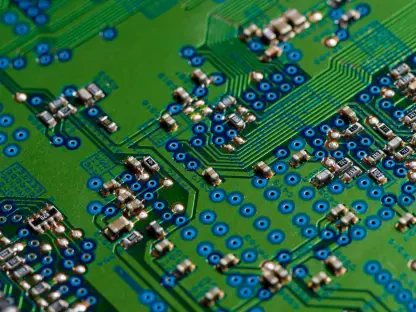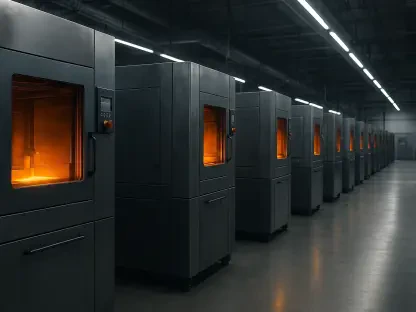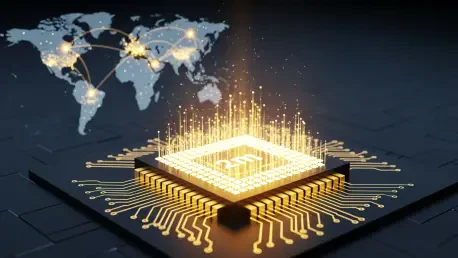

The global economy now hinges on a few square miles of high-tech infrastructure where the world’s most advanced semiconductors are manufactured with a precision that fundamentally defies traditional industrial logic. As the primary custodian of the most sophisticated logic chips, Taiwan Semiconductor Manufacturing Company has transitioned from a mere industrial leader into a vital geopolitical safeguard known as the silicon shield. This concept posits that Taiwan’s indispensable role in the global supply chain provides a unique layer of security, as any significant disruption to its production lines would trigger a catastrophic economic collapse across the planet. In the current landscape of 2026, this dependency has deepened as the demand for artificial intelligence and high-performance computing reaches unprecedented levels. Maintaining a technological lead ensures that global powers must prioritize regional stability to protect their own economic survival and technical progress. By anchoring the digital future to its shores, the company has created a scenario where the cost of regional instability is too high for any nation to bear.
Industrial Leadership: The Evolution of Advanced Manufacturing
Node Superiority: Leading the Charge with 2nm Mass Production
The transition to the 2-nanometer process represents the most significant leap in semiconductor history, allowing for more transistors to be packed into smaller spaces with vastly improved energy efficiency. By 2026, the mass production of these chips has become the cornerstone of high-performance computing, providing the necessary hardware for the next generation of autonomous systems and complex neural networks. This technological milestone was achieved through the implementation of gate-all-around field-effect transistor architecture, which replaced the aging FinFET design to overcome physical scaling limitations. The successful ramp-up of these facilities in Hsinchu and Kaohsiung ensures that the most critical components of the modern world remain tied to Taiwanese soil. Consequently, the reliance of global tech giants on this specific capacity creates a relationship where the prosperity of the international tech sector is inextricably linked to the island.
The precision required for these sub-microscopic structures involves complex ultraviolet lithography techniques that only a handful of technicians and engineers worldwide can master. This human capital constitutes a secondary layer of the shield, as the specialized knowledge needed to operate these machines cannot be easily exported or replicated in other regions. While competitors attempt to narrow the gap, the continuous refinement of the N2 and N2P processes allows the firm to maintain a two-generation lead over its nearest rivals. This gap is not merely a commercial advantage; it is a strategic moat that keeps the most advanced computing power concentrated in a single geographic location. As long as the most powerful AI models and consumer devices require these specific nodes to function, the incentive for global powers to ensure the uninterrupted flow of goods from these factories remains a primary driver of international diplomacy.
Global Reach: Expansion of the Fabrication Footprint
While the most advanced research and development remains concentrated in Taiwan, the strategic expansion of manufacturing facilities into the United States, Japan, and Europe has diversified the company’s operational risk. From 2026 to 2028, new fabrication plants in Arizona and Kumamoto are expected to reach full capacity, providing a localized supply of mature and advanced nodes for domestic industries in those regions. This geographic diversification serves a dual purpose: it mitigates the impact of localized disasters and addresses the sovereign concerns of major trading partners regarding supply chain resilience. However, the most cutting-edge processes continue to be pioneered within Taiwan first, ensuring that the core of the silicon shield remains anchored to its point of origin. By integrating international partners into its ecosystem through these facilities, the company has created a global network of stakeholders who have a vested interest in its success.
This expansion has also necessitated a massive overhaul of logistics and material sourcing, as the company now manages a global pipeline of specialty chemicals and rare earth elements. By establishing these overseas hubs, the firm has effectively embedded itself into the national industrial strategies of several major world powers, making its survival a matter of foreign domestic policy. The presence of these fabs on foreign soil acts as a tripwire, ensuring that any threat to the parent company would immediately involve the economic interests of the host nations. Furthermore, the collaboration with local universities and governments in these regions has fostered a global community of experts who are now dependent on the company’s proprietary technology. This web of interconnected interests reinforces the shield by distributing the economic consequences of any potential regional conflict far beyond the borders of the Taiwan Strait.
Geopolitical Deterrence: The Industrial Leadership Impact
Digital Sovereignty: Integration of Artificial Intelligence and Security
The surge in artificial intelligence development has placed chips at the center of national security discussions, as these components are now essential for both economic competitiveness and modern defense. In 2026, the ability to train massive language models and run real-time simulation software depends entirely on the availability of high-end accelerators produced by a single entity. This concentration of capability creates a deterrent effect, as any interruption would not only stall consumer electronics but also paralyze the defense capabilities of major global powers. Moreover, the deep integration of these chips into the infrastructure of every major economy ensures that the cost of conflict far outweighs any perceived benefits of territorial aggression. The technological lead is maintained through a cycle of reinvestment and specialized labor that is difficult to replicate elsewhere, further solidifying the shield.
Beyond hardware, the software ecosystems that have been built around these specific silicon architectures create a high level of “vendor lock-in” for the world’s largest technology firms. Migrating a global cloud infrastructure or a national defense network to a different chip architecture would take years and cost billions, making any sudden shift in the supply chain nearly impossible to manage. This reality forces international actors to maintain a stable and cooperative relationship with the primary producer to ensure their own digital sovereignty remains intact. The shield is therefore reinforced by the sheer technical difficulty of replacing the existing infrastructure with unproven alternatives. As the world moves further into an era defined by data and machine learning, the role of the semiconductor manufacturer as a neutral, yet essential, provider of computing power becomes the ultimate lever in maintaining a peaceful global balance.
Resilience Strategies: Future Recommendations for Supply Chain Stability
The evolution of the silicon shield required a delicate balance between maintaining a technological monopoly and fostering international cooperation to ensure long-term stability. Stakeholders recognized that true resilience came from deepening the integration of secondary supply chain layers, such as chemical suppliers and lithography specialists, within the domestic ecosystem. Leaders focused on human capital development to ensure a steady stream of engineering talent capable of pushing the boundaries beyond the 2nm threshold into the angstrom era. Furthermore, the establishment of clear protocols for international resource sharing during crises helped mitigate fears of supply volatility. These actions moved the industry toward a more collaborative model while keeping the most critical intellectual property protected at the source. Proactive investment in sustainable energy for fabrication plants also ensured that environmental constraints did not become a bottleneck for growth.
Strategic planners moved toward a model of decentralized assembly and testing while keeping the core wafer fabrication centralized to maintain high yields and security. This approach allowed for a faster response to regional demand shifts without compromising the integrity of the most sensitive manufacturing steps. Governments and private entities collaborated to build redundant infrastructure for water and power, ensuring that the factories could withstand external shocks or resource shortages. These investments transformed the manufacturing landscape into a fortress of industrial stability that was resistant to both economic fluctuations and political pressure. By the end of this period, the silicon shield had evolved into a comprehensive framework of mutual dependence that integrated the world’s economic interests with the security of the region. This holistic strategy successfully turned a potential point of failure into a lasting pillar of international security and technological progress.