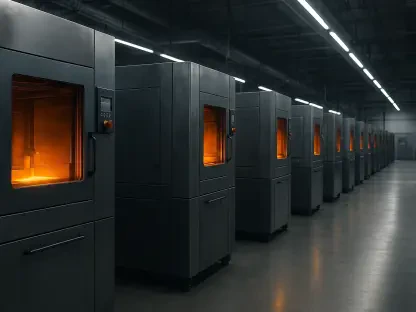

The convergence of high-performance computing and heavy manufacturing has reached a critical tipping point where factories operate as living, thinking entities. This strategic alliance between NVIDIA and LG Group is not merely a technical upgrade; it represents a fundamental shift in how global supply chains function. By establishing an integrated industrial AI factory, these companies are bridging the gap between digital simulation and physical reality. The project aims to harmonize everything from raw material logistics to product delivery, setting a new benchmark for autonomous manufacturing excellence in the electronics sector.
The Strategic Context: Why the Alliance Matters
Modern industrial progress has moved past the era of rigid automation where machines followed pre-set scripts. In today’s volatile market, adaptability is the primary currency, leading manufacturers to seek systems that can learn and respond to unforeseen disruptions. The partnership leverages NVIDIA’s expertise in GPU-accelerated computing and LG’s massive manufacturing footprint to create a feedback loop between data and action. This foundation allows business units to pivot rapidly, ensuring that home appliance production remains resilient against shifting global demands and labor shortages.
Technological Pillars: Building the Autonomous Ecosystem
Robotics Evolution: Integrating Isaac Sim and Reasoning
At the heart of this transformation lies the evolution of LG’s CLoi robots into intelligent agents capable of sophisticated reasoning. By utilizing the Isaac Sim and Isaac Lab frameworks, these machines undergo thousands of hours of training within high-fidelity virtual worlds before entering a physical facility. The integration of the Isaac Groot vision-language model allows these robots to understand complex instructions and execute multi-step tasks. This leap in multimodal reasoning ensures that robots are no longer confined to simple repetitive motions but can act with human-like precision.
The Data Solution: Synthetic Generation and World Models
Overcoming the scarcity of high-quality industrial data is a significant hurdle that this alliance addresses through synthetic generation. The physical AI data factory employs NVIDIA Cosmos world foundation models to create accurate digital twins of the manufacturing environment. These models generate diverse scenarios, including rare edge cases, to sharpen the AI’s decision-making capabilities. This approach accelerates the development cycle, allowing LG to refine its algorithms without the risks or costs associated with real-world experimentation.
Industrial Infrastructure: Thermal Management and Energy Systems
Scaling AI requires more than just code; it demands a robust physical infrastructure capable of handling extreme energetic and thermal loads. LG Electronics is deploying advanced thermal management solutions, such as cooling distribution units and cold plates, specifically designed for liquid-cooled NVIDIA clusters. Additionally, LG Energy Solution is implementing 800-volt direct-current systems to optimize power efficiency for these massive data centers. This synergy extends to software, as the Korean EXAONE model is being enhanced using the NeMo framework to provide superior research tools.
Future Projections: The Big Bang of Physical AI
The current trajectory indicates that the integration of physical AI will redefine the global industrial hierarchy. There is a noticeable shift toward localized “sovereign AI” clusters where factories operate independently of traditional cloud dependencies. As these technologies mature, the distinction between a software company and a hardware manufacturer will continue to blur, creating a hybrid model of production. This evolution will likely lead to highly personalized manufacturing at scale, where autonomous systems manage the entire lifecycle of a product with minimal human intervention.
Strategic Implications: Recommendations for the Manufacturing Sector
For organizations looking to remain competitive, the primary takeaway is the necessity of a simulation-first methodology. Companies should prioritize the development of digital twins to validate every operational change before physical deployment. Investing in interoperable hardware and liquid-cooling infrastructure is also becoming a prerequisite for sustaining high-compute AI workloads. Professionals in the field must now bridge the gap between mechanical engineering and data science to manage the next generation of autonomous workflows effectively.
Bridging the Gap: Moving from Digital Intelligence to Physical Action
The alliance between these two giants successfully demonstrated how digital intelligence could be translated into physical action. By unifying energy management, robotics, and synthetic data, the partnership solved the most persistent bottlenecks in modern manufacturing. Industry leaders realized that the AI factory model was the only viable path to long-term scalability and efficiency. The move toward this integrated ecosystem provided a clear blueprint for future industrial endeavors. Organizations that embraced this synergy early found themselves at the forefront of the autonomous revolution.