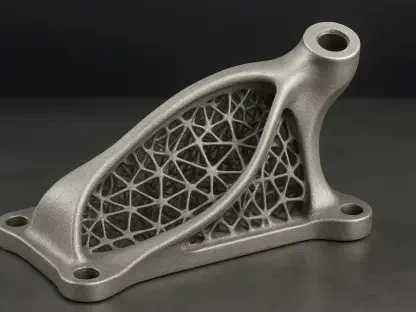

The persistent struggle to eliminate structural defects caused by the extreme thermal gradients of traditional laser-based melting processes has led researchers to explore solid-state additive manufacturing as a superior alternative for high-performance engineering. Unlike fusion-based methods where materials transition from liquid to solid, solid-state additive manufacturing (SSAM) maintains the metal in a solid phase throughout the entire deposition sequence. This fundamental shift avoids the standard pitfalls of solidification, such as dendritic growth, elemental segregation, and gas porosity, which often plague high-strength alloys. By utilizing mechanical energy—primarily friction and pressure—the material is deformed plastically to create a fully dense, metallurgical bond with the substrate. As the manufacturing landscape moves toward 2027 and 2028, the focus has shifted from simply making shapes to controlling internal microstructural evolution. This control allows for the production of components that possess properties nearly identical to forged parts, providing a reliable pathway for industries that demand high structural integrity.
Physical Drivers: Material Transformation
Mechanical Stirring: The Primary Driver of Refinement
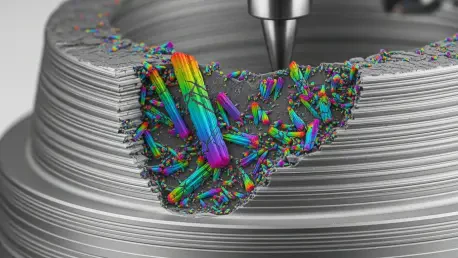
Mechanical stirring during the solid-state deposition process serves as the primary engine for microstructural refinement, where intense shear forces break down the original grain structure into much smaller units. This refinement occurs through dynamic recrystallization, a process where new, strain-free grains form at the boundaries of older grains during the deformation cycle. The result is a fine-grained, equiaxed structure that typically exhibits better mechanical properties than the coarse grains found in cast or melted materials. These shear forces are not applied uniformly; they vary based on the proximity to the tool shoulder and the specific path the tool takes across the material surface. Consequently, the resulting microstructure is often characterized by a high degree of heterogeneity, with different regions of the part exhibiting slightly different grain sizes and crystallographic orientations. Understanding these localized variations is critical because they determine the overall strength and fatigue resistance of the final manufactured component.
Thermal History: Managing Layer-by-Layer Evolution
The evolution of the microstructure does not stop once a layer is deposited; rather, it continues to change as subsequent layers are added to the build. Each new pass of the manufacturing tool introduces a fresh wave of heat and mechanical pressure into the layers immediately below the current working surface. This localized heating acts as an in-situ annealing treatment, which can cause the finely refined grains in the base layers to grow or undergo further phase transformations. This creates a complex thermal history that must be carefully managed to ensure the properties of the bottom of the part remain consistent with the top. Because the material remains in a solid state, the risk of cracking during these reheating cycles is significantly lower than in fusion-based additive manufacturing, but the risk of softening or unintended grain growth remains a primary concern for engineers. By monitoring the cumulative heat input across the entire build volume, operators can adjust cooling rates to lock in desired microstructural features.
Advanced Analysis: Diagnostic Mapping and Modeling
Precision Imaging: Mapping Grains and Orientations
To gain a comprehensive understanding of how these internal structures change, advanced characterization techniques such as Electron Backscatter Diffraction (EBSD) are being used to map the orientation of individual grains with microscopic precision. This method allows researchers to visualize the texture and misorientation of the material, revealing how the stirring process influences the internal fabric of the metal. High-resolution X-ray tomography further complements this by providing a three-dimensional view of the part’s internal density, ensuring that no voids or inclusions are present between the deposited layers. These imaging tools are essential for validating the efficacy of solid-state processes, as they provide empirical evidence of the metallurgical bonding achieved at the interface of each track. By comparing grain maps of different build zones, scientists can identify specific regions where recrystallization was incomplete. This data serves as the foundation for optimizing tool paths and ensuring the final part meets rigorous quality standards.
Predictive Modeling: Simulating Thermomechanical Flow
The massive datasets generated by high-resolution imaging are now being integrated into multiscale thermomechanical models to predict how specific manufacturing conditions will translate into final material properties. These models account for the complex coupling between the heat generated by friction and the plastic flow of the material around the rotating tool. Unlike earlier simulations that focused solely on heat distribution, contemporary versions incorporate the physical stirring action, which is a major driver of the resulting microstructure. By simulating the movement of individual grain boundaries and the accumulation of dislocations within the crystal lattice, these predictive tools can estimate the hardness and yield strength of a part before it is ever physically printed. This digital approach reduces the need for expensive trial-and-error testing and allows for the rapid development of new alloy systems tailored specifically for solid-state additive manufacturing. The ability to simulate the entire lifecycle of a grain represents a significant leap forward.
Optimization: Parameters and Real-World Readiness
Parameter Tuning: Balancing Speed and Temperature
Successful control over microstructural evolution is heavily dependent on the precise management of tool parameters, specifically the relationship between the tool rotation speed and the feed rate across the substrate. A higher rotation speed increases the frictional heat and the rate of plastic deformation, which typically promotes more extensive dynamic recrystallization and leads to a finer grain structure. However, if the speed is too high, the excessive heat can lead to grain coarsening or the formation of undesirable brittle phases in certain alloys. Conversely, a faster feed rate might result in insufficient heat input, leading to poor bonding between layers and a lack of structural integrity. Manufacturers must find the sweet spot for these parameters to ensure that the material undergoes enough deformation to be fully refined without being damaged by thermal overshoot. This delicate balance is often specific to each material, meaning that an aluminum alloy will require different settings than titanium.
Stagnation Points: Overcoming Structural Heterogeneity
One of the primary challenges in solid-state manufacturing is the presence of stagnation points, which are specific zones where the tool’s mechanical influence is reduced, leading to persistent microstructural heterogeneity. These areas often retain some of the original characteristics of the feedstock or exhibit localized textures that differ significantly from the rest of the build. Such variations can act as stress concentrators, where residual stresses accumulate and potentially lead to warping or premature fatigue failure during service. To mitigate these effects, engineers are experimenting with varying tool geometries and ultrasonic vibration techniques designed to improve the flow of material in these stagnant zones. By minimizing the differences between the heavily stirred regions and the peripheral areas, the overall uniformity of the component is greatly improved. Managing these internal tensions is essential for ensuring that the final engineering part can withstand the dynamic loads and harsh environments it will face.
Digital Twins: The Transition to Predictive Science
The transition toward a fully digitized manufacturing workflow was accelerated by the integration of Digital Twins, which mirrored the physical evolution of microstructures in a virtual environment. Engineering teams utilized these high-fidelity simulations to refine build strategies and predict the accumulation of residual stresses throughout the deposition process. This move from experimental observation to predictive science allowed for the rapid qualification of parts for safety-critical systems in both the energy and defense sectors. Industry leaders recognized that the value of solid-state additive manufacturing was tied directly to the data-driven insights provided by these virtual models. As practitioners adopted these tools, the reliance on post-process thermal treatments decreased, as the desired properties were achieved directly during the initial build phase. The systematic application of these advanced modeling techniques proved to be the most effective solution for scaling solid-state technology from niche laboratories to the global industrial stage.