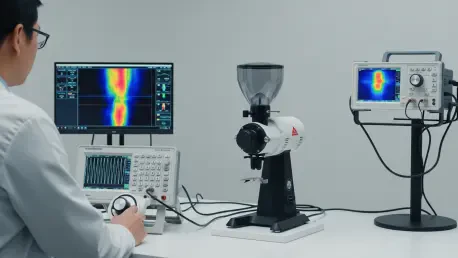

The transition of the kitchen from a place of simple preparation to a laboratory of precision engineering has fundamentally changed how we evaluate everyday appliances. While a sleek stainless steel finish or a minimalist interface might capture the attention of a casual buyer browsing a digital storefront, the internal mechanics of a coffee grinder dictate whether the device is a long-term investment or a potential liability. In the current market landscape of 2026, the distinction between a hobbyist gadget and a professional-grade tool lies in the manufacturer’s commitment to rigorous engineering accountability rather than mere aesthetic trends. Adherence to stringent international safety and performance standards, specifically CE and FCC certifications, serves as a non-negotiable benchmark for any product intended for global distribution. These high-torque mechanical instruments are tasked with pulverizing dense organic matter while managing high electrical loads, requiring a level of design sophistication that extends far beyond simple motor rotation. For manufacturers, achieving these certifications is not merely about clearing a bureaucratic hurdle but rather about validating a production philosophy that prioritizes the safety of the household and the consistency of the final brew. This focus on standard-driven excellence ensures that the complex interplay of friction, heat, and electricity remains controlled, providing consumers with the reliability they expect from modern high-performance kitchenware.
The Foundation of Manufacturing Accountability
Engineering for Safety and Performance
Electric coffee grinders represent a unique intersection of high-energy electronics and heavy-duty mechanical engineering, necessitating robust safety protocols. Because these devices operate under intense mechanical stress—often spinning hardened steel or ceramic burrs at thousands of revolutions per minute—the risk of component failure is significantly higher than in low-impact kitchen gadgets. Reputable brands recognize that safety certifications like the CE mark are essential requirements that address the inherent dangers of high-performance electronics, such as insulation breakdown or motor seizure. By implementing specific protective measures, such as automatic thermal cut-off switches and reinforced internal housing, manufacturers can manage the significant electrical loads required to crush hard, roasted beans without risking fires or electrical shocks. This level of engineering scrutiny guarantees that every unit leaving the assembly line can withstand the rigors of daily household use while maintaining a safe operating environment for the user.
Furthermore, the rigorous testing associated with these standards helps engineers identify weak points in the drivetrain before a product reaches the mass market, ensuring that the structural integrity of the grinder remains uncompromised over years of heavy operation. When a manufacturer commits to these protocols, they are essentially providing a guarantee that the device has undergone extreme stress tests, including high-voltage insulation checks and mechanical endurance cycles. This meticulous approach to safety not only protects the consumer but also enhances the overall performance of the machine, as a well-protected motor is more likely to provide the stable torque necessary for a uniform grind size. By treating safety as an integral part of the engineering process, companies create products that act as reliable workhorses in the kitchen, capable of delivering consistent results day after day without degradation. This focus on durability is particularly important in 2026, as consumers increasingly move away from disposable electronics in favor of appliances that offer longevity and repairability.
Democratizing Professional-Grade Extraction
The evolution of manufacturing leaders like JinHua Blossom Co., Ltd. highlights a significant industry shift toward the democratization of professional-grade extraction technology for the home consumer. Historically, precision grinding was a luxury reserved for commercial environments, but contemporary advancements in manufacturing have allowed for the integration of industrial-grade components into compact, affordable appliances. By aligning their production lines with global safety protocols, these companies have bridged the gap between the complex needs of specialty coffee shops and the convenience required by modern home users. This strategic focus on technical compliance ensures that even entry-level grinders benefit from the same safety and performance research that informs the design of high-end equipment. Consequently, the modern kitchen is now populated with devices that integrate seamlessly into smart-living ecosystems without compromising on technical integrity or user safety.
This commitment to standardized excellence fosters a culture of transparency, where consumers can trust that the internal components of their appliance are as well-crafted as the external chassis. As the global demand for specialty coffee continues to grow between 2026 and 2028, this focus on engineering accountability will remain the primary driver of market success and brand loyalty. Manufacturers who invest in these certifications demonstrate that they are not just selling a product, but are also supporting the broader culture of quality coffee preparation. This alignment with international standards also facilitates easier entry into new markets, as the certification marks act as a universal language of quality that resonates with regulators and consumers alike. By prioritizing these standards, manufacturers ensure that the pursuit of the perfect cup of coffee is supported by hardware that is as innovative as it is safe, setting a new bar for what home brewers can expect from their equipment.
Technical Compliance and Regulatory Frameworks
Adhering to the Low Voltage Directive
Securing the CE mark for a modern grinder requires a multi-disciplinary engineering approach that focuses heavily on the Low Voltage Directive and thermal management systems. Since the process of grinding coffee beans involves significant friction, the motors used in these appliances generate substantial heat that must be dissipated to prevent damage to the internal circuitry and the coffee itself. Certified manufacturers utilize superior insulation materials and sophisticated airflow designs to ensure that high-torque motors do not lead to electrical failure during extended use. By prioritizing material science, engineers can select components that maintain their structural properties even when subjected to the elevated temperatures characteristic of consecutive grinding cycles. This meticulous attention to thermal dynamics prevents the risk of short circuits and extends the total lifespan of the appliance, offering a clear advantage over non-certified alternatives.
Moreover, the structural layout of a certified grinder is designed to isolate sensitive electronic controllers from the vibrations of the grinding chamber, ensuring that the digital timers and grind-size selectors remain accurate over thousands of cycles. This isolation is critical for maintaining the precision required for different brewing methods, from coarse French press to fine espresso. A certified manufacturer will often employ advanced dampening materials within the housing to absorb mechanical energy, which not only protects the electronics but also results in a quieter operation for the end user. This level of technical foresight ensures that the machine remains a stable platform for coffee extraction, where every variable is controlled and repeatable. By adhering to these strict European standards, manufacturers provide a level of quality assurance that is recognized globally, reinforcing the idea that technical compliance is the foundation of a premium product.
Maintaining Electromagnetic Harmony in Modern Homes
Beyond the physical aspects of electrical safety, the Electromagnetic Compatibility Directive is a vital component of the regulatory framework that governs modern kitchen appliances. In an era where homes are filled with wireless networks and sensitive digital equipment, a coffee grinder must be engineered to operate without creating electromagnetic disturbances that could disrupt nearby electronics. High-speed motors are notorious for emitting radiofrequency noise, but a certified manufacturer employs advanced shielding and filtering techniques to suppress these unwanted emissions. This ensures that when a user starts their morning grind, the signal to their television remains stable and their smart-home hub continues to function without interference. This electromagnetic harmony is essential for maintaining a reliable electronic ecosystem in the modern residence, where multiple high-draw devices often share the same electrical circuits.
For products entering the North American market, FCC compliance represents a critical benchmark for the digital components found in modern grinders. Contemporary devices often feature micro-processors, LED displays, and wireless connectivity, all of which can act as unintentional radiators of radiofrequency energy. To meet Federal Communications Commission requirements, engineers must carefully design the internal circuitry to contain these signals, preventing the grinder from behaving like an unshielded transmitter. This is particularly important for high-performance grinders that utilize pulse-width modulation to control motor speed, as these systems can produce significant electrical noise if not properly managed. Proper shielding within the internal housing and the use of ferrite beads on power cords are common technical solutions employed by certified manufacturers to achieve this stability. By ensuring that the appliance is a quiet neighbor within a connected household, manufacturers satisfy both regulatory demands and the consumer’s desire for a seamless technological experience.
Strategic Advantages in Global Commerce
Risk Management and Supply Chain Integrity
Sourcing from a certified manufacturer serves as a vital risk-management strategy for international distributors and retail partners who must navigate complex trade environments. Products that carry recognized certifications face significantly fewer hurdles during customs inspections, as the presence of a CE or FCC mark serves as a reliable indicator of technical compliance. This reduces the likelihood of costly delays and provides legal protection for businesses against the threat of regulatory fines or widespread product recalls. Furthermore, the rigorous testing protocols required for certification—including thermal stress tests and structural impact assessments—tend to result in a much higher build quality compared to uncertified goods. This durability is a direct benefit to the end consumer, who receives a product that is less likely to fail within the first few years of ownership.
For retailers, this translates to lower return rates and higher customer satisfaction scores, which are essential metrics in an increasingly crowded marketplace. By investing in certified hardware, companies across the supply chain can build a foundation of trust that supports long-term growth and minimizes the financial volatility associated with low-quality manufacturing. Additionally, the documentation generated during the certification process provides a transparent audit trail that can be used to verify the origin and safety of every component. This level of accountability is becoming increasingly important as global supply chains face greater scrutiny regarding environmental impact and ethical production. In 2026, a certified manufacturer is not just a provider of goods but a partner in a sustainable and transparent business model that prioritizes quality and safety at every stage of the production cycle, ensuring that the entire industry moves toward a more responsible future.
Product Case Study: The Mini Electronic Grinder
The design of the automatic mini electronic coffee bean grinder provides an excellent case study in how manufacturers can overcome the physical constraints of compact appliances to meet high regulatory standards. These smaller devices often face challenges with heat dissipation due to their reduced internal volume, yet by utilizing a wired configuration for stable power delivery, engineers can optimize the interior for airflow. Specific airflow paths are carved into the internal chassis to allow the high-torque motor to cool effectively even during rapid-fire use, ensuring that the motor speed remains consistent without the risk of overheating. This model demonstrates that small-scale engineering does not have to compromise on commercial-grade utility when the manufacturer prioritizes structural optimization and electronic precision. By focusing on these technical details, the manufacturer ensures that the compact grinder delivers a uniform grind profile that rivals much larger machines.
The historical transition toward engineering rigor in coffee grinder manufacturing was a necessary response to a market where brand longevity became inseparable from technical excellence. As the landscape progressed from 2026 to 2028, the industry shifted its focus from mere feature parity to the total optimization of the user experience through safer, more reliable hardware. To maintain this momentum, manufacturers should prioritize the integration of modular internal components that allow for easier repairability and long-term compliance with evolving environmental standards. Consumers and distributors alike should treat the presence of CE and FCC marks as a baseline requirement for any purchase, while also looking for specific technical documentation regarding motor insulation and thermal protection. By treating regulatory standards as a methodology for refinement rather than a bureaucratic obstacle, the most successful companies redefined the benchmark for premium kitchenware. This commitment to safety and precision not only protected the consumer but also paved the way for the next generation of smart, high-performance coffee appliances that remain stable and efficient within the complex electronic environments of modern homes.