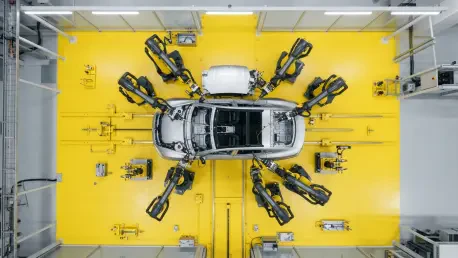

The rhythmic hum of automated assembly lines across the European continent is beginning to carry a distinctly Eastern cadence as Chinese automotive titans trade their shipping containers for local construction permits. In the first half of 2026, Chinese vehicle sales in Europe skyrocketed by a staggering 90.6 percent, reflecting a permanent realignment of the global automotive landscape. This surge, totaling 531,862 vehicles in just six months, signaled that the era of experimentation is over.
Manufacturers like BYD and Geely are no longer content with merely shipping units across the ocean. Instead, they are breaking ground on European soil, turning traditional industrial heartlands into specialized production hubs. This aggressive expansion marks a transition to a direct, localized battle for the European driveway. By establishing a physical presence, these firms are integrating into the local economy, hiring European workers, and adapting to the specific tastes of regional consumers.
The Great Wall Moves West: A New Era of European Manufacturing
The shift toward localized production represents more than just a business expansion; it is the beginning of a new industrial era. By moving manufacturing closer to the end consumer, Chinese firms are reducing the time-to-market for new models and enhancing their ability to provide after-sales support. This strategy allows them to shake the “foreign” label and present themselves as local contributors to the European economy.
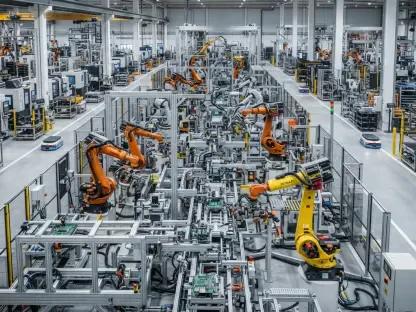
This movement also reflects the maturity of the Chinese automotive industry, which has evolved from copying designs to setting global technological standards. The factories being built today are high-tech facilities equipped with advanced robotics and sustainable energy systems. As these plants begin full-scale operations, the traditional distinction between European and foreign cars will continue to blur, challenging the cultural dominance of legacy brands.
The Catalyst: Why Chinese Automakers Are Digging In
The pivot toward local manufacturing was a necessary survival tactic fueled by massive overcapacity in the domestic Chinese market. With the home market reaching a saturation point, manufacturers were forced to find new outlets for their production volume to maintain profitability. Europe, with its commitment to decarbonization, provided the perfect target for this excess capacity, offering a stable environment for long-term investment.
Furthermore, an increasingly protectionist stance from European authorities made local production a requirement for financial viability. As trade barriers climbed, Chinese firms recognized that remaining price-competitive would be impossible without a local label. This reality turned a strategic choice into an existential necessity, forcing companies to commit billions to infrastructure in a region once considered the exclusive territory of Western legacy automakers.
Strategic Drivers: Behind the Shift to Local Production
The European Union responded to the influx of Chinese electric vehicles with a layered tariff system. Beyond the standard 10 percent import duty, countervailing levies were introduced, reaching as high as 35.3 percent for some firms. By manufacturing within EU borders, Chinese firms effectively bypass these financial hurdles, ensuring their pricing stays attractive while slashing long-distance logistics and carbon-heavy shipping costs.
BYD spearheaded this approach with its massive production base in Szeged, Hungary, designed for an annual capacity of 300,000 vehicles. This facility focuses on high-volume compact models like the Dolphin Surf and Atto 2, allowing the brand to avoid the 17 percent additional levy applied to its imports. This move solidified its physical presence and allowed for deeper integration with regional supply chains, creating a resilient local ecosystem.
A unique facet of this expansion involved forming strategic alliances with struggling European automakers. Rather than building every plant from scratch, some Chinese firms moved into underutilized facilities, providing a much-needed lifeline to plants grappling with high costs. This model allowed Chinese brands to scale faster by using existing infrastructure while helping local partners maintain employment levels during a period of intense industrial transition.
Expert Perspectives: Industrial Sovereignty and Competition
Industry analysts described this manufacturing surge as a formidable new challenge for established powerhouses like the Hyundai Motor Group. After decades of building market share through traditional networks, legacy players found themselves competing against rivals that controlled their own technology stacks. The speed of this transition raised questions about whether European manufacturers could pivot fast enough to retain their historical dominance.
Experts warned that while these investments brought jobs, they also created a subtle form of technological dependence. The concern focused on Europe’s industrial sovereignty, as the region became increasingly reliant on Chinese-controlled battery chemistry and software architectures. If the core components remained proprietary to foreign firms, the local assembly plants might become mere satellite facilities, potentially hollowing out indigenous research capabilities.
Strategies for Market Dominance: A Shifting Landscape
To capture the widest possible audience, Chinese manufacturers diversified their portfolios beyond pure battery electric vehicles. They rapidly expanded into plug-in hybrids and conventional hybrids, catering to European consumers who were not yet ready for a full electric transition. This multi-energy approach ensured that the factories remained at peak capacity, regardless of fluctuations in the pace of the green transition.
The ultimate test for these manufacturers was whether they could replicate their domestic efficiency within the strictures of European labor laws. Success depended on their ability to localize management while maintaining the aggressive innovation cycles that allowed them to dominate their home market. By blending Chinese manufacturing speed with European regulatory compliance, these