
Kwame Zaire brings a wealth of expertise to the table as a seasoned specialist in large-scale manufacturing and production management, with a sharp focus on the intersection of electronics and high-end equipment. His background in predictive maintenance and quality assurance makes him a vital voice in understanding the rigorous demands of next-generation defense projects. In this discussion, we explore the monumental scale of the Global Combat Air Programme and the industrial synergy required to bring a sixth-generation stealth fighter to life.
The conversation delves into the strategic implications of the newly awarded multi-billion-pound contract and the collaborative framework of the Edgewing joint venture. We examine the technical evolution from previous aircraft models, the critical role of sustained government funding in maintaining production momentum, and how shifts in international defense alliances are opening doors for new global partnerships.
The announcement of a £4.6 billion contract for the Global Combat Air Programme marks a massive turning point for international defense; how does a manufacturing project of this magnitude transform the industrial landscape?
The award of this £4.6 billion contract, which translates to roughly $6.14 billion, is far more than just a financial injection; it is the starting gun for an industrial mobilization that will span three nations. From a manufacturing perspective, this provides the long-term certainty that suppliers need to invest in the specialized robotics and precision tooling required for sixth-generation stealth technology. When you walk onto a facility floor preparing for a project of this scale, you can feel the shift in energy as engineers move from conceptual modeling to the physical reality of advanced assembly. This phase is critical because it solidifies the supply chain, ensuring that every micro-component and fuselage section is ready for the intense production schedule ahead. It is an immense leap forward that turns a high-level strategic vision into a tangible, humming production line.
With BAE Systems, Leonardo, and Mitsubishi Heavy Industries forming the Edgewing joint venture, what are the primary challenges in managing production across such diverse international partners?
Coordinating the industrial might of Britain, Italy, and Japan through the Edgewing joint venture requires a sophisticated approach to production management that balances different engineering cultures. By establishing the headquarters in Britain and appointing an Italian CEO, the program creates a centralized leadership structure to oversee the contributions of BAE, Leonardo, and Japan Aircraft Industrial Enhancement. The sheer logistical complexity of sharing tens of billions of dollars in development costs while maintaining a unified design is a monumental task that requires seamless data integration and quality control. You have to ensure that a component designed in Nagoya fits perfectly with a system developed in Lancashire, creating a sense of shared purpose that transcends national borders. It is a high-stakes endeavor where the synchronization of manufacturing standards is just as important as the technology itself.
The design of the GCAP fighter is reportedly quite different from its predecessors, particularly the Typhoon; what do these physical changes tell us about the future of aerial combat?
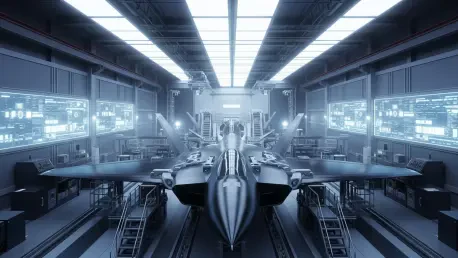
The physical evolution of this aircraft is striking, as it is designed to be three to four meters longer than the current Typhoon military jet, which is an increase of roughly 10 to 13 feet. This added length isn’t just for show; it allows for a much larger internal capacity for the advanced electronics, sensors, and fuel systems required for long-range missions. In the world of stealth manufacturing, every extra inch of the airframe must be meticulously crafted to maintain a low radar cross-section while housing more powerful capabilities. Designing a plane that can fly further and hit harder while remaining invisible to the enemy requires a radical shift in how we think about aerodynamics and weight distribution. It’s an engineering marvel that prioritizes endurance and stealth, ensuring that the pilots of the future have a tool that can survive the most contested environments on the planet.
Given that the project faced nine months of delays due to budget pressures, how significant is Britain’s recent commitment of £8.6 billion to the stability of the production timeline?
The commitment of £8.6 billion over the next four years is the essential “oxygen” that the GCAP project needed to survive and thrive after those nine months of fiscal uncertainty. In the world of high-tech manufacturing, delays can be devastating because they break the momentum of research and development and can lead to a “brain drain” of specialized talent. This infusion of capital allows the Edgewing partners to confidently move into the next phase of development, securing long-lead materials and specialized equipment that can take years to procure. It provides a stable horizon for the 2035 delivery goal, signaling to the thousands of workers involved that the project has the full weight of the government behind it. This kind of financial backing is what transforms a risky venture into a cornerstone of national defense and industrial growth.
With the recent collapse of a rival Franco-German fighter program, how do you see the expansion of the GCAP partnership evolving with potential interest from nations like Germany, Saudi Arabia, or Canada?
The collapse of the rival program in June has fundamentally reshaped the geopolitical board, making GCAP the most viable path forward for advanced stealth development in the West. We are already hearing from leaders at Leonardo that Germany would be a particularly valid partner given their immense industrial expertise and manufacturing base. The interest from nations like Saudi Arabia and Canada suggests that the global market is looking for a stable, well-funded project to join rather than trying to build a sixth-generation platform from scratch. Any expansion would require the unanimous agreement of the three founding members, but bringing in new partners would help share the astronomical costs and increase the total order volume. It’s a strategic opportunity to create a global standard for combat aircraft, turning the project into a massive international collaborative effort.
What is your forecast for the Global Combat Air Programme and its role in future defense manufacturing?
As we look toward the 2035 target for delivery, I forecast that GCAP will become the blueprint for how the next century of defense manufacturing is conducted through deep, multi-national integration. The project will likely drive a revolution in digital twinning and automated assembly, where every part of the aircraft is tracked and optimized from the moment it is forged to the moment it takes flight. This will not only result in a superior stealth fighter but will also create a ripple effect across the civilian aerospace and electronics sectors, pushing the boundaries of what is possible in precision engineering. We are witnessing the birth of a platform that will define aerial dominance for fifty years, and the industrial lessons learned during its development will stay with us for generations. The success of Edgewing will prove that when nations align their economic and technical resources, they can build something far greater than any one of them could achieve alone.