
The sight of high-value dairy products or beverage concentrates vanishing down a processing plant’s floor drain represents more than just a momentary financial loss; it reflects a systemic failure in modern resource management. Historically, many processing plants viewed a certain percentage of product loss as an inevitable byproduct of production, particularly during changeovers or end-of-run cycles. However, as the industry moves through 2026, this perspective has shifted significantly toward a more disciplined approach. Engineers and plant managers are increasingly treating product recovery as a rigorous engineering discipline rather than a secondary cleaning task. By viewing the drainage system as a point of failure rather than a disposal convenience, organizations can implement structured frameworks that drastically improve yield and reduce the environmental load on wastewater treatment systems. This strategic pivot requires a deep understanding of process piping, fluid dynamics, and automated control logic. It is no longer enough to simply wash away the remnants of a production run; instead, every ounce of material must be accounted for and, where possible, reclaimed to maintain competitiveness in a market with tightening margins and heightened sustainability requirements. Success in this area hinges on the transition from reactive cleaning to proactive material management across the entire facility.
1. Outline the Zones of Potential Loss
Mapping the physical landscape of a production facility is the essential first step in identifying where valuable materials are most likely to be sequestered. This involves a comprehensive audit of the entire processing line, starting from the point of raw ingredient unloading and extending through the storage tanks, pasteurizers, heat exchangers, and finally to the filler loops. Every elbow in the piping, every pump casing, and every filter housing represents a potential reservoir where product can be trapped at the end of a production cycle. Engineers must document these physical limits with precision, creating a digital or physical map that accounts for the “hold-up” volume of the system. In complex systems, such as those found in multi-flavor beverage plants or specialized dairy processing, these zones can be numerous and varied. Identifying these areas allows the team to prioritize recovery efforts based on the likelihood of significant accumulation. By treating the piping network as a series of connected vessels rather than just conduits, the facility begins to see the invisible inventory that was previously ignored or written off as process loss.
Beyond the physical identification of these zones, a cultural and procedural shift must occur regarding how material within these limits is handled. A fundamental rule for modern recovery programs is that food remaining in the lines after a transfer is finished must be recovered, reworked under strict controls, or formally logged as waste. It should never be allowed to simply “disappear” into the drainage system without documentation. This level of accountability forces production teams to acknowledge the mass balance of their operations. When material is formally logged as waste, it highlights the economic impact of inefficient recovery and provides the data necessary to justify capital expenditures for better hardware. Furthermore, this documentation process ensures that the facility maintains a high level of transparency, which is critical for meeting both internal sustainability goals and external regulatory requirements. Transitioning from a “wash-it-away” mentality to a “log-and-recover” methodology ensures that the drain is no longer used as a shortcut for cleaning, but rather as a last resort for material that truly cannot be saved or safely repurposed.
2. Calculate the Retained Volume Before Investing in Hardware
A disciplined mathematical approach to calculating retained volume is necessary to ensure that recovery projects provide a tangible return on investment. Before any new valves, sensors, or pigging systems are purchased, engineers must perform a detailed analysis of the material held within the process lines. This calculation involves determining the internal volume of all segments, including the often-overlooked components like flexible hoses, pump internals, and fine-mesh filters. The logic for this calculation is straightforward but requires accuracy: the internal area of the pipe is multiplied by the effective length and adjusted by a fill factor based on the product’s viscosity and flow characteristics. For instance, a high-viscosity yogurt will behave differently than a thin fruit juice, meaning the amount of product clinging to the pipe walls—the “clingage”—must be factored into the total volume. Without these precise calculations, a facility risks over-investing in recovery technology for lines that hold very little product, or conversely, missing significant opportunities in lines where the volume of trapped material is unexpectedly high.
Once the internal volume is established, the next logical step is to convert that volume into mass and financial value to build a business case for automation. By using the product’s density, the calculated volume can be translated into the weight of the lost material. When this mass is multiplied by the frequency of production runs and the cost per unit of the product, the true scale of the loss becomes apparent. This data allows management to focus their resources on the most significant, repeatable losses that justify the cost of upgrading piping or installing automated recovery sequences. For example, a line that runs five times a day and loses twenty gallons of expensive concentrate per run will show a much faster payback period for a recovery system than a line that runs only once a week. This data-driven screening process ensures that the engineering team is solving the right problems and that the implemented solutions will have a measurable impact on the plant’s bottom line and overall resource efficiency.
3. Extract the Product Before Cleaning Cycles Begin
The success of a product recovery program depends heavily on the timing and the clear separation between the production phase and the cleaning phase. Recovery must be treated as a distinct, intermediate step that occurs after the main production run is finished but before the clean-in-place (CIP) cycles are initiated. Once water, caustic cleaning chemicals, or acid sanitizers are introduced into the lines and begin to mix with the product, the material is instantly downgraded and can no longer be sold as food. To prevent this, the system must be designed to push the remaining product through the lines while it still meets all quality and safety standards. This phase requires a controlled displacement medium that is compatible with the product and the process equipment. By making recovery a mandatory precursor to cleaning, the facility ensures that the maximum amount of saleable product reaches the packaging stage, thereby reducing the organic load that the cleaning chemicals must eventually break down and wash away into the wastewater system.
Choosing the right recovery medium is a critical technical decision that depends on the product’s sensitivity to oxygen, its viscosity, and its general physical properties. In many cases, potable water is used to push the product, provided that the interface between the water and the food can be accurately managed. For products that are highly sensitive to moisture or oxygen, compressed air or inert gases like nitrogen may be more appropriate for clearing the lines. Furthermore, in high-viscosity applications like peanut butter, sauces, or heavy creams, a physical pigging system—where a flexible projectile is propelled through the piping—can offer nearly 100% recovery efficiency by physically wiping the pipe walls clean. Each of these methods serves the same goal: to maintain the integrity of the food product as it is moved toward the filler or a dedicated rework tank. The selection of the medium must be balanced against the cost of the displacement gas or water and the complexity of the hardware required to manage the push.
4. Pinpoint the Transition Point with Sensors Rather Than Estimates
Relying on manual timers or operator guesswork to decide when to stop the recovery process and start the drain sequence is a common source of both product waste and safety risks. To achieve high-precision recovery, manufacturers must utilize sophisticated instrumentation to detect the exact interface between the product and the displacement medium. For example, turbidity and density sensors are exceptionally effective at identifying changes in the clarity or the solids content of the fluid as the transition occurs. When a thick product is being pushed by water, the density sensor will detect a sharp drop as the water begins to dominate the flow, signaling the automated control system to divert the flow from the recovery tank to the drain or the cleaning circuit. This level of precision prevents the accidental dilution of recovered product and ensures that no cleaning water ends up in the final food containers. By replacing estimates with real-time data, the plant can tighten its operational tolerances and achieve more consistent results across different shifts and operators.
In addition to optical and density-based sensing, conductivity probes play a vital role in recovery systems, particularly when there is a significant electrical difference between the food product and the water used for the push. Conductivity sensors can detect the slightest presence of cleaning chemicals or water in the product stream, providing an instantaneous signal to the control logic. However, the hardware is only one part of the solution; the control system must also include robust fail-safes to ensure the process remains secure. If a sensor fails to provide a reading or a critical valve does not respond to a command within a specified timeframe, the recovery sequence should automatically stop and trigger an alarm. This “default to safe” logic prevents the risk of cross-contamination and ensures that recovery never comes at the expense of food safety. These automated systems provide a level of reliability that manual processes simply cannot match, turning product recovery into a repeatable, high-performance engineering task.
5. Confirm Effectiveness Through Material Balancing and Data
Validation is the cornerstone of any successful engineering framework, and product recovery is no exception. Once a system is installed or a new procedure is implemented, the facility must prove its effectiveness through rigorous material balancing. One of the most reliable methods for this is the manual “barrel check,” where the recovered material is collected and weighed during a controlled trial run. The actual mass of the recovered product is then compared to the original calculations made during the planning phase. If the recovered mass is significantly lower than expected, it indicates that product is still being trapped in undetected dead legs or that the sensor-driven cutover is happening too early. This physical verification process bridges the gap between theoretical calculations and real-world performance, providing the engineering team with the evidence needed to fine-tune the system for maximum efficiency.
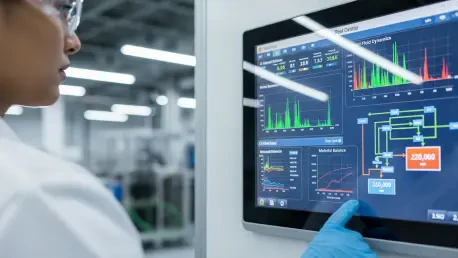
As the recovery process matures, the transition from manual verification to digital tracking allows for long-term transparency and continuous improvement. Modern manufacturing execution systems (MES) can monitor key performance indicators such as the mass recovered per event, the duration of the recovery push, and the sensor trends during each cutover. By analyzing this data over time, plant managers can identify deviations from the baseline and address issues before they lead to significant losses. For instance, if the data shows that recovery efficiency is slowly declining on a specific line, it may indicate that a pig is wearing out or that a sensor requires recalibration. Digital dashboards provide the visibility necessary for all levels of the organization to see the impact of the recovery program on the bottom line. This data-driven approach ensures that the recovery system remains a reliable part of the production process, providing a clear and transparent record of the facility’s commitment to material efficiency and operational excellence.
6. Manage the Recovery Under Food Safety Protocols
Every advancement in product recovery must be strictly governed by food safety protocols to ensure that the primary mission of the facility—producing safe food—is never compromised. A formal Management of Change (MOC) process is essential for any recovery project, as it involves a cross-functional review of the potential risks associated with the new hardware or procedures. This review ensures that the recovered material is correctly identified and that there is no possibility of allergen cross-contamination, especially in plants that handle multiple product types on shared lines. For example, if a line recovers a dairy-based sauce, the system must be designed to prevent any of that material from entering a subsequent run of a vegan-certified product. The food safety plan must be updated to include these recovery steps, treating the recovered material as a critical control point that requires the same level of scrutiny as the original ingredients.
The physical design of the recovery hardware also played a critical role in maintaining the long-term viability of these systems. Engineers prioritized equipment that met stringent hygienic standards, such as those defined by 3-A or EHEDG, to ensure that the recovery valves and sensors did not become harborages for bacteria. This focus on hygienic design eliminated “dead legs”—sections of pipe where fluid can stagnate and spoil—and ensured that the entire system remained easy to clean during standard CIP cycles. The transition to an engineering-focused recovery framework transformed the way facilities perceived their internal losses and environmental footprint. Facilities that adopted these rigorous standards successfully recaptured lost revenue while simultaneously reducing their reliance on massive wastewater treatment facilities. These actions offered a clear path for future expansion, where every plant component was evaluated for its contribution to material efficiency. The decision to invest in precise instrumentation and rigorous material balancing proved to be the most effective strategy for mitigating the economic impact of process losses. Ultimately, the industry recognized that food recovery was not merely a sustainability initiative but a fundamental pillar of modern operational excellence.