
The sight of a driverless vehicle frozen in the middle of a busy intersection while an ambulance blares its siren behind it has become an all too common frustration for urban residents. As autonomous vehicle fleets expand across major American hubs, the frequency of these critical interference events has shifted from rare anomalies to systemic concerns for public safety officials. Fire departments and emergency medical services have reported numerous instances where robotaxis simply stopped moving when confronted with sirens and flashing lights, effectively creating a blockade that delayed life-saving interventions. For months, city governments relied on data sharing requests and public pressure to encourage developers to fix these glitches, yet the incidents persisted with troubling regularity. This ongoing friction has finally catalyzed a major legislative shift toward strict financial penalties designed to treat autonomous systems with the same legal accountability as human motorists. The transition from polite suggestions to heavy fines represents a turning point in the governance of the mobility revolution.
Regulatory Escalation: The Implementation of Financial Accountability
The new regulatory framework established significant per-incident fines that targeted the recurring issue of autonomous vehicles obstructing emergency paths. Under the latest municipal ordinances, companies operating Level 4 autonomous fleets faced penalties reaching twenty-five hundred dollars for every documented case of interference with a responding emergency unit. Previously, autonomous vehicle operators enjoyed a period of relative immunity because traditional traffic citations were built for human drivers with valid licenses. By redefining obstruction to include software-induced stalls, city councils effectively closed a loophole that allowed tech firms to treat these dangerous events as minor edge cases. These financial measures were not merely punitive; they were designed to shift the internal research and development priorities of autonomous vehicle companies. When the cost of a software bug was no longer just a bad headline but a direct hit to the quarterly bottom line, the urgency to resolve sensor fusion errors increased exponentially among engineering teams.
Solving the problem of emergency vehicle detection proved to be one of the most significant technical hurdles for autonomous developers working in complex urban environments. While current sensor suites utilized high-definition cameras and LiDAR to map surroundings, the acoustic processing required to localize a siren remained surprisingly difficult to master. High-rise buildings often created acoustic reflections that made a siren sound as if it were coming from multiple directions at once, confusing the vehicle’s decision-making logic. Furthermore, the visual identification of emergency light patterns could be compromised by heavy rain, fog, or the blinding glare of other neon signs in dense city centers. Developers responded to these challenges by integrating advanced neural networks specifically trained on thousands of hours of siren data and emergency lighting sequences. Despite these improvements, the unpredictability of human-driven emergency vehicles, which often took unconventional routes or traveled against traffic, continued to test the limits of even the most sophisticated machine learning models.
Technical Evolution: From Passive Detection to Active Coordination
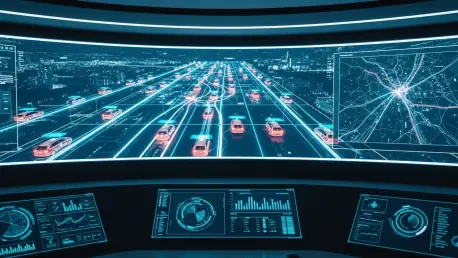
The legislative shift ultimately forced a necessary evolution in how autonomous technology interfaced with public safety infrastructure. It was observed that financial pressure successfully catalyzed a level of cooperation between tech firms and first responders that had previously been elusive. As a direct result, manufacturers accelerated the implementation of Vehicle-to-Everything communication protocols, which allowed ambulances to broadcast their precise location and intent directly to the surrounding autonomous fleets. This development transformed the interaction from a game of passive detection into one of active coordination, ensuring that robotaxis cleared paths before sirens were even within earshot. City planning departments also moved toward integrating real-time emergency dispatch data into the broader traffic management clouds used by autonomous operators. By prioritizing these collaborative strategies, urban centers moved closer to a reality where driverless cars were no longer obstacles but active participants in protecting public safety during critical moments.