
The longstanding monopoly of off-the-shelf semiconductors is rapidly dissolving as artificial intelligence begins to architect its own physical foundations, effectively bypassing decades of manual engineering constraints. This evolution marks a departure from the traditional reliance on general-purpose processors that, while versatile, increasingly struggle to handle the specialized computational intensities of modern neural networks. The current movement signifies a fundamental change in how the industry approaches hardware, moving from a rigid manufacturing process toward a fluid, algorithm-centric design philosophy.
Understanding the Shift to AI-Enabled Hardware Engineering
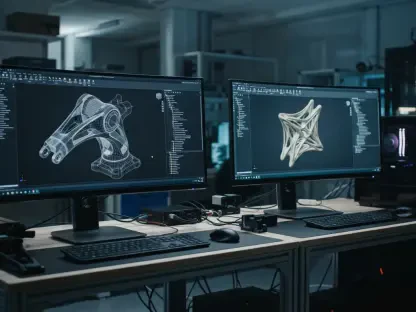
The transition from manual Electronic Design Automation to AI-driven synthesis represents the most significant leap in chip engineering in over forty years. Historically, human engineers spent months manually optimizing circuit layouts and managing thermal constraints, a process that created a massive bottleneck for innovation. By utilizing machine learning algorithms to automate physical layouts, companies can now explore millions of potential configurations in a fraction of the time, resulting in silicon that is mathematically optimized for specific tasks rather than being a compromise of general utility.
This shift has fostered a “designless” semiconductor movement that builds upon the fabless revolution of the early 2000s. While being fabless allowed companies to avoid the costs of owning a foundry, the designless model removes the necessity of maintaining a massive internal team of specialized hardware architects. In an environment where the demand for specialized workloads outpaces the capabilities of standard CPUs, this automation allows organizations to bypass the stagnation of traditional hardware and produce chips that are tailor-made for the software they run.
Key Pillars of the AI-Driven Silicon Methodology
The Designless Model and Automated Chip Synthesis
Startups like Architect Labs have emerged as leaders in this space, utilizing AI systems to automate the creation of custom chips from the ground up. By providing a platform where high-level requirements are converted into physical silicon blueprints, these tools allow smaller organizations to compete with established giants. The performance gains are substantial, as purpose-built silicon eliminates the overhead associated with unused instructions found in off-the-shelf hardware, leading to faster execution and lower power consumption.
The financial barriers that once restricted custom hardware to companies like Apple or Tesla are finally falling. This democratization of design means that a firm specializing in niche machine learning models can now afford to develop its own hardware, ensuring that its specific algorithmic advantages are not lost to the inefficiencies of generic silicon. Automated synthesis is the catalyst for a more diverse hardware ecosystem, where the physical layer of computing is no longer a static commodity but a strategic advantage.
Full-Stack Co-Optimization and Software Integration
True efficiency in modern computing requires more than just a fast chip; it necessitates the seamless integration of hardware with the entire computing stack. This includes the development of compilers, runtimes, and system software that are aware of the underlying hardware architecture. The hardware-software development loop ensures that as a developer updates an algorithm, the silicon blueprints can be adjusted to support new operations, creating a level of agility previously reserved for software-only platforms.
This co-optimization results in silicon that evolves dynamically alongside the software it supports. By integrating design tools directly into the development pipeline, engineers can test how a software update performs on a simulated version of a new chip before any physical manufacturing occurs. This iterative approach reduces the risk of hardware obsolescence and ensures that the final product is perfectly tuned for the data patterns and memory requirements of its specific application.
Emerging Trends in Iterative Hardware Development
Hardware is increasingly becoming as iterative and flexible as software, driven by a surge in seed-stage funding for stealth startups in hubs like Palo Alto. These companies are applying first-principles engineering to address critical bottlenecks in memory bandwidth and networking speeds. The influence of major industry players from NVIDIA and OpenAI has validated this trend, as these entities seek to optimize their massive workloads by moving away from standard architectures toward highly specialized, AI-designed alternatives.
The influx of capital into firms like Architect Labs suggests that the industry is preparing for a future where hardware cycles are measured in months rather than years. Investors are betting on the idea that the “flywheel” effect—where better hardware leads to better AI, which in turn designs even better hardware—will be the primary driver of technological progress. This trend is moving the focus away from raw transistor counts and toward the intelligent distribution of resources across the silicon surface.
Real-World Applications in Specialized Computing
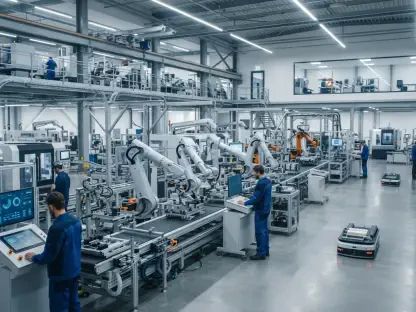
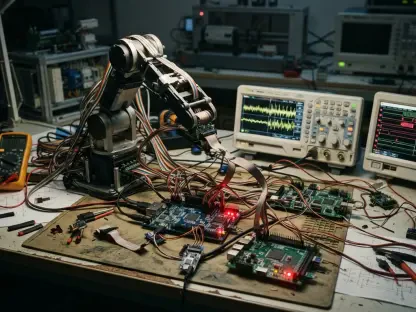
In the robotics industry, custom silicon has become a necessity for handling complex sensory data with minimal latency. Traditional chips often introduce delays that are unacceptable for autonomous systems operating in dynamic environments. By using AI-driven design to create specialized vision and motor-control processors, manufacturers have significantly improved the response times and safety of their machines. These purpose-built components allow for high-efficiency compute at the edge, reducing the reliance on central data centers.
Massive machine learning workloads in data centers also benefit from this specialized approach, particularly regarding energy efficiency. Organizations running large-scale language models have found that custom hardware can reduce operational costs by optimizing the way data moves between memory and logic units. This specialization not only lowers the carbon footprint of AI operations but also enables more powerful computations to be performed within the same thermal and power envelopes as previous generations.
Challenges and Barriers to Widespread Adoption
Despite the progress, technical hurdles regarding the verification and reliability of AI-generated hardware remain. Ensuring that an autonomously designed chip is free of logic errors and security vulnerabilities is a complex task that still requires significant human oversight. The “black box” nature of some AI design processes can make it difficult to troubleshoot performance issues once a chip has been fabricated, posing a risk for mission-critical applications where failure is not an option.
Market obstacles also persist, as established semiconductor giants maintain a firm grip on the supply chain and manufacturing capacity. The high initial cost of manufacturing even an AI-designed chip can be prohibitive for smaller firms without significant backing. Furthermore, the rapid pace of change in AI models means that hardware must be designed with enough flexibility to remain relevant even if the underlying mathematics of the software changes shortly after the chip is produced.
The Long-Term Outlook for Silicon Evolution
The democratization of high-performance computing is expected to redefine the global semiconductor supply chain over the next few years. As AI-driven design tools become more accessible, we will likely see a proliferation of regional design centers that cater to specific industrial needs. This decentralization will reduce the reliance on a few dominant architectures, leading to a more resilient and innovative hardware landscape that is less susceptible to the supply shocks often seen in the general-purpose chip market.
Long-term societal impacts include the rise of energy-conscious machine intelligence that can operate at scale without exhausting global power resources. By co-optimizing silicon and software, the industry will unlock new levels of efficiency that make advanced AI accessible for everyday applications. The move toward specialized hardware will eventually bridge the gap between digital intelligence and physical execution, enabling breakthroughs in fields ranging from personalized medicine to complex climate modeling.
Conclusion: The Impact of AI on the Semiconductor Industry
The transition from static hardware constraints to dynamic, AI-driven solutions represented a fundamental shift in the technological paradigm. The emergence of startups like Architect Labs proved that the historical barriers to custom silicon could be dismantled through the intelligent application of machine learning. The review indicated that the move toward a designless industry was not merely a convenience but a strategic necessity to sustain the rapid advancement of artificial intelligence.
The analyzed data suggested that organizations prioritizing the co-optimization of hardware and software achieved superior performance and energy efficiency compared to those relying on legacy components. The industry realized that the future of computing depends on the ability to iterate on physical architectures as quickly as code. Ultimately, the adoption of AI-driven design tools became the cornerstone of a more specialized, efficient, and accessible semiconductor ecosystem that supported the next generation of global innovation.